School and Youth Orchestra Viola Audition Guide
School and youth orchestra viola audition guide for Hong Kong students, covering repertoire, scales, sight-reading, parts and mock auditions.
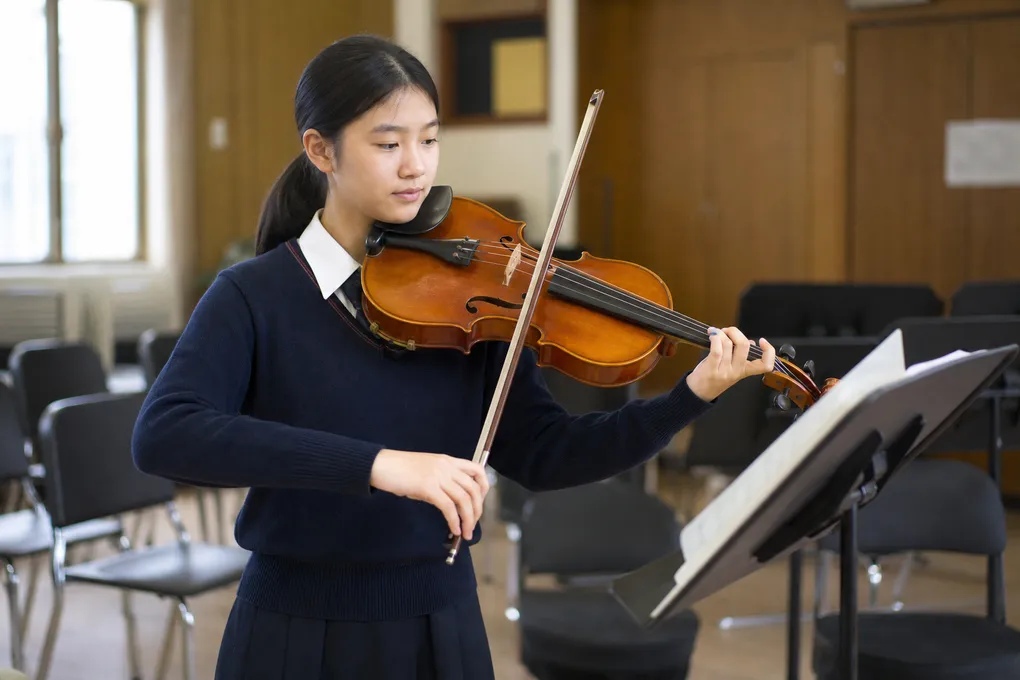
A school orchestra or youth orchestra audition is often a student’s first serious musical checkpoint outside graded exams. It may not feel as formal as a conservatory audition, but it asks an important question: can this student join a group, listen, prepare responsibly, and keep playing when the room feels slightly unfamiliar?
For young violists, that question matters. The viola is not usually the loudest or most exposed part of the orchestra, but it carries the inner structure of the music. A good viola player needs rhythm, warmth, awareness, and the patience to support a texture from the middle. In an audition, the panel is rarely listening only for difficult notes. They are listening for the kind of player who can make an orchestra more stable.
This is why school and youth orchestra audition preparation should not be treated as a last-minute sprint. It is a chance to build the habits that ensemble playing actually needs: steady counting, clear tone, fluent reading, reliable intonation, and the ability to recover without drama.
If your child is still at an earlier stage, it may help to read this alongside when a child should start ensemble training and how parents can support music practice at home.
For students who need regular help with ensemble readiness, sight-reading, sound and audition preparation, I outline my one-to-one approach on the private viola lessons in Hong Kong page.
Start by reading the audition notice carefully
Before practising harder, understand what the audition is asking for. Some school orchestras ask students to play one prepared piece and a scale. Some youth orchestras may ask for contrasting pieces, sight-reading, scales, or short orchestral excerpts. Some auditions are live. Others begin with a video submission.
Check the notice for:
- required piece, free-choice piece, or specified level
- scales, arpeggios, or technical requirements
- sight-reading or aural tasks
- orchestra excerpts or assigned passages
- time limits
- accompaniment rules
- video format, file naming, or upload deadline
- whether memorisation is expected or unnecessary
This administrative step is part of musical preparation. A student who understands the instructions already shows seriousness. A student who prepares the wrong material may lose confidence before the playing has even begun.
For Hong Kong families, this is especially important because students may be balancing school music activities, ABRSM exams, competitions, and outside ensembles at the same time. The audition brief helps decide what deserves attention first.
Choose a piece that shows readiness, not panic
If the audition allows a free-choice piece, choose music that shows the student’s real playing clearly. The best audition piece is not always the hardest piece the student can barely survive. It is the piece that lets the student play with a centred sound, secure rhythm, and some musical direction under pressure.
For a school orchestra audition, a clean and musical Grade 3 or Grade 4 piece may be stronger than a rushed Grade 6 piece with unstable shifting and unclear rhythm. For a youth orchestra audition, the level may need to be higher, but the principle remains the same: difficulty should serve the playing, not hide its weaknesses.
A good viola audition piece should show:
- a warm, focused sound on more than one string
- clear rhythm and pulse
- intonation that is guided by the ear
- bow control, especially at beginnings and endings
- simple phrase shape
- enough technical challenge to show the student’s current level honestly
If the student is preparing ABRSM repertoire at the same time, there may be overlap, but do not assume an exam piece automatically works as an audition piece. An exam programme may be designed for contrast across lists. An orchestra audition may need a shorter excerpt that reveals ensemble readiness quickly.
Students choosing from graded repertoire may find ABRSM viola repertoire by grade useful as a reference point.
Prepare scales as sound training
Scales are not only a technical requirement. For a young violist, they are one of the simplest ways to show the panel how the hands, ear, and bow are working.
A scale played with poor rhythm and thin sound tells the panel that the student may struggle to hold an orchestra part together. A scale played calmly, with even tone and clear intonation, can be quietly persuasive. It shows that the student has a dependable foundation.
Practise scales in a way that connects to orchestra playing:
- use a steady pulse instead of flexible guessing
- listen for ringing, settled intonation
- keep the bow speed even from frog to tip
- practise soft scales without losing the centre of the sound
- play with a metronome sometimes, then without it
- include the keys of the audition piece and likely orchestra parts
For viola students, the C string needs special attention. It should not sound forced or cloudy. A young player does not need a huge professional sound, but the lower strings should speak clearly enough to support the ensemble.
For more detail on making scales musical rather than mechanical, see ABRSM viola scales: how to practise them musically.
Practise sight-reading before it becomes frightening
Many school and youth orchestra auditions include sight-reading because orchestras need players who can function in rehearsal. Sight-reading is not a test of perfection. It is a test of orientation: can the student find the key, pulse, rhythm, and character quickly enough to keep going?
Viola students should sight-read regularly in alto clef, not only when an audition is approaching. The most common problems are not always the difficult notes. They are missed rests, weak counting, accidental changes, uncertain rhythm, and losing the place after a small mistake.
A simple sight-reading routine might include:
- look at key signature, time signature, tempo, and first position before playing
- tap or count the rhythm once
- notice accidentals and repeated patterns
- keep a steady pulse even if some notes are imperfect
- practise restarting from the next bar after a mistake
- read duets or easy ensemble parts, not only solo pieces
The goal is not to pretend that sight-reading is easy. The goal is to make it familiar enough that the student can stay musical while solving problems.
Learn how orchestra parts behave
A viola audition is different from a solo exam because orchestral viola parts often ask for different strengths. The student may need to count rests, play repeated inner rhythms, support harmony, match articulation, or enter after another section. These skills are not glamorous, but they are exactly what make a violist useful in an ensemble.
If the audition includes an excerpt or assigned orchestra passage, do not practise it like a solo. Ask what its job is.
Is the viola carrying rhythm? Filling harmony? Answering the violins? Supporting the cellos? Moving with the second violins? Building energy before a cadence? The student does not need advanced score analysis, but even a simple awareness of role changes the sound.
Good orchestra-part preparation includes:
- counting rests out loud
- marking cues from other sections
- practising entries after silence
- checking bowings carefully
- learning repeated rhythms with a metronome
- playing softly without becoming vague
- listening to a recording while following the viola part
This is where the viola becomes a wonderful teacher. It asks the student to care about music that is not always on top. That kind of listening is one of the strongest signs of orchestra readiness.
Record and listen back
Recording is useful because it removes some of the illusion of practice. A student may feel that the rhythm is steady until a recording shows otherwise. They may think the first note is confident until they hear a small hesitation. They may believe a shift is secure because it usually works on the second try.
Use recording gently, not obsessively. One take can teach a great deal if the student listens for specific things:
- Is the first note prepared?
- Does the tempo stay stable?
- Can the melody still be heard during difficult passages?
- Are endings finished cleanly?
- Does the sound become smaller after a mistake?
- Is the student playing with direction, or only surviving?
For video auditions, recording practice is even more important. Students should know how it feels to play one complete take without stopping. They should also check practical details early: camera angle, sound quality, lighting, music stand height, file format, and whether the full body and instrument need to be visible.
For students preparing any recorded exam or audition, the principles in ABRSM online exam recording technique can also help.
Practise the audition moment
Many students practise the piece but not the audition. Yet the audition begins before the first note. Walking in, tuning, greeting the panel, placing the music, breathing, and starting calmly are all part of the experience.
A mock audition does not need to be dramatic. It can be simple:
- walk into the room
- tune
- announce the piece if needed
- play the full excerpt or piece without stopping
- sight-read one short passage
- answer one simple question
- leave calmly
This kind of practice teaches the student that nervousness is not an emergency. The body can feel nervous and still do the job. That is an important lesson for young musicians.
For youth orchestra auditions, I would include more complete runs and more realistic pressure: playing for a teacher, another student, parents, or a small group. For school orchestra auditions, even one or two mock runs can make the real day feel much less mysterious.
What parents can do
Parents do not need to become assistant teachers. Their most useful role is to create steadiness around the preparation.
Help the student know the deadline, organise the practice schedule, bring the music to lessons, and avoid turning every practice session into a judgment. If the student is young, short daily practice is usually more useful than one panicked weekend. If the student is older, help them divide the work: scales, piece, sight-reading, orchestra excerpt, and one complete run.
Try not to ask only, “Did you play it correctly?” Better questions are:
- Did you practise the difficult bar slowly?
- Did you count the rests?
- Did you record one full take?
- Did you listen back for rhythm or sound?
- Do you know what to work on tomorrow?
Those questions build ownership. They also make the audition feel like a learning process, not a family emergency.
A final week checklist
In the final week, do not rebuild everything. Keep the playing fresh and organised.
Check:
- instrument, bow, rosin, shoulder rest, and spare strings
- printed music or uploaded files
- audition time, address, room, or video deadline
- accompaniment arrangement if needed
- school forms or ensemble application details
- comfortable concert clothing if required
- travel time
Musically, focus on beginnings, endings, transitions, tuning, and recovery. Run the audition, but not endlessly. A tired student often starts to practise from fear rather than attention.
The night before, the goal is not to become a different player. The goal is to arrive clear enough to show the preparation that has already been done.
The real sign of readiness
A student is ready for a school or youth orchestra audition when the playing sounds organised. It does not need to be flawless. It needs to show pulse, listening, preparation, and the ability to continue.
For a violist, that means more than playing the right notes. It means understanding how sound fits inside a group. It means keeping rhythm alive when the viola part is not the melody. It means tuning carefully, entering confidently, and supporting the music from the middle.
That is why orchestra auditions can be so valuable for young students. They prepare the student not only to pass a selection, but to become the kind of musician other people can play with.