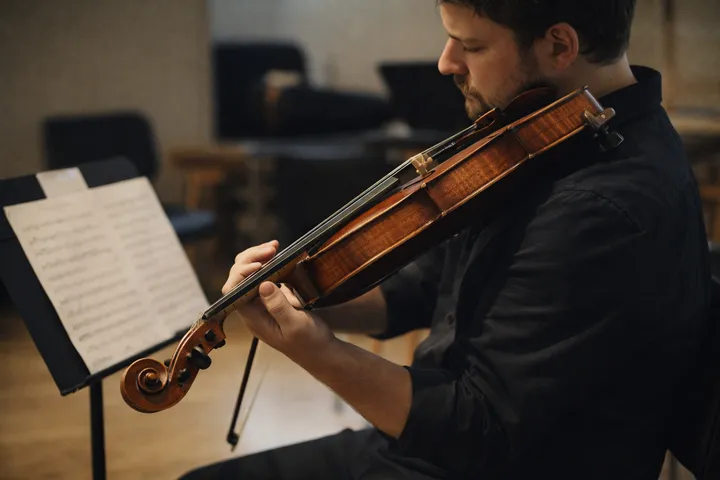
ABRSM Viola Diploma Exam: DipABRSM, LRSM and FRSM Guide
A practical hub for ABRSM viola diploma exams after Grade 8, covering DipABRSM, LRSM, FRSM, recital planning, written work and preparation strategy.
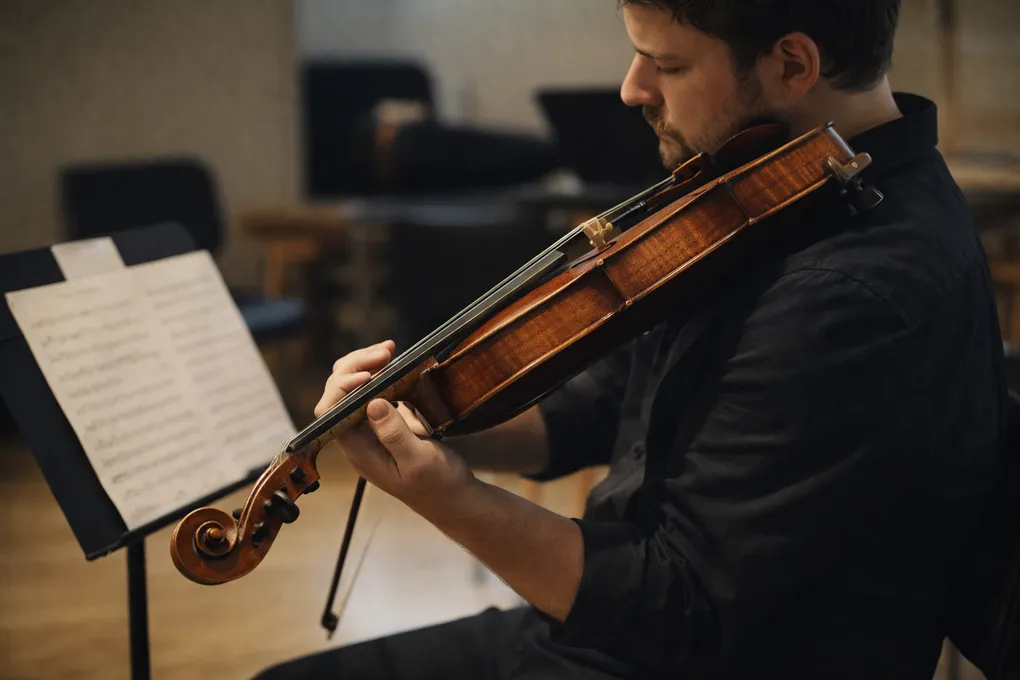
ABRSM viola diplomas are not only higher exams after Grade 8. They are recital projects. The candidate must choose repertoire, sustain a programme, write about it clearly, speak about it in the Viva Voce and respond musically in the Quick Study.
This hub gathers the viola route from DipABRSM to LRSM and FRSM, using the ABRSM Performance Diploma Syllabus 2022 as the working catalogue. Always confirm the latest ABRSM entry rules, dates, fees and syllabus status before booking.
Viola diploma route at a glance
| Level | Main recital shape | Written work | Best for |
|---|---|---|---|
| DipABRSM | About 35 minutes | Programme Notes of about 1,100 words | A first serious recital after Grade 8 |
| LRSM | About 40 minutes, with more independence and optional specialist work | Programme Notes of about 1,800 words | A player ready for deeper style and programme ownership |
| FRSM | About 50 minutes | Written Submission of about 4,500 words | A mature violist with a clear artistic and research angle |
All three levels include Recital, Viva Voce and Quick Study. The difference is not only duration. At each step, ABRSM expects more authority: a larger sound-world, stronger stylistic judgement, more sophisticated written work and a steadier stage presence.
Why viola diploma planning feels different
Viola candidates often have a more delicate programming problem than violinists. The repertoire can move between transcribed Bach, Classical concertos, Romantic sonatas, British twentieth-century writing, and major modern works. A good programme must show the instrument’s depth without becoming too heavy in colour or too narrow in tempo.
For a first diploma, DipABRSM viola is the natural starting point. The ABRSM list includes Bach cello suite movements transcribed for viola, Brahms sonata movements, Britten Lachrymae, Handel, Hindemith, Hoffmeister, Reger, Schubert Arpeggione, Schumann, Telemann, Vaughan Williams, Vivaldi and Weber.
LRSM viola raises the demand. Candidates encounter broader programme responsibilities, with repertoire such as J.C. Bach, Bach solo suite groupings, Bartok, Bax, Brahms complete sonatas, Hindemith, Hoffmeister, Martinu, Milhaud, Rubbra, Shostakovich, Vaughan Williams, Walton and Hugh Wood.
FRSM viola is fellowship level. The list includes complete Bach cello suites, Brahms sonatas, Hindemith solo sonatas, Hoffmeister Concerto, Maconchy, Martinu Rhapsody Concerto, Milhaud, Penderecki, Rainier, Reger, Schubert Arpeggione, Shostakovich Sonata, Vaughan Williams and Walton.
What the viola candidate must prepare
The recital needs a clear profile. A violist might build a programme around Bach and a sonata, then use a shorter twentieth-century work to sharpen contrast. Another candidate might foreground British viola writing, but would still need enough texture and period contrast for the programme to feel like a recital rather than a topic list.
The written work should not be left until the end. At DipABRSM and LRSM, Programme Notes are part of the Viva Voce conversation. At FRSM, the Written Submission is more substantial and should investigate performance issues connected with the recital, not merely retell composer biographies.
The Quick Study deserves regular practice. For viola, the test is often about reading calmly across clef, position, string colour and rhythm while keeping tone alive. A technically correct but stiff reading rarely sounds convincing.
Related instrument option
The syllabus allows a limited related-instrument option for listed instruments. Violin and viola are accepted related instruments for each other, but the majority of the recital must remain on the main instrument. This can be musically useful for a candidate with a genuine double background, but it should never be used as a shortcut around the identity of the diploma.
Related viola diploma pages
| Page | Use it when |
|---|---|
| DipABRSM viola guide | You are planning the first viola diploma after Grade 8 |
| LRSM viola guide | You are ready for a more advanced recital and deeper Programme Notes |
| FRSM viola guide | You are considering fellowship-level performance and written research |
The strongest viola diploma programmes usually have one thing in common: they let the instrument speak with its own centre of gravity. They do not try to make the viola into a smaller cello or a darker violin.