ABRSM Viola Exams in Hong Kong: Online or Live?
ABRSM viola exams in Hong Kong: compare digital Performance Grade and face-to-face Practical Grade, and what each route asks of a student.
In Hong Kong, conversations about ABRSM often sound practical very quickly. Which session is open, which route is easier to schedule, whether a video is less stressful than walking into an exam room, whether the result will still “count”. For viola students, these questions matter. But they are not only administrative questions. They shape the kind of musician a student is being asked to become.
For that reason, the choice between online and live should not be treated as a minor detail. It is really a choice between two different musical emphases.
If you are still asking what an exam should contribute to a student’s growth in the first place, I have written more broadly about what ABRSM exams can and cannot teach.
What “online” actually means in Hong Kong
The first point is simply clarity. In Hong Kong, “online ABRSM” for viola normally means a digital Performance Grade, not a live video-call exam. According to the HKEAA ABRSM Practical Grade and Performance Grade page, Practical Grades are face-to-face examinations, while Performance Grades are digital examinations available on demand.
That distinction matters because the format changes the musical task itself.
In the current bowed strings specifications from ABRSM, the live Practical Grade route includes three pieces, scales and arpeggios, sight-reading, and aural tests. The digital Performance Grade route asks for four pieces in one continuous performance. Those are not small procedural differences. They point students towards different habits of preparation, different kinds of pressure, and different kinds of listening.
As of 14 April 2026, HKEAA lists Hong Kong face-to-face Practical Grade sessions for August to September 2026 and October to November 2026, while Performance Grades remain bookable at any time, with the video submitted at booking or within the following 28 days. In the same 2026 Hong Kong fee table, Performance Grades are also priced lower than Practical Grades. This makes the digital route attractive, but convenience is not the same thing as suitability.
For families who need the administrative sequence laid out more plainly, I have also put together a step-by-step guide to the ABRSM exam procedure in Hong Kong. If the immediate question is cost, booking windows, and what dates are still open, use the more focused guide to ABRSM viola exam fees, dates and booking in Hong Kong.
What the two routes really test
The live Practical Grade remains the more complete test of exam-room musicianship. It does not only ask whether a student can prepare pieces. It asks whether they can arrive, settle, respond, recover, hear quickly, and think under mild pressure. Scales reveal whether the hand is organised. Sight-reading shows whether the player can keep musical continuity when the ground is unfamiliar. Aural tests show whether the ear is awake. For many students, especially in the middle grades, this is valuable discipline.
The digital Performance Grade asks for something different. Because the performance must run as one continuous programme of four pieces, it shifts attention toward pacing, character, stamina, and overall shape. It rewards students who can sustain a musical line across a longer span, plan contrasts well, and present a convincing programme rather than a sequence of disconnected exam items.
That choice of pieces matters more than many candidates expect. For a closer look at level-by-level programme decisions, see my guide to ABRSM viola repertoire by grade.
Neither route is automatically better, and the digital route should not be treated as the “easy version”. In some ways it is gentler; in other ways it is less forgiving. A live exam passes quickly. A recording stays there, and every lapse in pulse, every unclear beginning of a note, every moment of tonal thinning can feel more exposed because it can be replayed in the candidate’s own mind long before it is assessed.
Why this choice matters especially on viola
The viola sits in a musical position that makes the route choice unusually revealing.
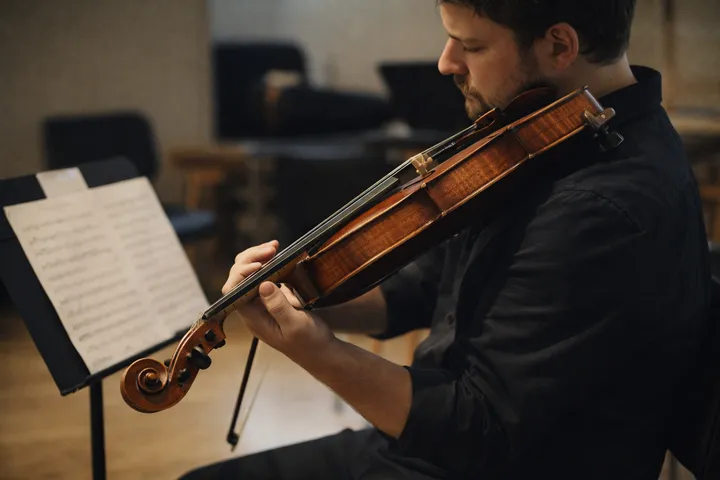
In a live Practical Grade, the viola benefits from the fact that ABRSM is still testing more than surface performance. Many viola students are naturally musical but slightly less tidy in their technical housekeeping than they realise. The instrument can hide things for a while: a hand frame that is not fully settled, a shift that arrives by instinct rather than by ear, string crossings that work only when the tempo is comfortable. Scales, sight-reading, and aural work expose these gaps early, often usefully.
This is one reason I would not rush every viola student toward the online route. If a student still needs structure around intonation, rhythmic steadiness, clef fluency, and listening under pressure, the live Practical Grade may actually serve them better. It asks the kind of complete alertness that violists need anyway, especially if they also play in school orchestras, chamber groups, or youth ensembles in Hong Kong.
For students leaning toward that path, I have a more focused guide to the ABRSM live viola exam in Hong Kong.
On the other hand, the digital Performance Grade can suit a violist with a more settled ear and a naturally thoughtful sound. The viola often speaks most persuasively when a player has time to shape a line, balance resonance, and connect one phrase to the next. A four-piece recorded programme can allow that kind of inward musical thinking to come through more clearly than a stop-start exam structure.
If the student chooses the digital route, the recording itself becomes part of the performance preparation. I cover that separately in ABRSM online exam recording: technique, stress, and what to focus on.
A few practical remarks for viola candidates in Hong Kong
For viola, the biggest mistake is to think only in terms of comfort. The better question is: what does this student need next?
If the student avoids scales, postpones sight-reading, and hopes musical feeling will cover technical uncertainty, the live route may be the healthier one. If the student plays with genuine shape and listens well but tightens badly in an exam room, the digital route may present a more truthful picture of their current level.
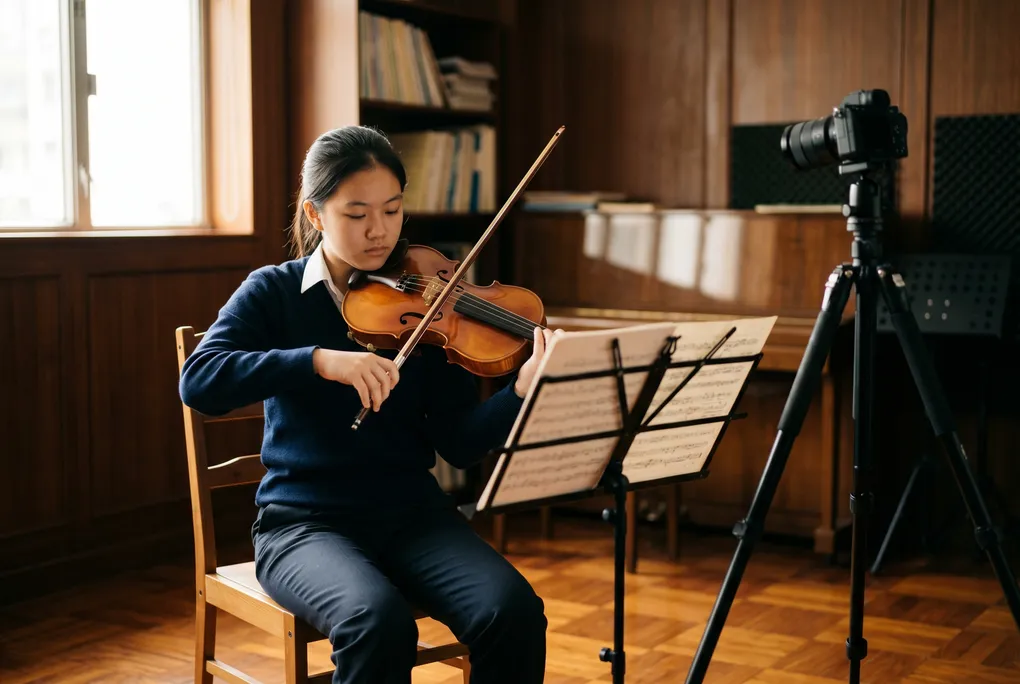
There are also some very local considerations. Hong Kong homes are often small, reflective, and noisy. That matters much more on viola than some families expect. A violin will usually project its edge even in a mediocre room. A viola can lose focus very quickly if the room is boxy, the piano is too near, or the recording setup favours brightness over depth. A digital exam recorded in an ordinary flat is not automatically easier than a live exam in a proper space. Sometimes it is harder.
For that reason, digital candidates should test balance carefully before recording. The middle register should still carry. The C string should speak cleanly without sounding forced. If piano accompaniment is used, it should support rather than cover. On viola, a beautiful sound is rarely just “dark”; it also needs core, direction, and enough clarity for detail to travel.
One further practical point: for Grade 6, 7, and 8, Hong Kong candidates may be asked to submit the usual prerequisite evidence if ABRSM requires it. That applies to both Practical and Performance Grades, so it is worth checking paperwork early rather than treating it as an afterthought.
Choosing the route for the right reason
In Hong Kong, it is easy to let scheduling make the decision. School terms are crowded, accompanists are busy, parents are managing calendars, and on-demand digital booking sounds wonderfully efficient. Sometimes it is the right answer. But if the decision is made only to reduce friction, something important can be missed.
Some families are also choosing between examination boards rather than only between ABRSM routes. If that is the real question, start with ABRSM vs Trinity exams.
An ABRSM route should strengthen the weaker side of a student’s musicianship, not simply protect the stronger side.
For viola students in particular, that means asking whether the next stage of growth lies in exam-room responsiveness or in long-line performance; in technical accountability or in sustained musical communication; in being tested live, or in learning how to present a whole programme with maturity and care.
The route matters. But the deeper question matters more: which format will help this student become a better violist, not just a safer candidate?