Common Beginner Viola Problems and How to Fix Them
Common beginner viola problems explained: setup, tension, listening habits and practice routines that can be corrected with patient work.
Most beginner viola problems are not mysterious. They often come from a few simple causes: the instrument is not sitting well, the bow is not moving freely, the left hand is working too hard, or the student is practising a mistake faster than the ear can understand it. That is encouraging, because it means the answer is usually not to try harder in a vague way. The answer is to make the problem smaller, more physical, and more audible.
The viola can feel unforgiving at the beginning. It is larger than the violin, slower to speak in the lower register, and less willing to cover tension with brilliance. But those same qualities make it a good teacher. When something is uncomfortable or unclear, the instrument usually tells the truth quite quickly. The task is to learn what that truth is pointing towards.
For families still deciding when to begin, this article follows naturally from when to start learning viola. For violinists moving across, some of the same problems appear in a different form; see viola for violinists.
Problem one: the viola feels heavy or unstable
Many beginners assume the viola is supposed to feel awkward. Some discomfort is normal while the body learns a new coordination, but persistent strain is not a badge of seriousness. If the student is gripping with the jaw, lifting the left shoulder, or squeezing the neck of the instrument just to stop it from falling, the setup needs attention before the practice becomes productive.
If the player is a child, instrument size is often the first thing to check; I explain that in what size viola is right for your child. Adult beginners may want the companion guide to choosing a viola size for adults.
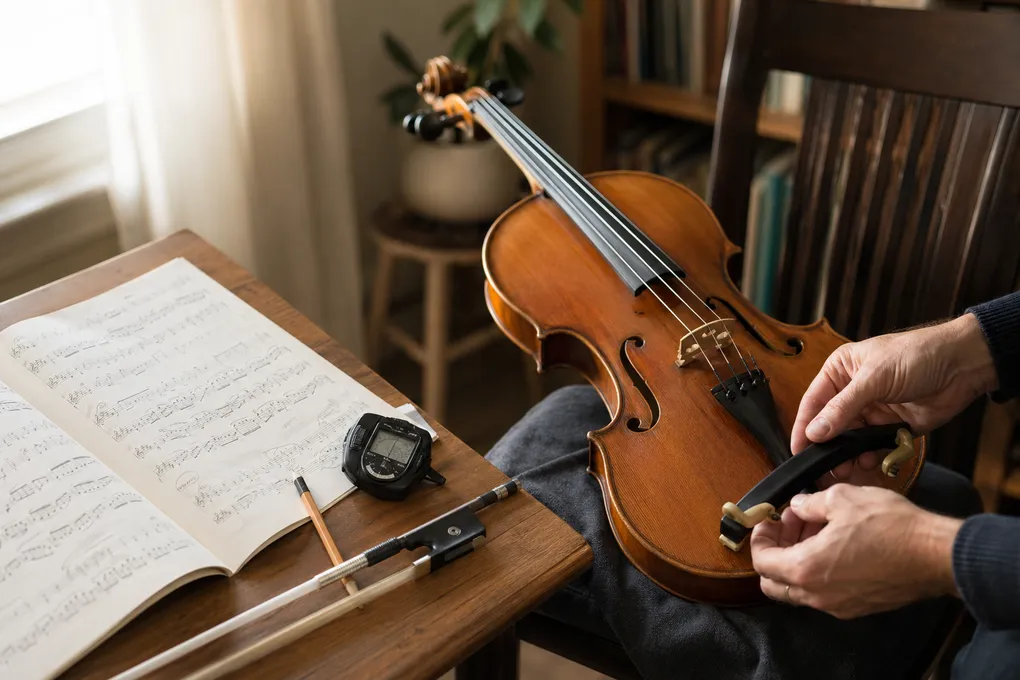
The first fix is not a dramatic technical correction. It is to check the relationship between the body, the viola, the shoulder rest, and the chin rest. The instrument should feel supported enough that the left hand can release for a moment without panic. The head should rest, not clamp. The shoulder should remain broad and low rather than pushed upwards to meet the instrument.
A useful practice test is to place the viola carefully, breathe out, and let both arms hang for a second before playing. If the setup collapses immediately, the body is probably being asked to solve a fitting problem. That may require a different shoulder rest height, a different angle, or simply more careful placement. Good posture is not about looking correct from the outside. It is about creating enough balance that musical movement becomes possible.
Problem two: the sound is scratchy, thin, or forced
A scratchy sound often makes beginners feel embarrassed, so they respond by pressing harder. On viola, that usually makes the problem worse. The viola needs weight, but not panic. A clear sound comes from the bow moving with a sensible balance of contact point, speed, and arm weight.
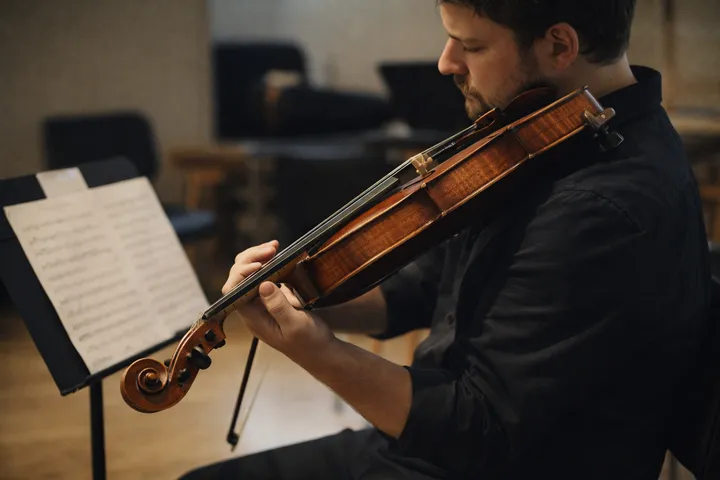
If the sound cracks or scratches, first look at where the bow is travelling. Beginners often drift towards the fingerboard or bridge without noticing. Playing too close to the fingerboard with too little bow speed can make the sound unfocused; playing too close to the bridge with too much pressure can make it harsh. The fix is to practise open strings in front of a mirror, keeping the bow roughly parallel to the bridge and listening for when the sound opens.
Then separate weight from pressure. The arm can feel gently heavy while the hand remains flexible. A clenched thumb, locked little finger, or stiff wrist often transfers pressure into the string instead of allowing the bow to draw sound from it. Slow open-string bows are not a beginner punishment. They are where the player learns how the viola speaks.
Problem three: intonation feels impossible
Viola intonation is demanding because the spaces between fingers are wider than on violin, and the darker sound can make pitch feel less instantly obvious to the beginner. But poor intonation is not only a left-hand problem. It is also a listening problem.
The first fix is to reduce the amount of information. Do not practise a whole piece while hoping the notes will somehow improve. Take two notes. Sing or hear the second note before playing it. Then place the finger and check whether the pitch matches what the ear expected. If the ear has no expectation, the hand is guessing.
Beginners also need to learn the feeling of finger patterns. High second finger and low second finger are not abstract theory; they are physical shapes in the hand. Practise small patterns slowly on one string, listening for semitones and tones. A tuner can help, but it should not replace the ear. Use it briefly to confirm, then turn back to listening. The goal is not to obey a screen. The goal is to build an inner pitch map.
Problem four: the left hand squeezes
When notes feel insecure, beginners often squeeze the neck of the viola between the thumb and fingers. This seems helpful for about three seconds. Then the hand becomes tight, the fingers move slowly, shifting becomes frightening, and intonation suffers.
The thumb should guide and balance, not act like a clamp. One simple exercise is to play a short pattern while deliberately noticing whether the thumb can stay soft. Another is to tap the fingers lightly on the string without pushing them all the way down at first. This reminds the hand that the fingers can move from above rather than being dragged into place by force.
The left hand does need strength, especially on viola, but strength is not the same as gripping. A strong hand is organised, responsive, and able to release. If the thumb cannot move, the hand is not strong in the musical sense. It is trapped.
Problem five: rhythm disappears when the notes become difficult
Beginners often practise pitch and rhythm as if they are separate subjects. They correct notes first, then hope rhythm will return later. Usually it does not. Once the pulse has been abandoned, the piece may become a collection of anxious events rather than music.
The fix is to protect rhythm early. Clap the rhythm. Speak it. Play it on an open string before adding the left hand. If a bar is difficult, remove the pitches and keep the bow rhythm alive. Then add only the easiest notes. Then rebuild the full version.
This is especially useful for viola students because the instrument often plays inner lines, offbeats, and supporting figures in ensemble music. A violist who can keep rhythm steady is already learning one of the instrument’s most important responsibilities: to make the music around them feel grounded.
Problem six: practice becomes repetition without listening
The most common beginner practice mistake is not laziness. It is unfocused repetition. A student plays the same passage many times, vaguely hoping that quantity will turn into improvement. Sometimes it does. More often, the mistake becomes more fluent.
Good practice begins with a question. What exactly is wrong? Is the shift late? Is the bow crooked? Is the third finger sharp? Is the rhythm uneven? Once the question is clear, the solution becomes smaller. Practise only the shift. Practise only the bow change. Practise only the two notes that are out of tune.
A useful rule is this: if you cannot describe what you are trying to improve, you are probably only repeating. Short, attentive practice is better than long practice with a sleepy ear. Beginners do not need heroic hours so much as honest feedback.
Problem seven: the student expects every fix to work immediately
There is a quiet frustration in beginner viola study: even when the teacher gives the right correction, the body may not absorb it at once. The student understands the instruction, tries it, succeeds for one bar, then loses it again. This can feel like failure, but it is actually how technical learning often works.
The body learns through return. A better bow hold may need to be rebuilt at the start of every practice session for a while. A relaxed thumb may need many reminders. A new listening habit may appear in scales before it appears in pieces. That is normal. The sign of progress is not that the problem vanishes instantly. It is that the student begins to notice it sooner, correct it more calmly, and recover without panic.
The deeper fix: make the viola easier to hear and easier to hold
Most beginner problems improve when two things happen together: the instrument becomes physically easier to manage, and the student becomes more specific in listening. Technique and musicianship are not separate worlds. A tense shoulder changes the sound. A poor sound changes the ear’s confidence. Unclear listening makes the left hand guess. Guessing makes the hand squeeze. The chain is physical and musical at the same time.
That is why the best fixes are rarely dramatic. Adjust the setup. Slow the bow. Listen before placing the finger. Practise fewer notes. Keep the pulse. Release the thumb. Ask one clear question at a time.
The beginner stage is not something to rush past in embarrassment. It is where a violist learns the basic honesty of the instrument. The viola asks for patience, but it gives something valuable in return: it teaches the player to solve problems by listening more closely, not by forcing more loudly.