Choosing Rosin by Sound, Climate, and Feel
A practical guide to choosing violin, viola, or cello rosin with attention to tone, grip, climate, bow response, and playing style.
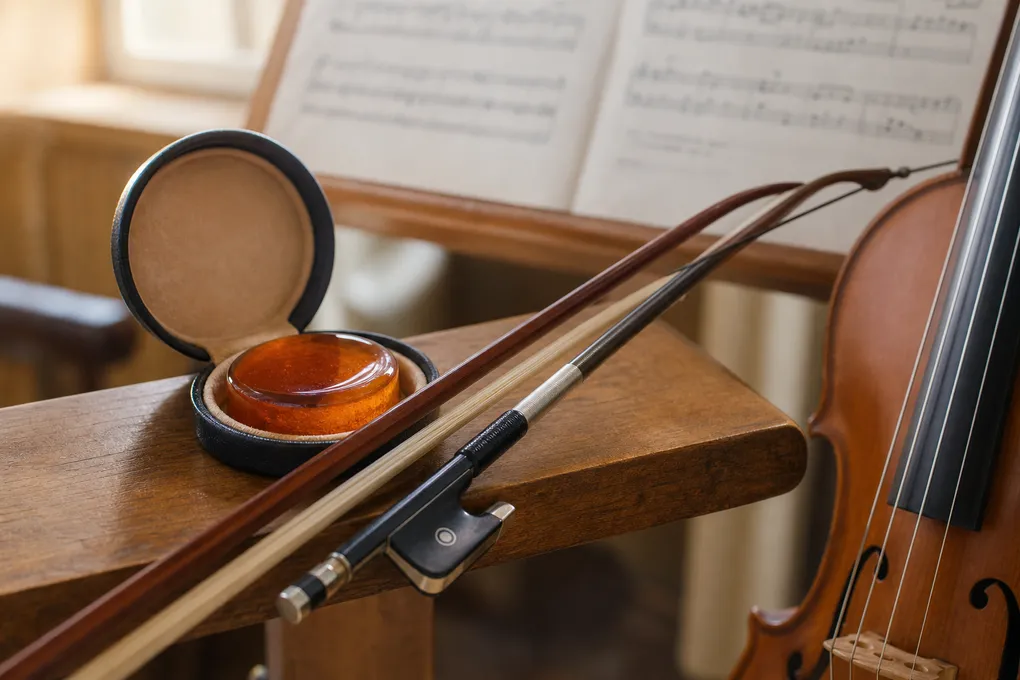
Rosin is a small thing, but it changes the way a string instrument speaks. A bow with too little grip can feel distant and glassy. A bow with too much grip can feel rough, noisy, or heavy under the hand. For many players, rosin is treated as an accessory rather than part of the setup, but the choice of rosin can quietly affect articulation, tone colour, response, and even confidence.
The aim is not to find the “best” rosin in general. The better question is: what does your instrument, bow, climate, and playing style need?
This question sits close to broader instrument care. If humidity, strings, pegs, and bow hair are also changing, read this alongside the guide to string instrument maintenance in Hong Kong humidity.
What Rosin Actually Does
Rosin helps the bow hair grip the string. Without it, the bow would slide across the string with very little sound. With the right amount of rosin, the hair catches and releases the string repeatedly, producing vibration.
This means rosin sits between technique and equipment. When the bow does not respond well, the cause may be bow pressure, contact point, bow speed, old hair, dirty strings, or the rosin itself. Changing rosin should not replace technical work, but it can make the instrument more cooperative.
A useful test is to play a simple open-string stroke near the middle of the bow. The sound should start cleanly without forcing. If the bow slips, the rosin may be too light, too little, or too old on the hair. If the sound crunches easily or leaves heavy dust, the rosin may be too sticky or over-applied.
For newer players, it is worth separating rosin issues from basic bowing habits. Some scratchy or thin sounds come from contact point, bow speed, and tension rather than the rosin itself; I discuss those foundations in common beginner viola problems.
Light, Dark, Soft, And Hard Rosin
Rosin is often described as light or dark, though colour alone is not a perfect guide. In general, lighter rosins tend to feel harder and cleaner. They often suit violinists, warmer climates, and players who prefer a clear, quick response. Darker rosins are often softer and stickier. They can give more grip and warmth, which may suit viola, cello, double bass, or dry conditions.
But this is only a starting point. Some light rosins are quite grippy, and some dark rosins are refined and clean. The real difference is how the rosin behaves under the bow.
A harder rosin may give clarity and less dust, but it can feel less generous on an instrument that needs help speaking. A softer rosin may give warmth and immediate grip, but it can also produce excess surface noise if the player already uses a heavy bow arm.
Match The Rosin To The Instrument
Violin players often look for a rosin that gives quick response without making the E string harsh. A rosin that is too sticky can make fast passages feel less clean, especially in spiccato or sautille.
Viola players may want slightly more grip, especially on the C string. A viola often benefits from a rosin that helps the lower register speak without forcing the bow. The danger is choosing something too heavy, which can make the sound thick but less flexible. Violinists who are switching to viola may also need to rethink bow weight and response; that change is covered more fully in viola for violinists.
Cellists usually need more traction than violinists because of the thicker strings. A cello rosin often feels softer and more substantial. Still, clarity matters. A powerful rosin is not automatically a musical one.
Double bass rosin is its own category and is usually much softer and stickier. It should not normally be used on violin, viola, or cello bows unless there is a very specific reason and a teacher or luthier agrees.
Climate Matters More Than Many Players Expect
Rosin reacts to temperature and humidity. In a hot or humid place, a soft rosin can become too sticky and messy. The bow may feel sluggish, and the strings may collect residue quickly. In a dry or cold place, a harder rosin may feel too glassy and unresponsive.
For a player moving between Hong Kong and Europe, this matters. A rosin that works beautifully in a dry winter practice room may feel too aggressive or dusty in a humid summer. Likewise, a clean, hard rosin that behaves well in Hong Kong may not give enough grip in a cold Swiss practice room.
This is why some players keep two rosins: one cleaner and harder for humid weather, and one slightly softer or warmer for dry conditions. It does not need to be complicated. The point is to observe how the bow feels across seasons.
Sound Versus Feel
Players often describe rosin by sound: bright, warm, clear, dark, focused, smooth. But feel is just as important. Good rosin should make the bow feel connected to the string without making the right hand tense.
A warm rosin that feels slow may not be helpful. A bright rosin that gives excellent control may still be musically useful, even if it is not the richest sound on its own. Rosin should support phrasing, not only produce an attractive first impression.
Try testing rosin with different strokes:
- Play a slow open-string bow and listen to the beginning of the sound.
- Play a soft attack from silence.
- Play a short martele stroke.
- Play a light off-string stroke.
- Play a lyrical phrase in the middle register.
If the rosin only works in one situation, it may not be the best daily choice. A reliable rosin should support slow practice, scales, short articulations, and lyrical playing; for a structured practice approach, see effective viola scales for better practice.
Avoid Over-Rosining
Many rosin problems are actually application problems. Too much rosin can make the sound noisy and reduce nuance. It can also leave dust on the strings and instrument.
For daily practice, a few slow passes are usually enough unless the bow hair is very clean or newly rehaired. After playing, wipe the strings gently with a dry cloth. This keeps the sound clearer and prevents rosin buildup.
A common sign of over-rosining is when the bow feels exciting for the first few minutes but then becomes rough and uncontrolled. More grip is not always more control.
When To Change Rosin
Consider changing rosin when:
- Your bow consistently slips even with clean technique.
- The sound feels too scratchy despite relaxed bowing.
- The instrument feels slow to respond.
- You have moved to a very different climate.
- You changed strings, bow, or had a rehair.
But change one thing at a time. If you change strings, rosin, and bow hair together, it becomes difficult to know what actually helped.
A Simple Way To Choose
Start with your main problem.
| If you notice this | Try this first |
|---|---|
| The sound is too thin or the lower strings do not speak | Try something with slightly more grip. |
| The sound is dusty, harsh, or heavy | Try something cleaner and harder. |
| The bow slips in dry weather | Try a slightly softer rosin. |
| The bow feels sticky in humid weather | Try a harder rosin and apply less. |
| The response changed after a rehair or new strings | Test gradually before changing several parts of the setup. |
The best rosin is not the one with the strongest personality. It is the one that lets the instrument respond naturally and lets the player forget about it.
A good selection process is calm and practical: listen, feel, compare, and avoid changing too many things at once. Rosin should help the bow meet the string with clarity, not become another source of uncertainty.
Related Guides
- String instrument maintenance in Hong Kong humidity
- How often should you rosin a violin bow in Hong Kong?
- How to clean rosin off violin strings safely
- Why does my violin sound bad in Hong Kong?
- When should you rehair a violin or viola bow in Hong Kong?
- Common beginner viola problems and how to fix them
- Viola for violinists: what changes when you switch?
- Effective viola scales for better practice