How Often Should You Rosin a Violin Bow in Hong Kong?
A practical guide for Hong Kong violin and viola students on when to rosin, how much to use, and how to tell whether bad sound is really a rosin problem.
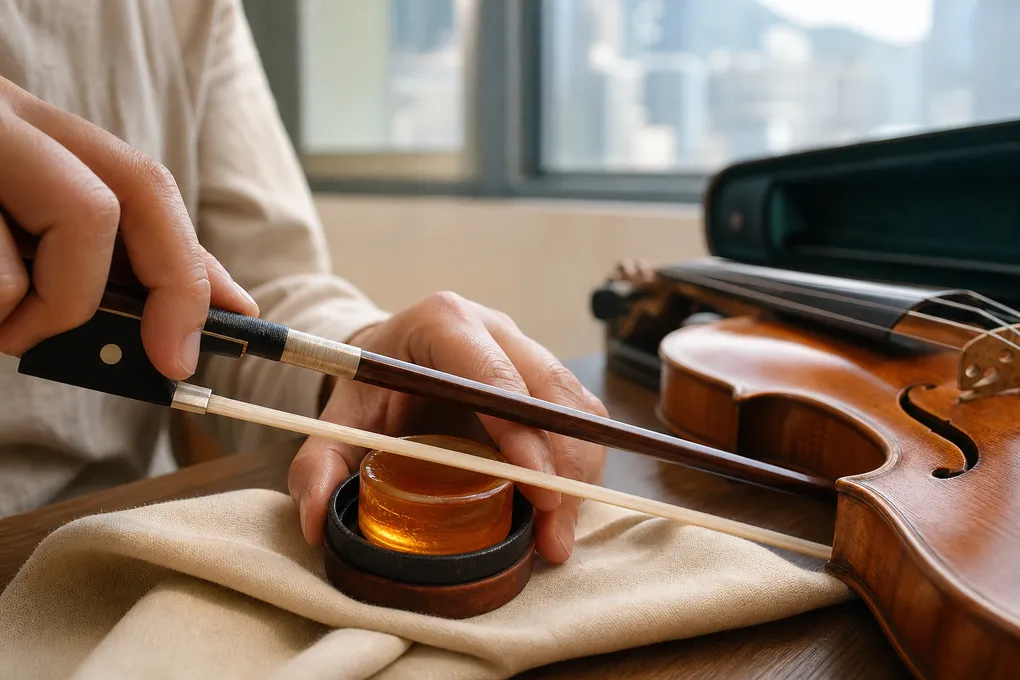
Rosin is one of the first things a violin or viola student owns, but it is also one of the easiest things to misunderstand. When the sound is weak, scratchy, or unreliable, many beginners immediately add more rosin. Sometimes that helps. Often it only makes the sound rougher.
In Hong Kong, the question is not simply how often to rosin. Humidity, air conditioning, school storage, bow hair condition, and practice frequency all change the answer.
The Short Answer
For regular student practice, a small amount of rosin every few practice sessions is often enough. Some players need a little every day. Others need less. A newly rehaired bow may need more rosin at the beginning, while a bow already carrying plenty of rosin may need none for several sessions.
The better habit is to listen before applying. Play a slow open string. If the bow slips, sounds glassy, and cannot start the note cleanly, a little rosin may help. If the sound is already dusty, gritty, or harsh, more rosin is probably not the answer.
For a broader comparison of rosin types, see choosing rosin by sound, climate, and feel.
What Too Little Rosin Feels Like
Too little rosin usually feels slippery. The bow passes over the string but does not catch enough to make the note speak clearly. Soft playing may become airy, and the beginning of notes may feel delayed.
This is most obvious on open strings and simple long bows. If a beginner cannot make a clear sound at all, check the bow hair. A completely new or newly cleaned bow may need more rosin than usual before it grips properly.
What Too Much Rosin Feels Like
Too much rosin often creates the opposite problem: the bow grabs too much. The sound becomes crunchy, scratchy, dusty, or uneven. Rosin powder builds up on the strings and sometimes on the instrument body near the bridge.
This happens easily when students apply rosin every day out of habit rather than need. In Hong Kong humidity, softer rosins can also feel stickier than expected, especially after travelling through warm weather.
If the strings look white with residue, wipe them gently with a dry cloth after playing. Do not use alcohol, wet wipes, or household cleaners on the violin. If buildup is stubborn, ask a teacher or luthier.
Hong Kong Humidity Changes The Feel
Hong Kong players often move between hot outdoor air and cold indoor air conditioning. Bow hair and rosin both respond to that. On a damp day, the bow may feel less responsive, and the first instinct may be to add rosin. Sometimes the real issue is that the bow hair has stretched or the bow is not tightened to a normal playing curve.
Do not overtighten the bow to compensate. Tighten only enough for playing, and loosen it after practice. If the bow still feels wrong when tightened normally, the hair may need inspection.
A Simple Rosin Routine
Before practice, play first. Do not automatically rosin.
If the bow slips, apply a few slow strokes of rosin along the hair, then test again. Avoid grinding the rosin into the hair aggressively. If the sound becomes harsh after applying rosin, you probably used too much or the rosin is too sticky for the conditions.
After practice, loosen the bow and wipe the strings. This small routine protects the bow, keeps the strings clearer, and helps the student notice changes before they become confusing.
Rosin should make the instrument easier to play, not louder in a forced way. The goal is a clean connection between bow and string, where the student can listen to music rather than fight dust.