How to Clean Rosin Off Violin Strings Safely
A safe beginner-friendly guide to cleaning rosin from violin and viola strings without damaging the instrument, especially for students in humid Hong Kong weather.
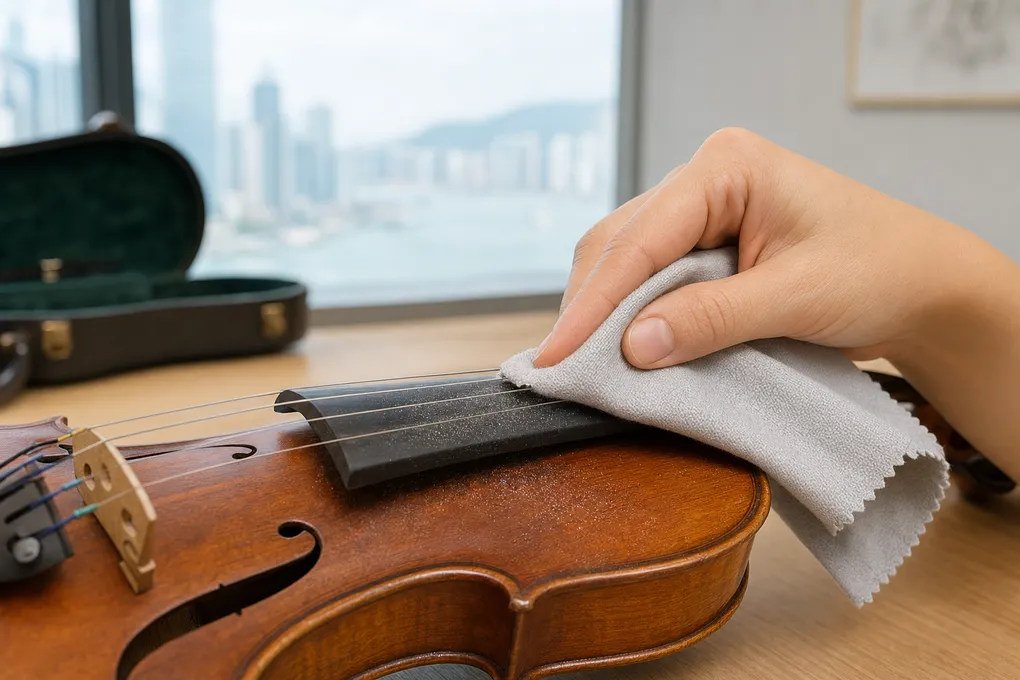
Rosin dust is normal. A violin or viola bow needs rosin to grip the string. But when rosin builds up too heavily, the sound can become rough, dusty, or unclear. The strings may feel dirty under the fingers, and the instrument may look neglected around the bridge.
Cleaning rosin safely is simple, but it is important not to treat the violin like ordinary furniture.
Use A Dry Cloth First
After every practice session, wipe the strings gently with a clean dry cloth. Microfiber works well. Move along the length of the string where the bow plays, and remove visible dust before closing the case.
Use light pressure. The aim is to remove loose rosin, not scrape the string. If the cloth becomes very dirty, replace or wash it.
Keep One Cloth For Strings
It is useful to keep one cloth for strings and another softer cloth for the instrument body. The string cloth collects rosin and metal residue. Rubbing that same cloth over varnish can be unkind to the instrument.
For young students, the simplest routine is: loosen bow, wipe strings, quick wipe near the fingerboard and chin rest area if needed, close case.
Avoid Wet Wipes And Household Cleaners
Do not use wet wipes, alcohol, perfume, essential oils, glass cleaner, furniture polish, or general cleaning spray on the violin. Violin varnish can be delicate, and liquids can cause damage if they touch the body of the instrument.
Some players use alcohol very carefully on strings only, but this is risky for students because one drop on varnish can cause harm. For most families, the safe advice is simple: use a dry cloth, and ask a teacher or luthier if dry wiping is not enough.
What If Rosin Is Stuck On The Strings?
If rosin has hardened into a rough layer, first try repeated gentle dry wiping after each practice. Do not use a knife, coin, nail file, or abrasive pad.
If the buildup will not come off, ask a teacher or luthier to look at it. The strings may be old, the student may be over-rosining, or the rosin may be too sticky for the climate.
This is common in Hong Kong because humid weather can make rosin feel heavier, especially if the student applies it every day without checking the sound first.
Clean The Instrument Body Carefully
Rosin dust often lands on the top of the violin between the bridge and fingerboard. Wipe it gently with a clean dry cloth after playing. Do not rub hard. If the dust has become stuck to the varnish, ask a luthier rather than trying stronger products at home.
Prevention is much easier than deep cleaning. A few seconds after each practice protects the sound and the varnish.
Cleaning Helps You Listen
Clean strings usually respond more clearly. If the sound immediately improves after wiping, the problem may have been rosin buildup rather than technique.
If the sound remains scratchy, weak, or dull after cleaning, check rosin amount, bow hair, strings, and setup. The broader troubleshooting guide why does my violin sound bad in Hong Kong can help separate those causes.
Instrument care should not make students nervous. It should make practice calmer. A dry cloth, a consistent routine, and a little restraint solve more problems than dramatic cleaning.