Should You Rent or Buy a Viola in Hong Kong?
Should you rent or buy a viola in Hong Kong? Advice for students, parents and adult beginners on size, budget, setup and value.
For many families in Hong Kong, the first viola decision is not really about music at all. It is about commitment. Should we rent first and see how lessons go? Should we buy an instrument so the student can settle properly? Is a cheaper viola acceptable at the beginning, or will it make learning harder?
These are practical questions, but they are also musical ones. A viola is not just an item to own. It is the object through which a student learns posture, sound, listening, rhythm, and confidence. If the instrument is badly set up, the student may think the problem is their own playing. If the viola is the wrong size, practice can become tense before real musical work has even begun.
So the better question is not simply “rent or buy?” It is: what will help this student begin with the least unnecessary friction?
If the student has not yet settled on the instrument itself, it may help to read why learn viola in Hong Kong and viola vs violin first. If size is the main uncertainty, start with what size viola is right for your child or choosing a viola size for adults.
Renting makes sense when the future is still unclear
Renting is often the calmest first step for a young beginner. Children grow, attention changes, school schedules shift, and the first few months of lessons reveal a great deal. A child may discover that they love the darker sound of the viola, or they may find that the physical feeling of a string instrument is not what they expected. Renting gives the family time to learn this without turning the first decision into a permanent purchase.
The other strong reason to rent is size. Viola sizing is less standard than violin sizing, especially because viola body lengths vary more widely. A child may need a smaller instrument at first, then move up as the arm, hand, shoulder, and general posture develop. Buying each transitional size can become expensive, and it can also encourage a family to keep a child on the wrong size for too long simply because the instrument has already been paid for.
For beginners, a good rental instrument should still be properly set up. The bridge, strings, pegs, fine tuners, bow, shoulder rest, and case all matter. A rental that is difficult to tune, uncomfortable to hold, or unpleasant in sound is not a bargain if it makes the student practise less.
Before renting, ask clear questions:
- What is included in the rental: viola, bow, case, shoulder rest, rosin, and basic maintenance?
- Is there a minimum rental period or deposit?
- Who pays for broken strings, bow hair problems, bridge movement, or accidental damage?
- Can the student exchange size when needed?
- Is any part of the rental fee credited toward a later purchase?
The answers matter more than the headline monthly price. A slightly more expensive rental with reliable maintenance and size exchange may be better value than a cheaper instrument that leaves the family alone whenever something goes wrong.
Buying makes sense when the student is ready to commit
Buying becomes more attractive when the student has settled into regular practice, has a suitable size, and is likely to continue for at least the next stage of learning. Ownership gives consistency. The student learns one instrument’s response, one bow’s balance, and one familiar sound. That familiarity can help technique develop more steadily.
For adult beginners, buying may make sense earlier than it does for children because body size is stable. An adult does not need to move through fractional instruments. The main question is whether the viola is comfortable and realistic for the player’s body. A well-chosen adult beginner viola can last for several years, especially if the setup is good and the instrument is not chosen at the very bottom of the market.
Buying can also be sensible for students who are preparing exams, school auditions, ensemble playing, or more serious repertoire. At that point, the instrument needs to respond more reliably. If the viola cannot produce a clean tone, hold tuning, or support dynamic contrast, the student may spend too much energy fighting the instrument instead of learning music.
Still, buying should not be rushed. A purchased viola should be tried in person whenever possible, ideally with help from a teacher or experienced player. Two violas at the same price can feel very different. One may sound clear but thin; another may feel warm but slow to respond. A beginner may not yet know how to judge this alone.
The cheapest purchase is often not the cheapest path
It is understandable to look for a low-cost instrument at the beginning. Nobody wants to waste money before knowing whether lessons will continue. But very cheap violas can create hidden costs.
Poor pegs make tuning frustrating. A badly cut bridge can affect intonation and tone. Weak strings can make the sound dull. A heavy or unbalanced bow can encourage tension. A case that does not protect well can become a problem in Hong Kong’s crowded transport and humid weather. These issues do not always look dramatic in a shop, but they appear quickly in weekly practice.
This does not mean every beginner needs an expensive viola. It means the beginner needs a functional one. A modest instrument with a good setup is usually far better than a flashier-looking instrument with poor adjustment. For many students, money is better spent on setup, suitable strings, a reliable bow, and a comfortable shoulder rest than on decorative features.
Hong Kong’s climate also matters. Moving between outdoor humidity and strong indoor air conditioning can affect the instrument. Whether renting or buying, families should learn basic care: loosen the bow after playing, wipe rosin from the strings and body, keep the instrument in the case when not in use, and ask for help if the bridge begins to lean. I discuss this wider issue in string instrument maintenance in Hong Kong humidity.
Second-hand violas can be good, but only with checking
A second-hand viola can be a very sensible purchase, especially if it comes from a teacher, luthier, or trusted player. It may offer better value than a new instrument at the same price. But it should still be checked carefully.
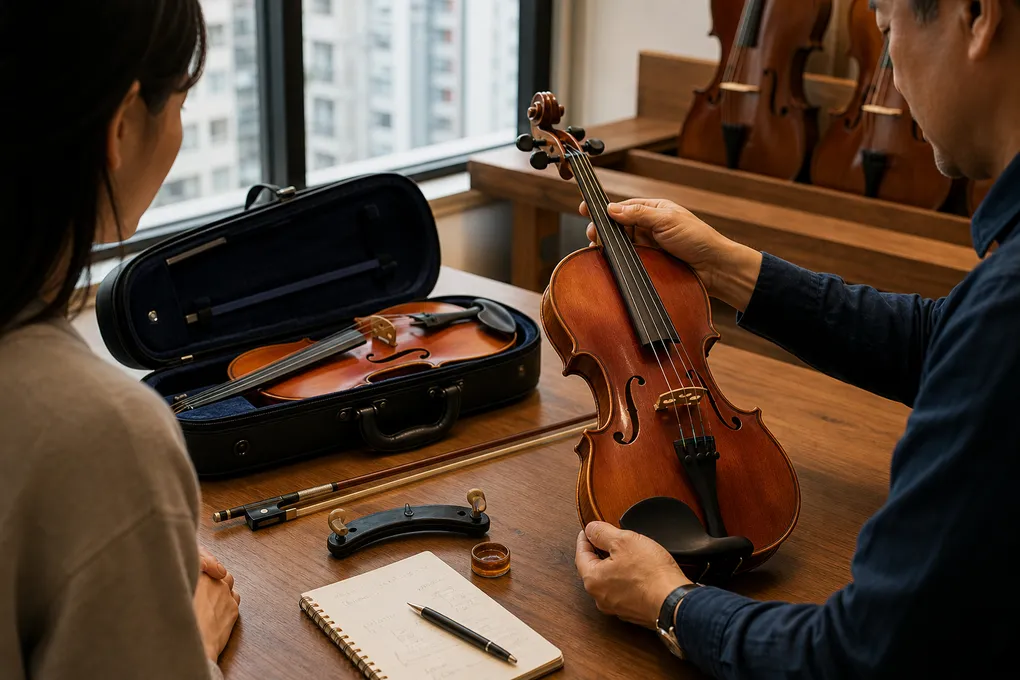
Look for cracks, open seams, warped bridges, worn pegs, fingerboard problems, weak bow hair, and a case that actually protects the instrument. Also check whether the instrument has been sitting unused for a long time. A viola that looks fine may still need new strings, bridge adjustment, bow rehairing, or other work before it is pleasant to play.
The price of a second-hand instrument should be understood together with the cost of making it playable. A lower purchase price is not automatically cheaper if the first month requires repairs and replacement accessories.
A simple way to decide
Rent if the student is very young, the size may change soon, the family is unsure about continuing, or the teacher has not yet helped choose a suitable instrument.
Buy if the student is practising regularly, the size is stable, the instrument will be used for exams or ensemble playing, or a trusted teacher or luthier has found something genuinely suitable.
Consider second-hand if the instrument can be inspected, the setup is sound, and the total cost after maintenance still makes sense.
Avoid buying blindly online unless you are comfortable arranging setup afterwards. String instruments are not only specifications on a page. The bridge, strings, bow, response, comfort, and sound all need to work together in the hands of the actual player.
Let the instrument support the habit
The best beginner viola is not necessarily the one the student will keep forever. It is the one that helps practice become possible, clear, and musically satisfying now.
Renting is not a lack of seriousness. It can be a wise way to begin while the student’s body, routine, and interest are still forming. Buying is not automatically excessive. It can be the right step when the student is ready for consistency and deeper work.
Whichever path you choose, judge the viola by what happens after it comes home. Can the student tune with help, hold it comfortably, make a sound that invites them back, and practise without fighting the instrument? If yes, the decision is doing its job.
The point is not to own a viola as quickly as possible. The point is to place a playable, well-fitted instrument in the student’s hands, so the first months of learning are shaped by listening and discovery rather than avoidable frustration.