Choosing a Music University or Conservatory in Hong Kong
How to choose a music university or conservatory in Hong Kong, comparing training style, teachers, facilities and resources.
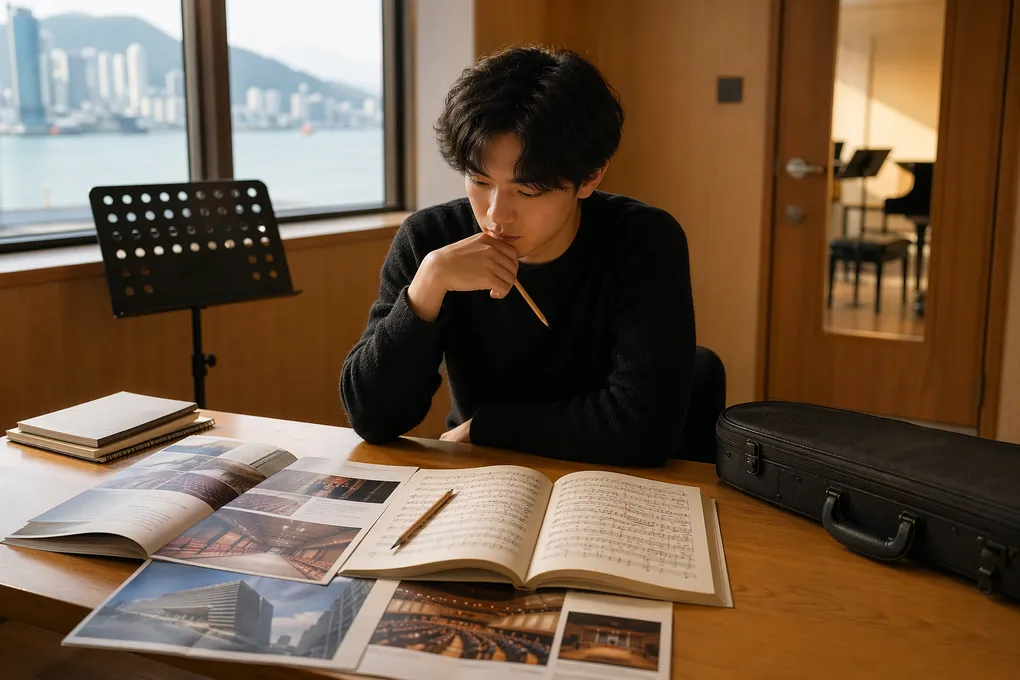
Choosing where to study music in Hong Kong is not a question of finding the single “best” school. That question is too blunt for something as personal as musical training. A student preparing for conservatory-level performance, a composer who wants technology and production, a future music teacher, and a student who loves musicology but still wants to play seriously may all need different rooms, different teachers, and different kinds of pressure.
The better question is: which school will make the student’s musical life more honest, more disciplined, and more possible?
Hong Kong has a small but surprisingly varied landscape for tertiary music study. The Hong Kong Academy for Performing Arts is the closest thing to a conservatoire environment. CUHK Music and HKU Music place music inside a broader university and humanities context. HKBU Academy of Music has a strong identity around performance, composition, music education, technology, and creative industries. EdUHK matters especially for students whose musical future is tied to teaching, schools, and arts education.
None of these choices is automatically more serious than the others. They are serious in different ways.
If this decision is connected to an upcoming performance audition, read this alongside the music school and conservatory audition checklist. For violists, audition preparation also depends on repertoire choice, scale fluency, and slow practice habits, which I discuss in ABRSM viola repertoire by grade, effective viola scales for advanced practice, and practising slowly without losing the musical line.
A quick comparison
| School | Strongest fit | Infrastructure and resources | Teaching profile |
|---|---|---|---|
| HKAPA | Conservatoire-style performance, composition, conducting, Chinese music, and intensive professional training | Purpose-built performance venues, including the William Au Concert Hall and Recital Hall; composition studios, music technology labs, professional instruments, and frequent productions | Specialist faculty, artist teachers, visiting artists, masterclasses, chamber music, orchestral work, opera productions, and professional performance culture |
| CUHK | Students who want performance, composition, musicology, theory, Chinese and Western traditions, and a campus-based intellectual life | Lee Hysan Concert Hall, Chung Chi Chapel, practice rooms, electronic music studio, instrument collections, ensembles, library and archival resources | Full-time scholars and composers, plus applied teaching by leading Hong Kong professional musicians |
| HKU | Students drawn to musicology, composition, cultural thinking, writing, research, and performance within a broad arts education | Stand-alone Music Library, electronic music studio, diverse instrument collections, MUSE concerts, chamber and ensemble opportunities | Research-led faculty, instrumental and vocal teachers selected for performance study, visiting artists, and cross-disciplinary university culture |
| HKBU | Students interested in performance, composition, music education, music technology, scoring, songwriting, production, and creative industries | Jockey Club Campus of Creativity, Electro-Acoustic Music Centre, Laboratory for Immersive Arts and Technology, recording and immersive arts facilities | Scholars, composers, performers, artist teachers, visiting artists, and a clear pathway into music-related professional fields |
| EdUHK | Students who want to become music teachers or work in arts education and community-based creative practice | Music classrooms, practice rooms, music studios, learning resource facilities, digital arts and performance spaces | Music education, pedagogy, field experience, internships, creative arts, digital arts, and teacher preparation |
HKAPA: when performance needs to be the centre
HKAPA is the most natural choice for a student who wants the shape of daily life to be organised around performance. Its School of Music includes departments in strings, keyboard, vocal studies, woodwind, brass and percussion, Chinese music, composition and electronic music, conducting, and academic studies. For a serious instrumentalist, singer, conductor, or composer, that matters because the school is built around the idea that practical training is not an extra activity. It is the main environment.
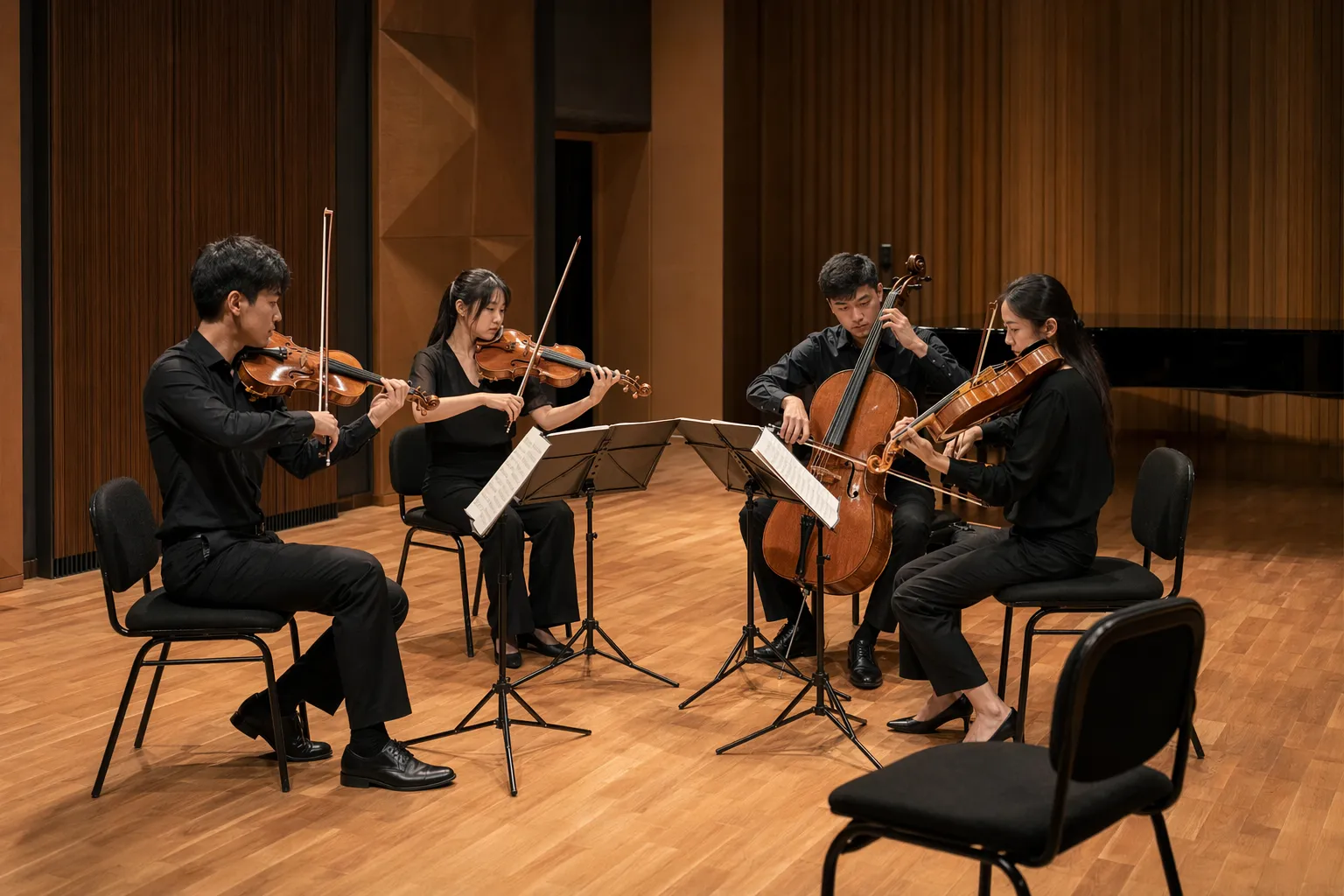
The infrastructure supports that identity. The William Au Concert Hall is a purpose-built orchestral concert space, and the Academy also has a recital hall and other performance venues. The School of Music describes facilities that include composition studios, music technology labs, Steinway grand pianos, valuable string instruments, Chinese instruments, Baroque instruments, percussion instruments, and a Rieger pipe organ. These details are not decorative. A performance student needs regular contact with real halls, real backstage routines, and real production pressure.
The teacher question is also central. HKAPA’s Strings Department, for example, lists viola as a major study area and supports major lessons with orchestral technique, concert practice, chamber music, pedagogy, masterclasses, recitals, orchestral concerts, opera productions, outreach, and tours. The Academy also notes that more than 100 visiting artists come to the School of Music each year for masterclasses, tuition, or concerts.
It is valid to choose HKAPA when the student’s main question is: can I live inside a professional training environment every week? For a violist, violinist, cellist, pianist, singer, composer, conductor, or Chinese instrumentalist who wants intensive practical formation, HKAPA gives the clearest answer. The trade-off is that the environment may feel narrow if the student wants a broader academic degree with many non-music electives. But for someone who wants music to be the centre of gravity, that narrowness can be a virtue.
CUHK: when breadth and depth need to meet
CUHK Music has a different kind of authority. It is Hong Kong’s first degree-granting music department, founded in 1965, and its undergraduate programme places practical music making beside academic study. That combination is important for students who do not want to choose too early between being a performer, composer, teacher, scholar, or culturally curious musician.
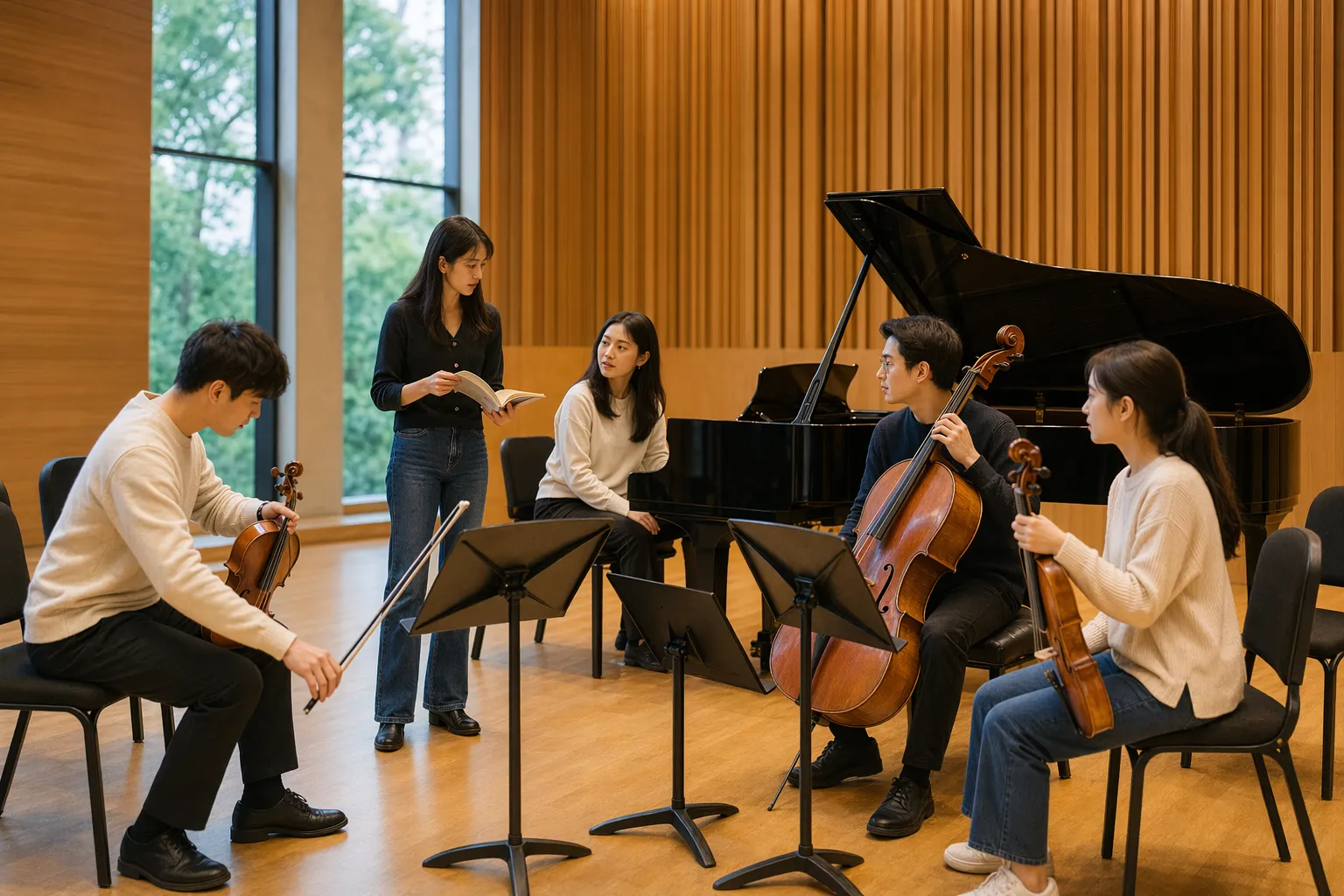
Its infrastructure has a strong campus identity. The Lee Hysan Concert Hall is one of the department’s main assets, recognised for its acoustics and used for solo recitals, chamber music, choir, and orchestra. The department also uses Chung Chi Chapel and has teaching rooms, a rehearsal room, an early music room, a gamelan room, an electronic music studio, and 11 practice rooms, most with grand pianos. Its instrument collections are unusually broad, including Western, Chinese, world, and early music instruments.
CUHK’s teaching profile suits students who think musically and intellectually at the same time. The department has full-time faculty in composition, theory, musicology, ethnomusicology, conducting, and performance, while applied music training is offered by many of Hong Kong’s leading professional musicians, including players connected with major orchestras. The ensemble culture is also substantial: CUHK says more than 30 ensembles are formed each year, with weekly rehearsals, coaching, masterclasses, and public performances.
It is valid to choose CUHK when a student wants a serious musical education without reducing music to only one lane. A strong performer who also wants analysis, history, composition, Chinese music, early music, conducting, or research may find CUHK especially fertile. It can also suit students who want the feel of a residential university: space, campus life, and the chance to grow around people studying many other disciplines. The student must, however, be self-directed. A broad environment rewards curiosity, but it also asks the student to know what to reach for.
HKU: when music belongs to a wider intellectual life
HKU Music is particularly compelling for students who want to think, write, research, compose, listen, and perform inside a large arts university. Its department describes itself as a centre of research excellence and gives students a curriculum covering Western music, Chinese music, theory, history, ethnomusicology, performance, and composition. That breadth is not a consolation prize for students who are not “serious performers”. It is a different model of seriousness.
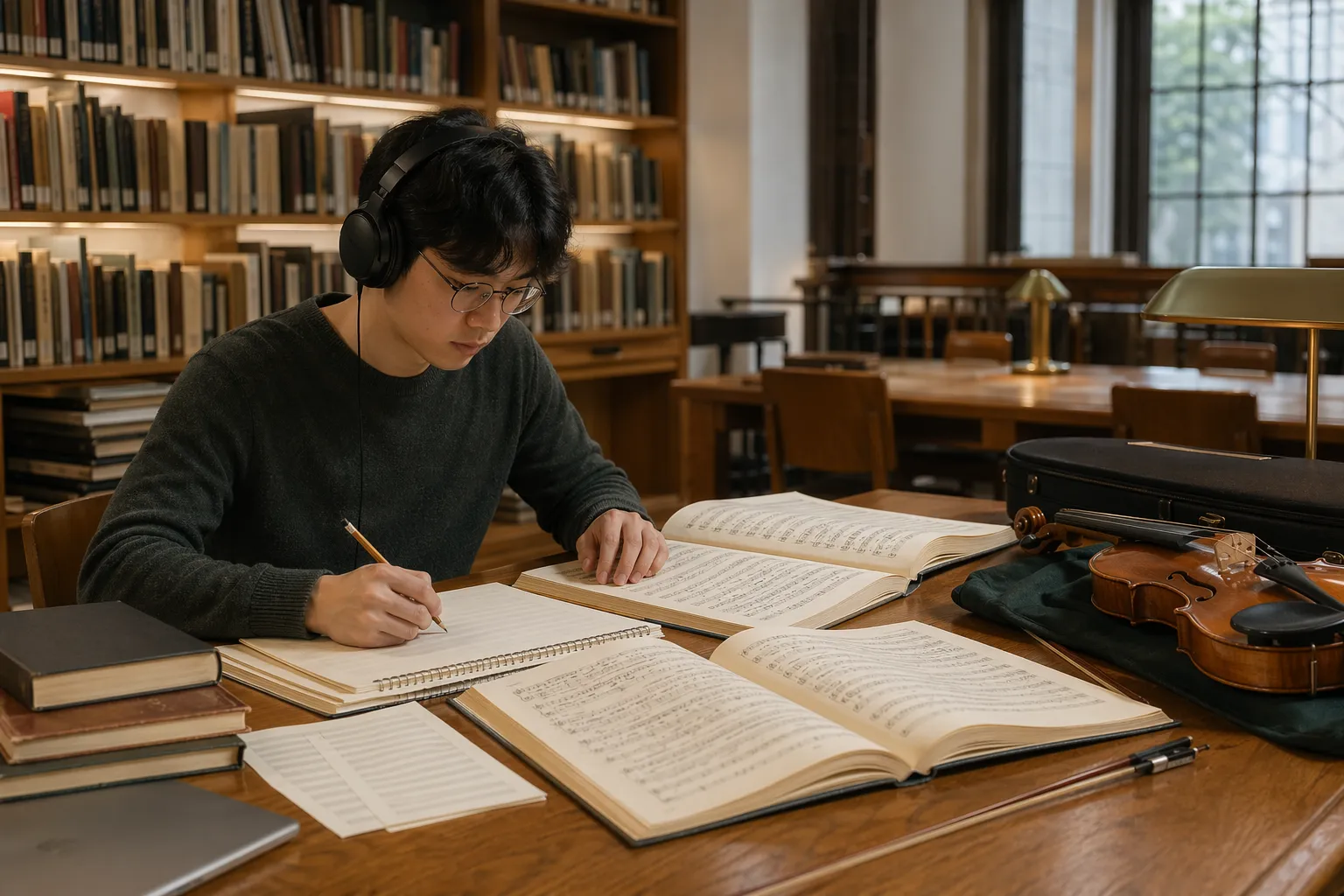
The infrastructure is especially strong for scholarly and cross-cultural work. HKU’s Music Library is described by the department as the only stand-alone music library in Hong Kong, with books, journals, scores, recordings, electronic resources, and special collections. The department also has an electronic music studio with recording facilities, as well as an instrument collection that includes early instruments, gamelan, Ghanaian, Brazilian, Cuban, Indian, Chinese, and Western percussion resources.
Performance at HKU exists, but it sits within a wider frame. Music majors taking performance studies can receive instrumental tuition selected to meet individual needs, and the department lists performance courses, chamber music, conducting, instrument workshops, HKU Chamber Singers, gamelan, and percussion ensemble. HKU MUSE and visiting artists also bring high-level listening and performance into the campus culture.
It is valid to choose HKU when the student wants music to connect with thought, language, culture, history, and other disciplines. A student who enjoys writing about music, analysing recordings, asking why music matters socially, composing in relation to ideas, or keeping performance alive while studying widely may thrive there. It may be less suitable for someone who wants the whole week to revolve around principal-study performance in a conservatoire way. But for a reflective musician, HKU can make the mind sharper without asking the musical ear to go quiet.
HKBU: when music meets technology and industry
HKBU Academy of Music deserves attention because its profile is not simply “another university music department”. Its undergraduate route includes the BA in Music and BMus in Creative Industries under the JS2060 admissions route. The BA includes concentrations such as composition, directed studies, music education, and performance. The BMus in Creative Industries offers pathways such as scoring for film, television and video games, and popular music performance and songwriting.
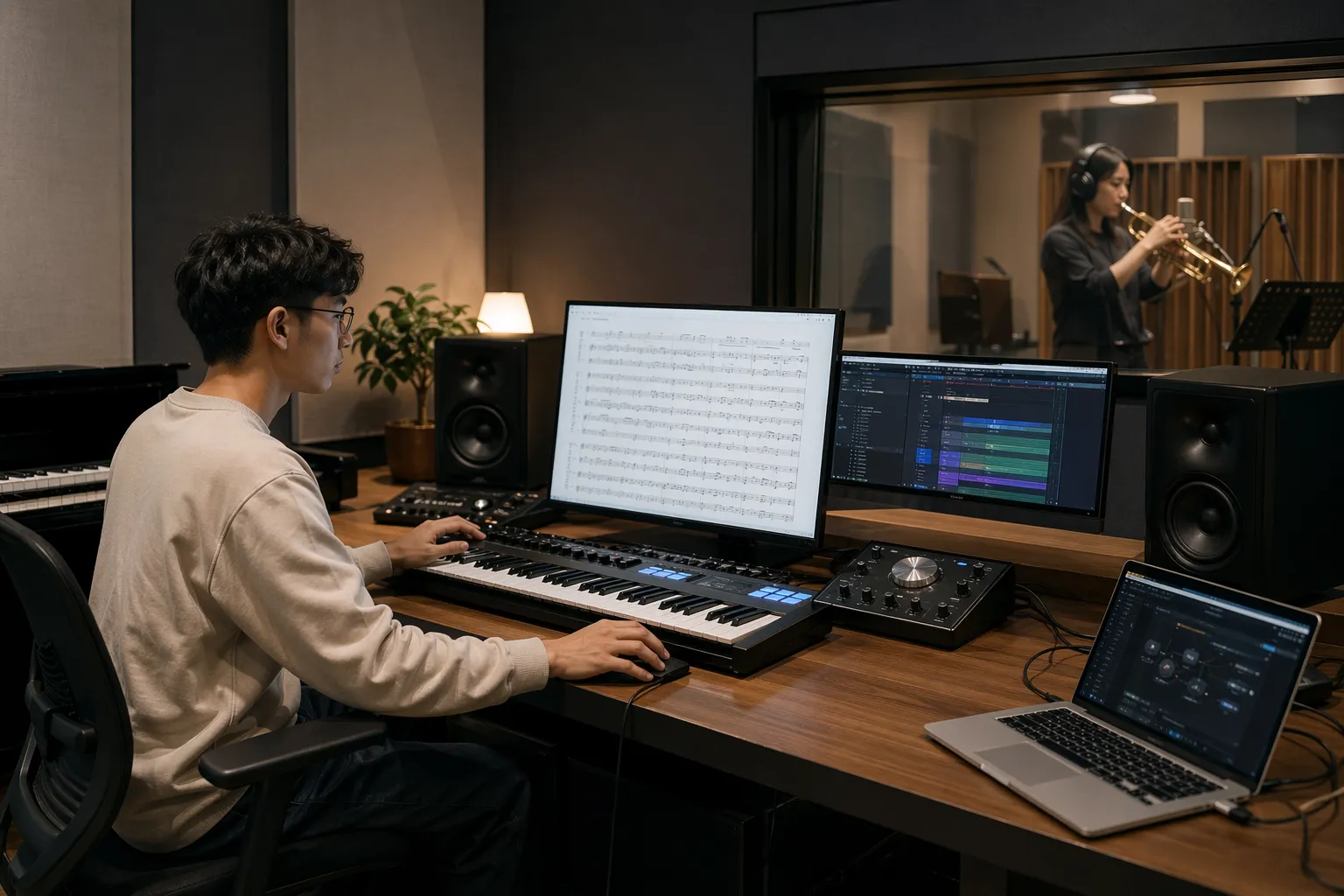
This matters for students whose musical life already includes recording, production, composition for media, technology, or contemporary commercial work. HKBU’s official admissions material emphasises electronic instruments, recording technology, the Electro-Acoustic Music Centre, and the Laboratory for Immersive Arts and Technology. The newer Jockey Club Campus of Creativity, opened in 2025, also places the Academy of Music near facilities for music, film, and other creative disciplines, including the Jockey Club White Box Experimental Space.
The teaching profile is correspondingly mixed: composers, performers, music scholars, music education specialists, artist teachers, and visiting artists. Students can still pursue solo, chamber, and ensemble performance, but the surrounding identity is more obviously connected to the modern music profession: creative industries, media, production, technology, entrepreneurship, and applied musicianship.
It is valid to choose HKBU when the student’s musical ambition does not fit neatly into the old split between performer and scholar. A composer interested in scoring, a singer-songwriter who wants craft and production skills, a performer who also wants recording literacy, or a student drawn to music education and creative practice may find HKBU’s structure persuasive. The caution is that students should check the exact concentration, teacher, and audition requirements carefully. “Creative industries” sounds broad, and broadness is only useful when the student knows which skills they are trying to build.
EdUHK: when teaching is the calling, not the backup plan
EdUHK should not be treated as the place students choose only if they are not aiming at performance. That would misunderstand both music teaching and Hong Kong’s educational needs. A good school music teacher needs musicianship, patience, classroom imagination, knowledge of pedagogy, and the ability to help young people enter music without fear. That is serious work.
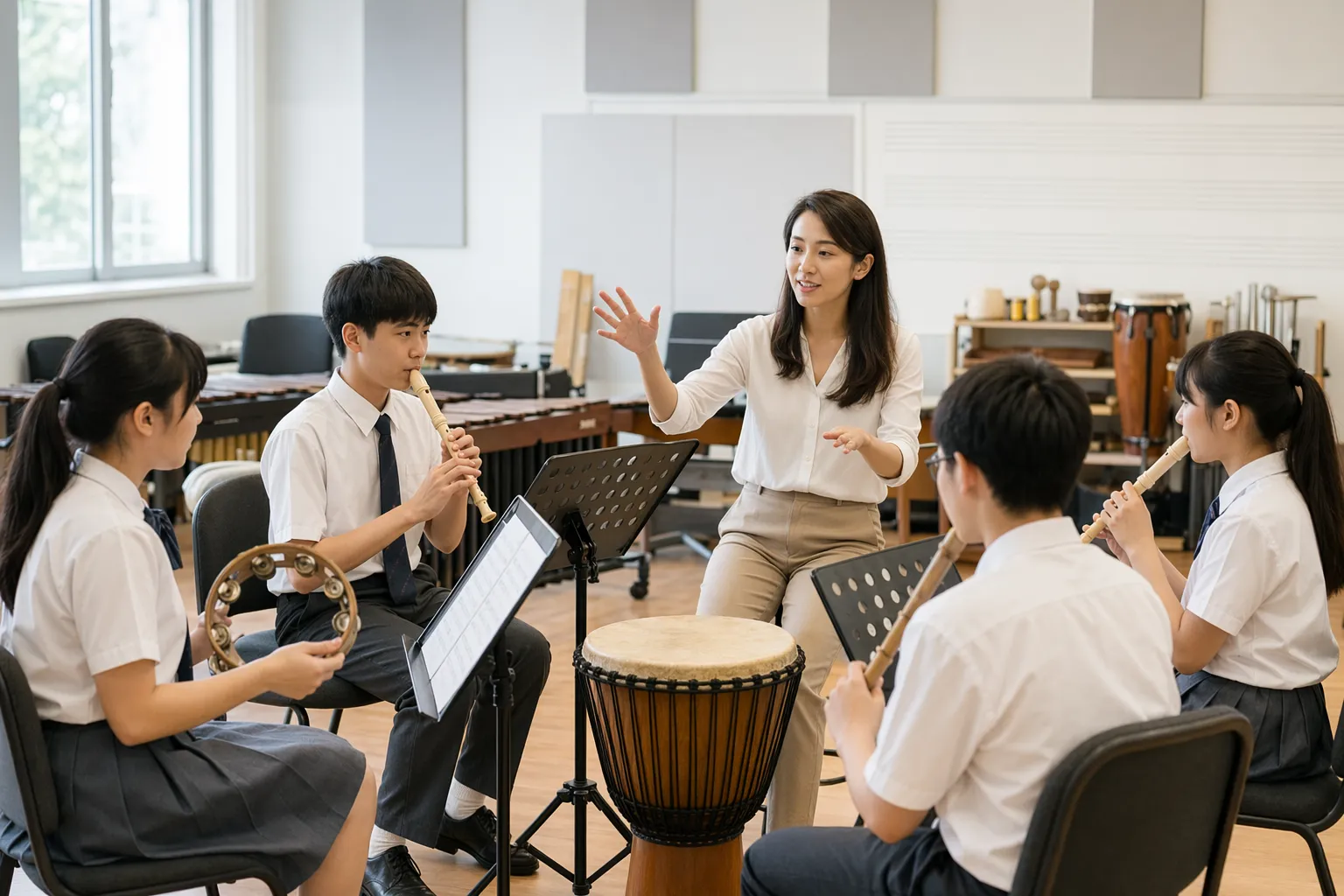
EdUHK’s music-related undergraduate offerings include double-degree and arts programmes that connect music with creative arts, culture, digital arts, field experience, internship, and teacher preparation. The BA in Creative and Digital Arts and BEd in Music, for example, is designed to prepare qualified primary or secondary music teachers while also engaging with traditional and digital music, arts administration, cultural studies, and creative practice.
The infrastructure is practical for that mission: music classrooms, Wenger practice rooms, music studios, a music learning resource centre, digital arts facilities, multi-sensory arts lab, and performance venues such as CANOPY LIVE. The resources point toward a musician who will work with learners, schools, communities, and creative projects, not only toward a musician who practises alone for auditions.
It is valid to choose EdUHK when a student can say, without embarrassment, “I want to teach.” In fact, that clarity can be a strength. A student who wants Qualified Teacher Status, school experience, music pedagogy, arts education, and a career helping others learn may be better served by EdUHK than by a more performance-centred route. The important thing is not to choose teaching because it sounds safer. Choose it because the student is willing to take responsibility for other people’s musical beginnings.
How to choose honestly
A student should not choose a school only by reputation, ranking, or the name most people recognise. Music training is too intimate for that. The daily relationship with the teacher, the kind of room a student practises in, the peers they hear around them, the performances they attend, and the assumptions the school makes about what a musician is will all shape the student.
For performance-centred training, start with HKAPA. For a balanced university music department with strong ensemble life and broad Chinese, Western, and world music resources, look closely at CUHK. For music inside a highly intellectual arts environment, HKU is compelling. For technology, media, production, composition, performance, and creative industries, HKBU may be the strongest fit. For music education and school teaching, EdUHK deserves serious attention.
Then go one level deeper. Look at the actual teacher for your instrument or area. Read the audition requirements. Attend student concerts. Visit the campus if possible. Ask whether the practice rooms, ensemble schedule, library, studios, and performance opportunities match the work you actually want to do. Most importantly, ask whether the school will help you become more truthful as a musician.
The right school is not always the most prestigious one. It is the one where the student’s discipline, curiosity, and future responsibilities can grow together. When that fit is real, choosing that school is not a compromise. It is the beginning of a clearer musical path.