Viola Case Buying Guide: Size, Materials and Travel
A practical guide to choosing a viola case, comparing wood, foam, fiberglass, carbon fiber, thermoplastic, customized cases, and flight-ready options.
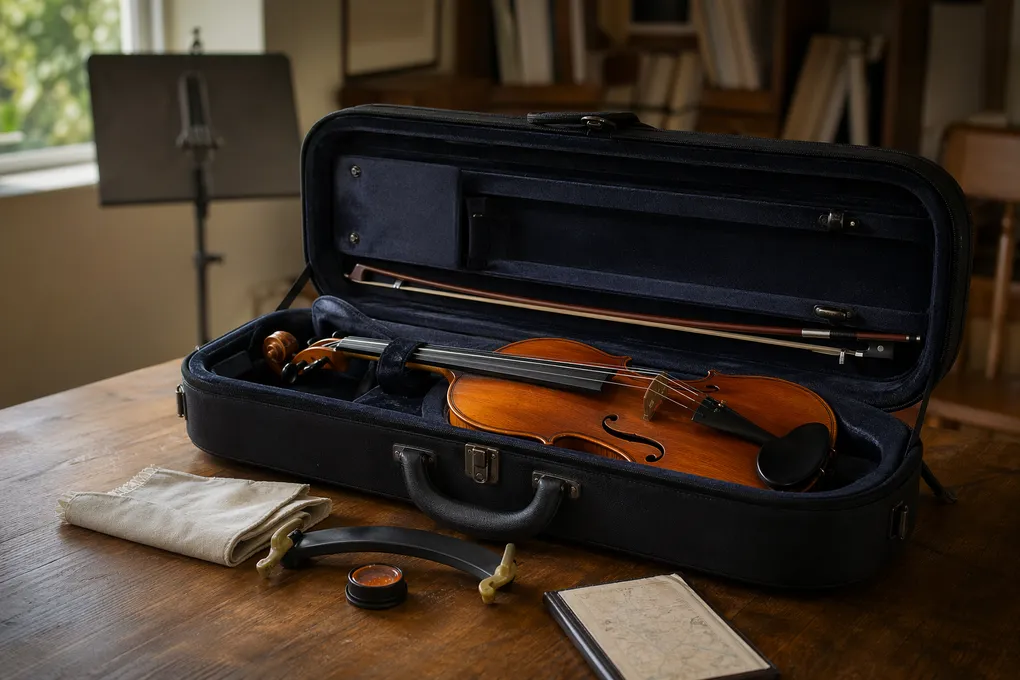
A viola case is easy to underestimate until the day it matters. Most of the time it feels like a bag with a handle. Then there is a sudden rainstorm, a crowded MTR carriage, a rehearsal bag pressing against the bridge area, or an airline gate where nobody quite knows what to do with a musical instrument.
The right case is not simply the strongest, lightest, or most expensive one. It is the case that fits the instrument accurately, protects it from the risks you actually face, and remains comfortable enough that you will use it properly every day. For a violist, that balance is especially important because viola sizes vary so much. A violin case can often assume a standard full size. A viola case cannot.
If the instrument size itself is still uncertain, start there before buying the case. I cover child sizing in what size viola is right for your child and adult sizing in choosing a viola size for adults. A well-chosen case cannot fix a viola that is already too large, too small, or uncomfortable to hold.
Start With Fit Before Brand
Before comparing materials, measure the viola. The case must suit the body length, upper bout, lower bout, rib depth, bridge height, and overall outline. A 16” viola and another 16” viola may not sit the same way inside the same case.
Many modern cases are adjustable across a range, often around 15” to 17”, or roughly 38 to 43 cm body length. That is useful, but it is not a substitute for real fit. The instrument should rest in a suspension system without rattling. The neck should be held securely without pressure on the scroll. The bridge and tailpiece need enough clearance when the lid closes. The bow holders should not let a bow fall onto the instrument.
If possible, place the exact viola in the case before buying. Close the lid gently the first time. Then carry the case, set it down, open it again, and check whether the instrument has shifted. A protective case that allows the viola to move too freely is only protective in theory.
Material Types: Strengths And Trade-Offs
Case material affects weight, insulation, impact resistance, repairability, price, and daily comfort. The names are not always used consistently by retailers, so look at construction details rather than marketing labels alone.
| Case material | Advantages | Disadvantages |
|---|---|---|
| Foam or styrofoam | Very light, inexpensive, easy for young students to carry | Limited impact resistance, weaker hardware, poor choice for expensive instruments or rough travel. |
| Plywood or wood shell | Traditional feel, good insulation, often repairable, common in luxury cases | Heavier than many modern shells, vulnerable to moisture, quality varies widely. |
| Fiberglass or composite shell | Good rigidity, weather resistance, modern protective feel | Can be heavier than expected, may crack under severe impact. |
| Carbon fiber | Excellent strength-to-weight ratio, stiff shell, useful for travel | Expensive, glossy finishes show scratches, still needs a good suspension interior. |
| Thermoplastic or polycarbonate-style shell | Light, clean modern design, strong insulation and break resistance | Can be costly, sometimes less external storage. |
| Hybrid luxury construction | Can combine wood, Kevlar, foam, reinforced hardware, and fitted interiors | Expensive, often special order, not always light. |
The shell is only one part of protection. A good interior suspension system, secure latches or zippers, reliable bow holders, stable backpack straps, weather sealing, and sensible storage matter just as much.
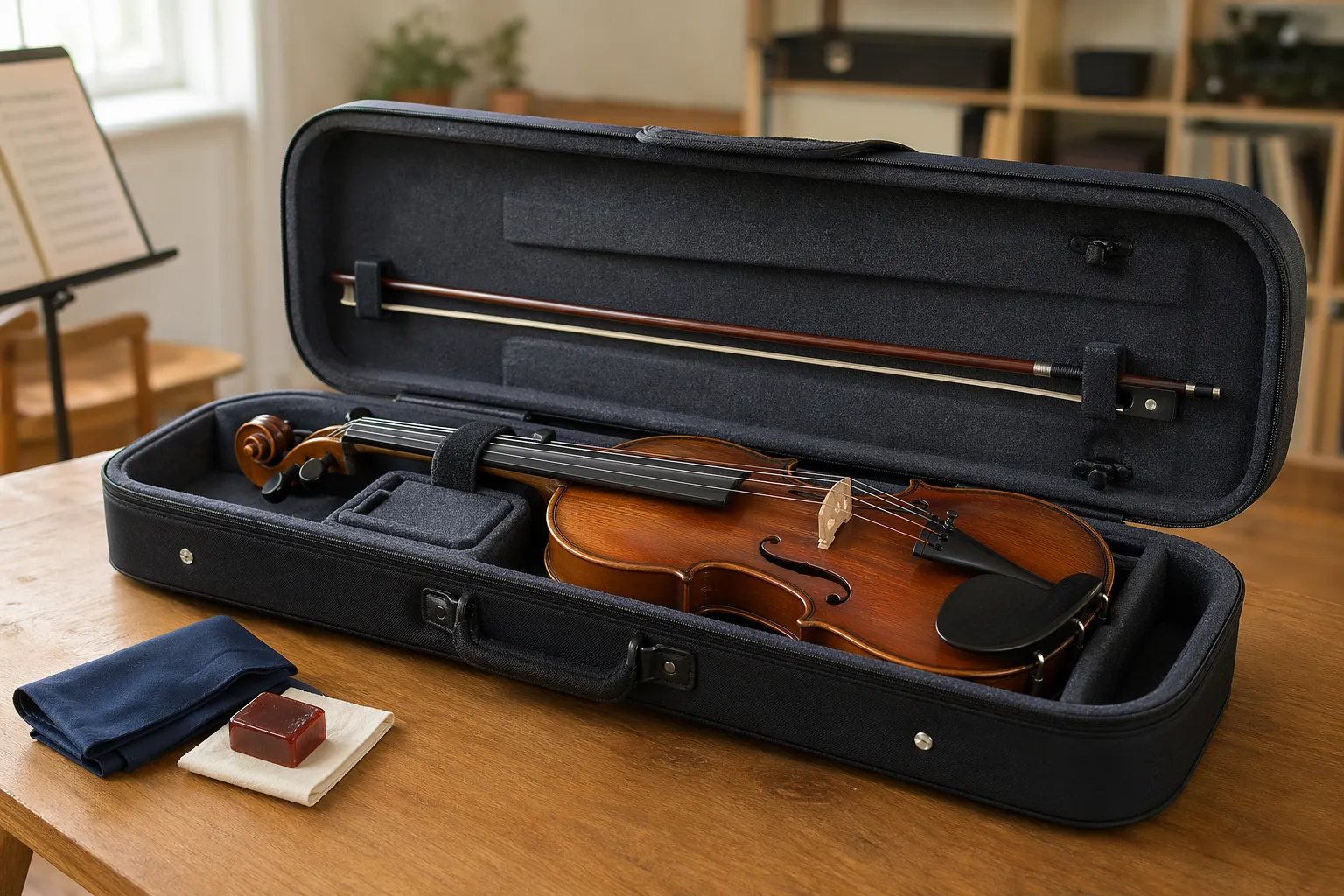
Foam and styrofoam cases are mostly about low weight and low cost. They can be sensible for young beginners carrying modest instruments, but they should not be mistaken for serious travel protection.
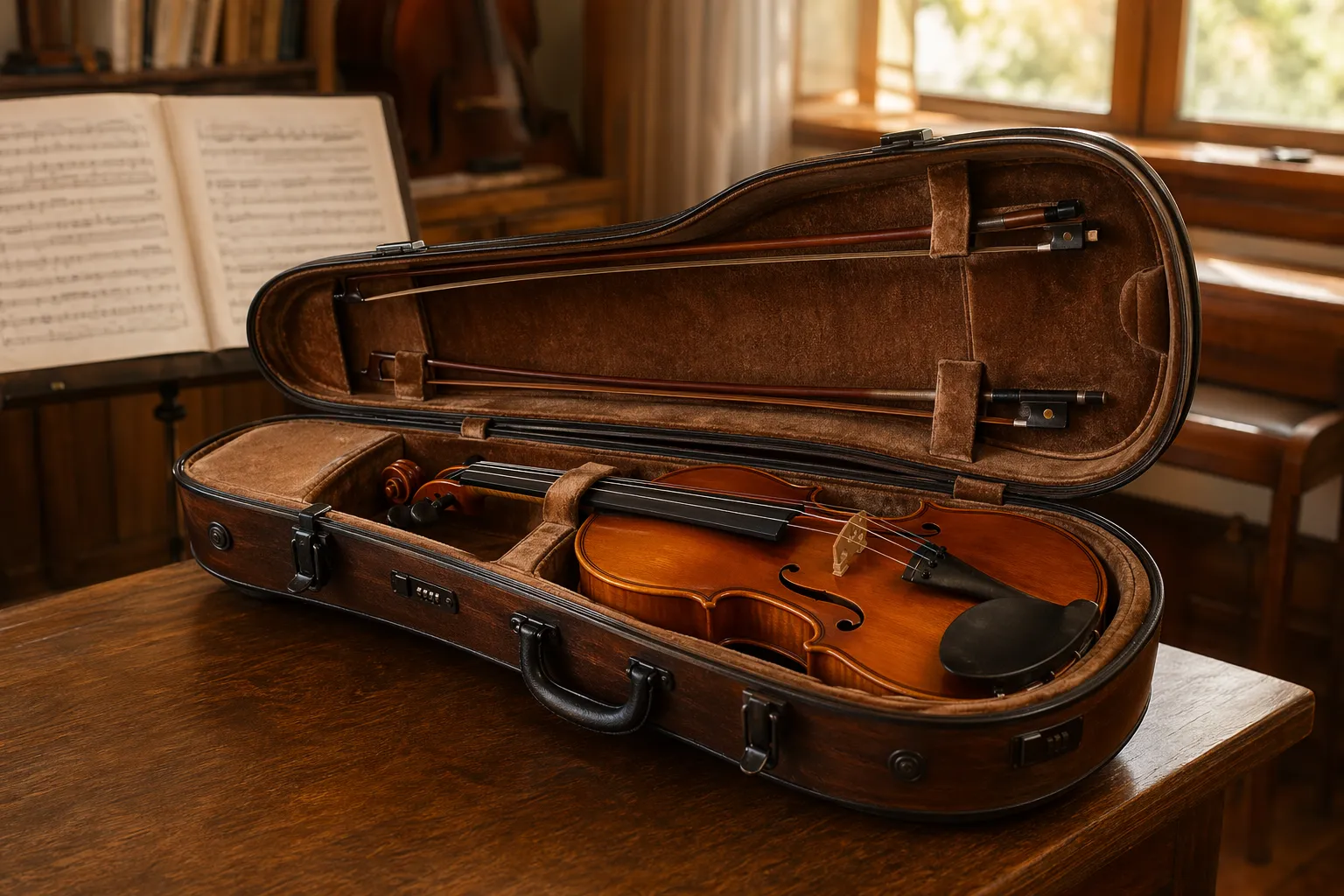
Wood-shell cases often feel more traditional and substantial. Their strength is insulation and repairable construction, though the added weight matters for students who commute often.
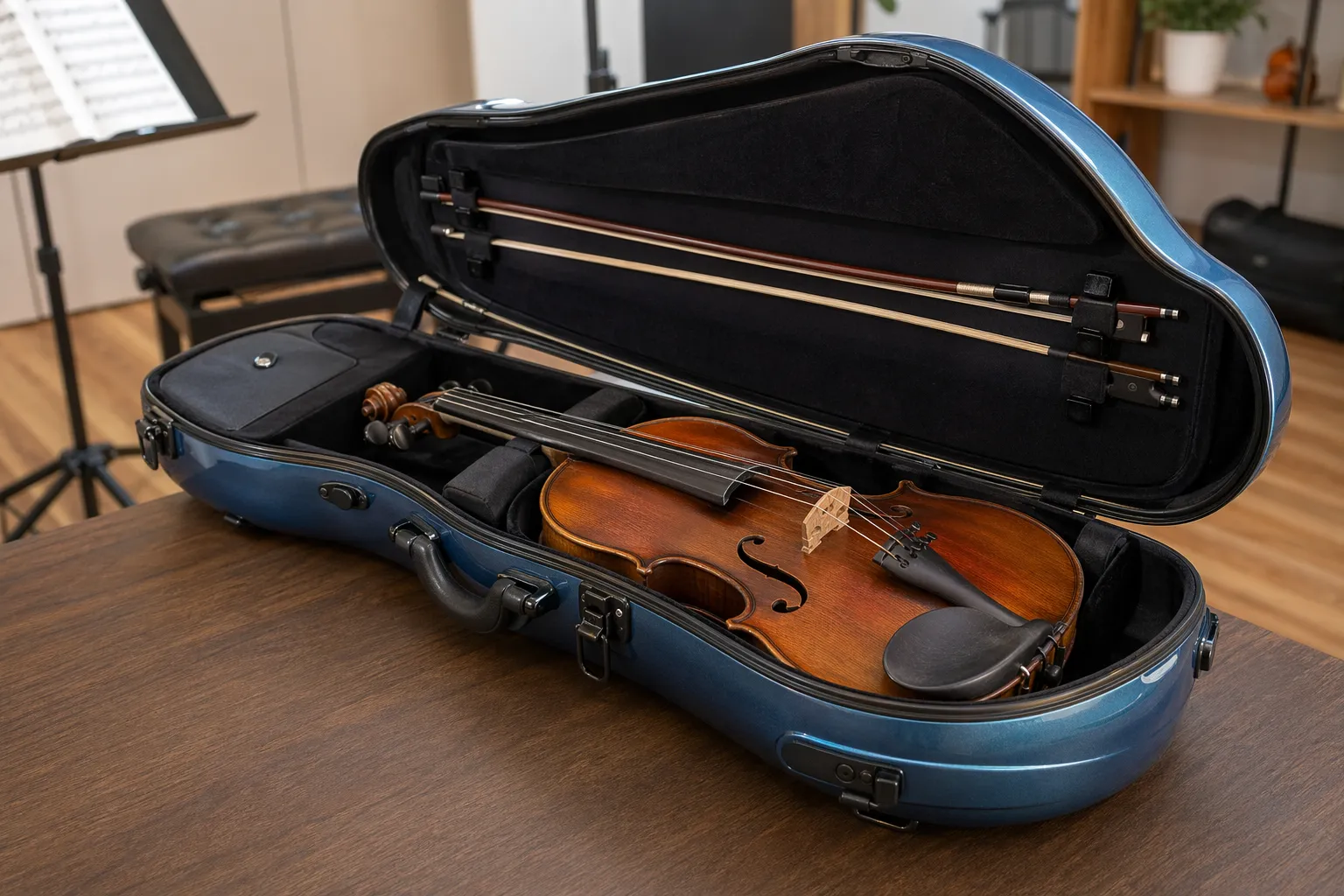
Fiberglass and composite cases offer a useful middle ground: more rigid than simple foam, often weather-resistant, and still less expensive than many premium carbon options.
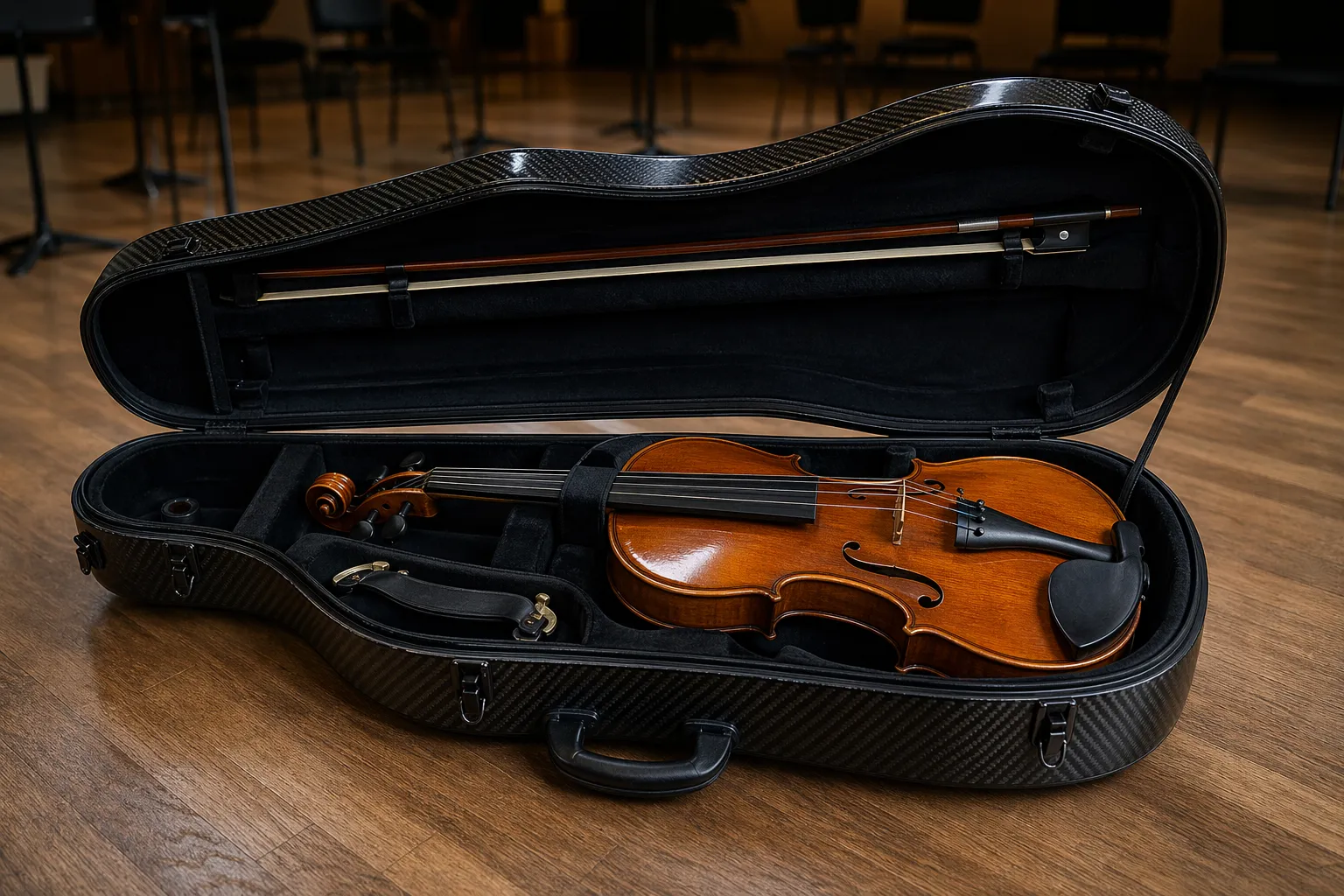
Carbon fiber cases are valued for stiffness and low weight, especially by travelling players. The price is higher, and the interior suspension still matters as much as the shell.
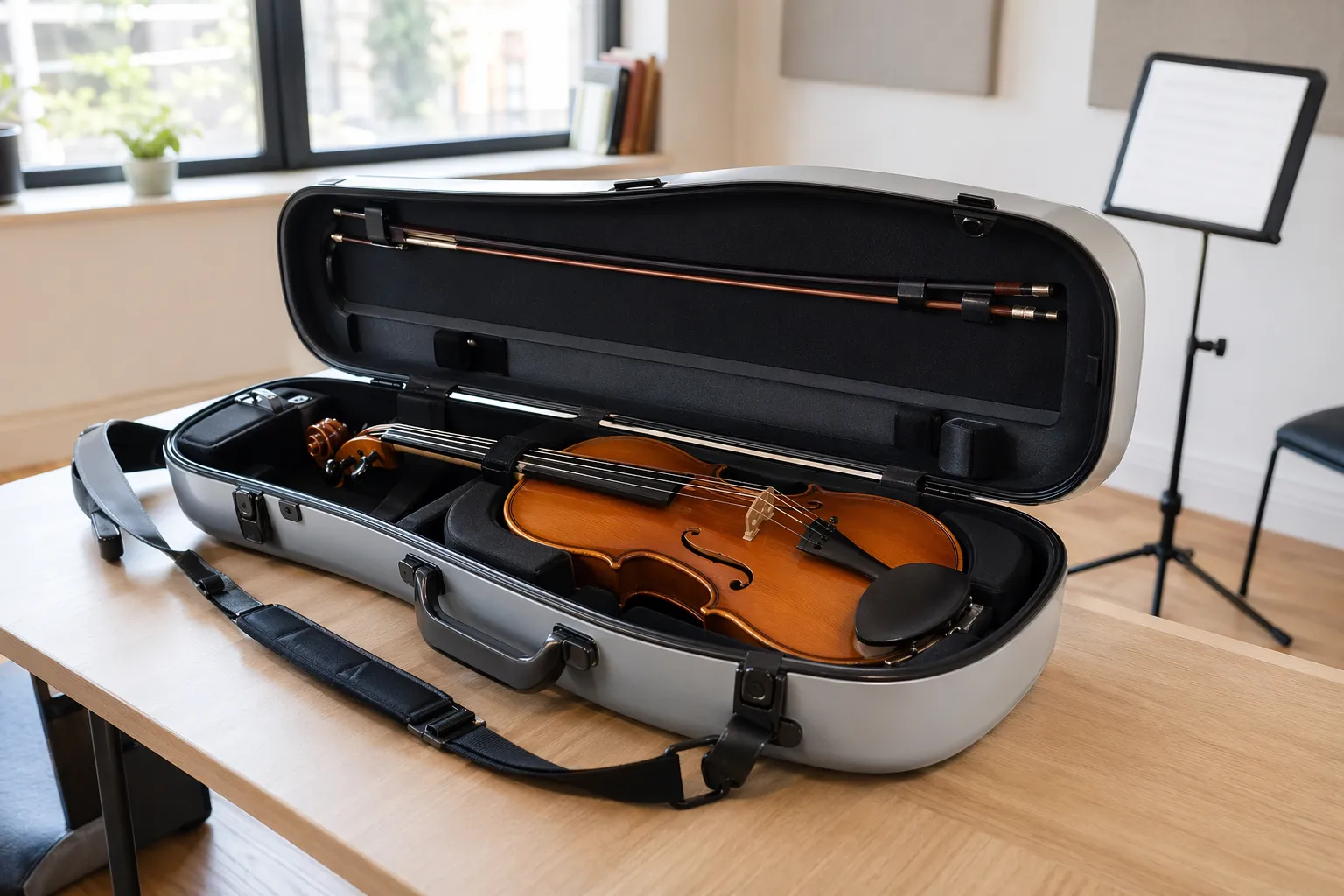
Thermoplastic and polycarbonate-style cases suit players who want a clean hard-shell design for city travel. They can be compact and protective, but storage space should be checked before buying.
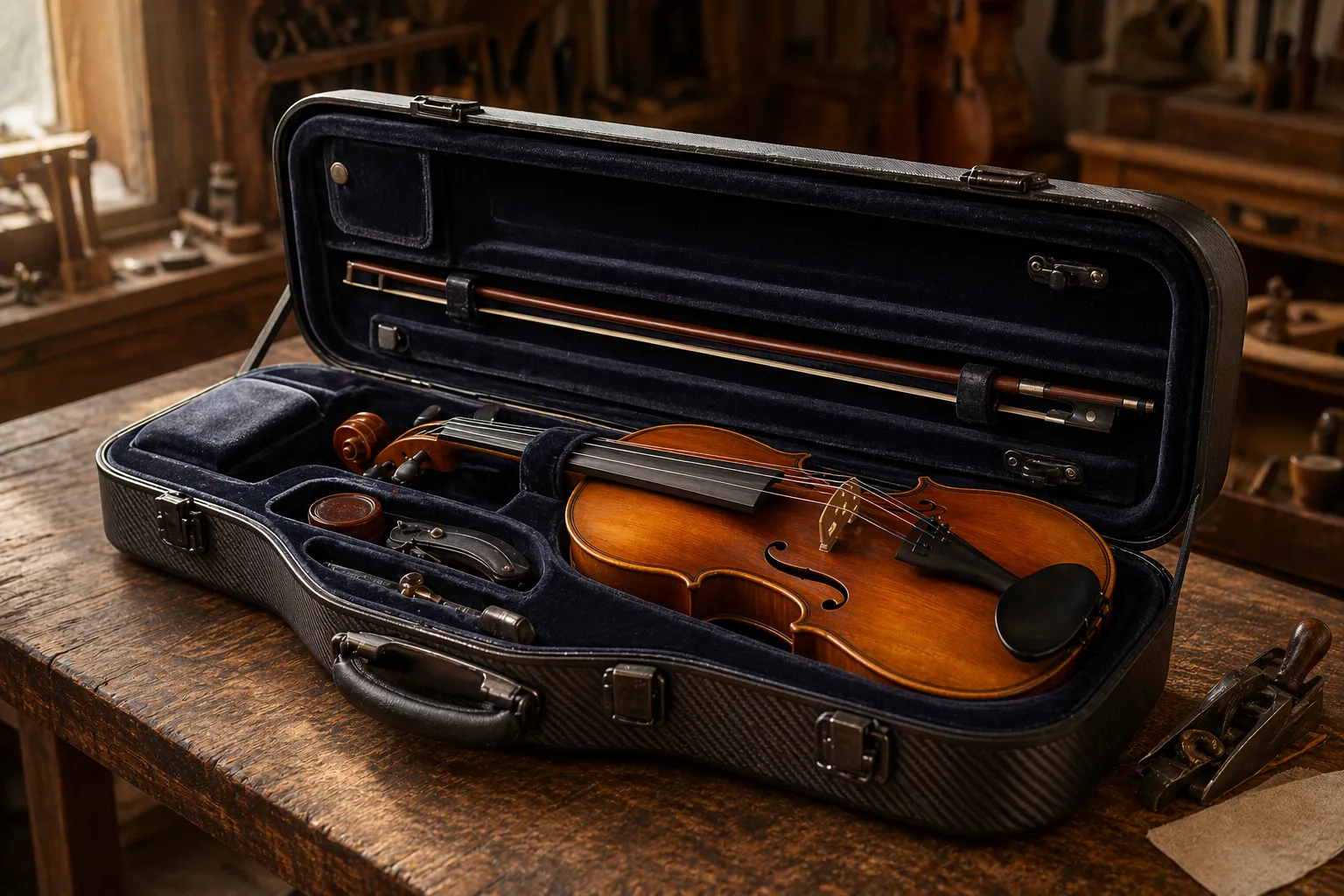
Hybrid luxury cases are for more specific needs: valuable instruments, unusual dimensions, custom interiors, and players who want protection shaped around the actual viola rather than an average size.
Daily Use: Lessons, School, And Rehearsals
For a student or adult learner who travels to lessons every week, weight matters more than people admit. A heavy case may feel reassuring in the shop, then become a burden on stairs, buses, and long walks. Once a case becomes tiring, players begin carrying it carelessly.
Comfort outside the practice room affects comfort inside it. When beginners struggle with heaviness, tension, or unstable setup, the case and instrument size are often part of the same practical picture; I discuss those early warning signs in common beginner viola problems.
For daily use, look for four things: a secure suspension interior, manageable weight, comfortable backpack straps, and enough storage for real life. A music pocket is useful, but a large overloaded pocket can change the balance of the case and stress the hinges if it sits on the lid. A subway handle is valuable in crowded transport because it keeps the case close to the body.
Humidity control also matters, especially in Hong Kong where air conditioning, outdoor humidity, and seasonal changes can make the instrument expand and contract. A case cannot replace careful instrument care, but a well-insulated case gives the viola a calmer environment.
Cases Worth Knowing About
There is no single best viola case, but a few current case families are useful reference points.
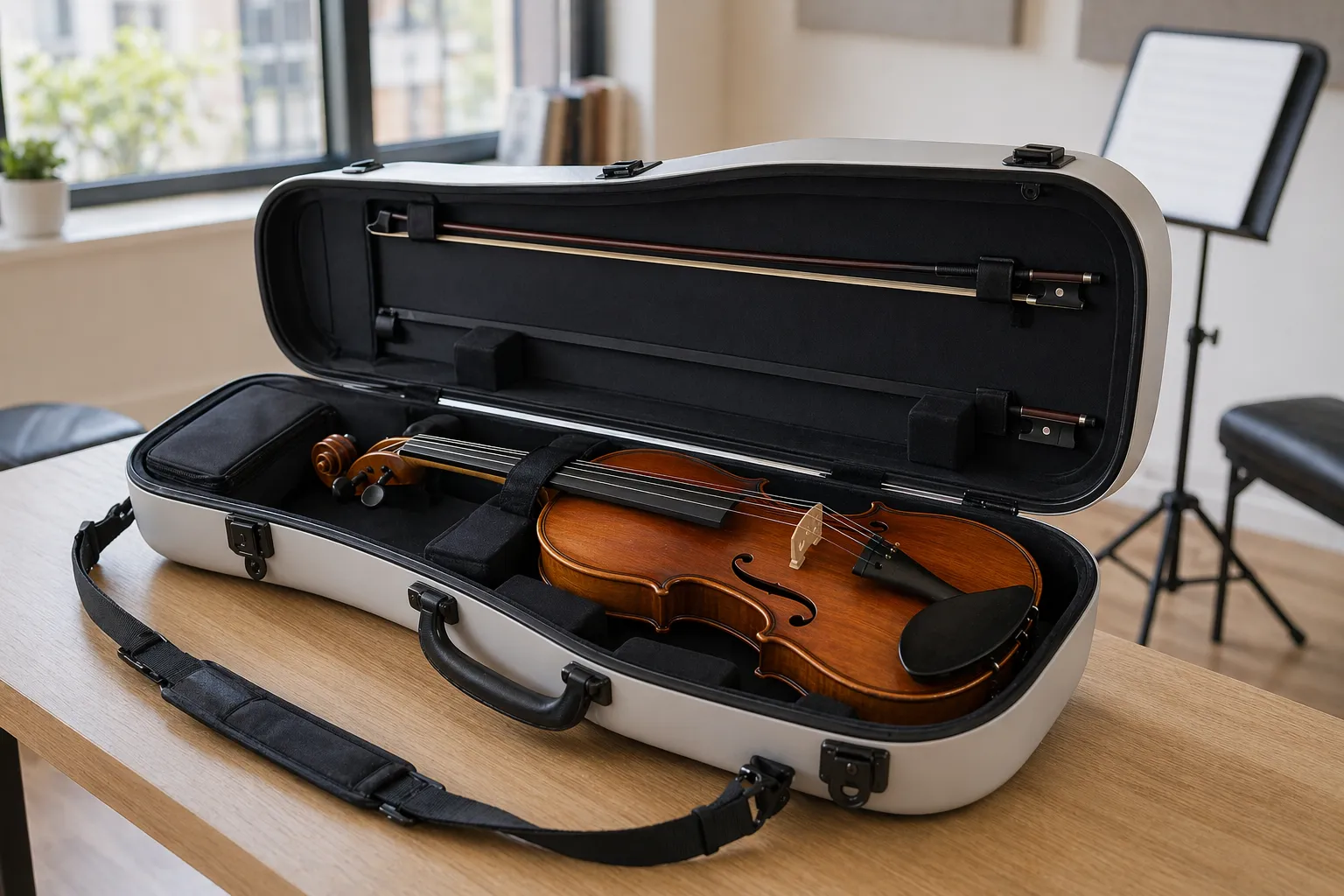
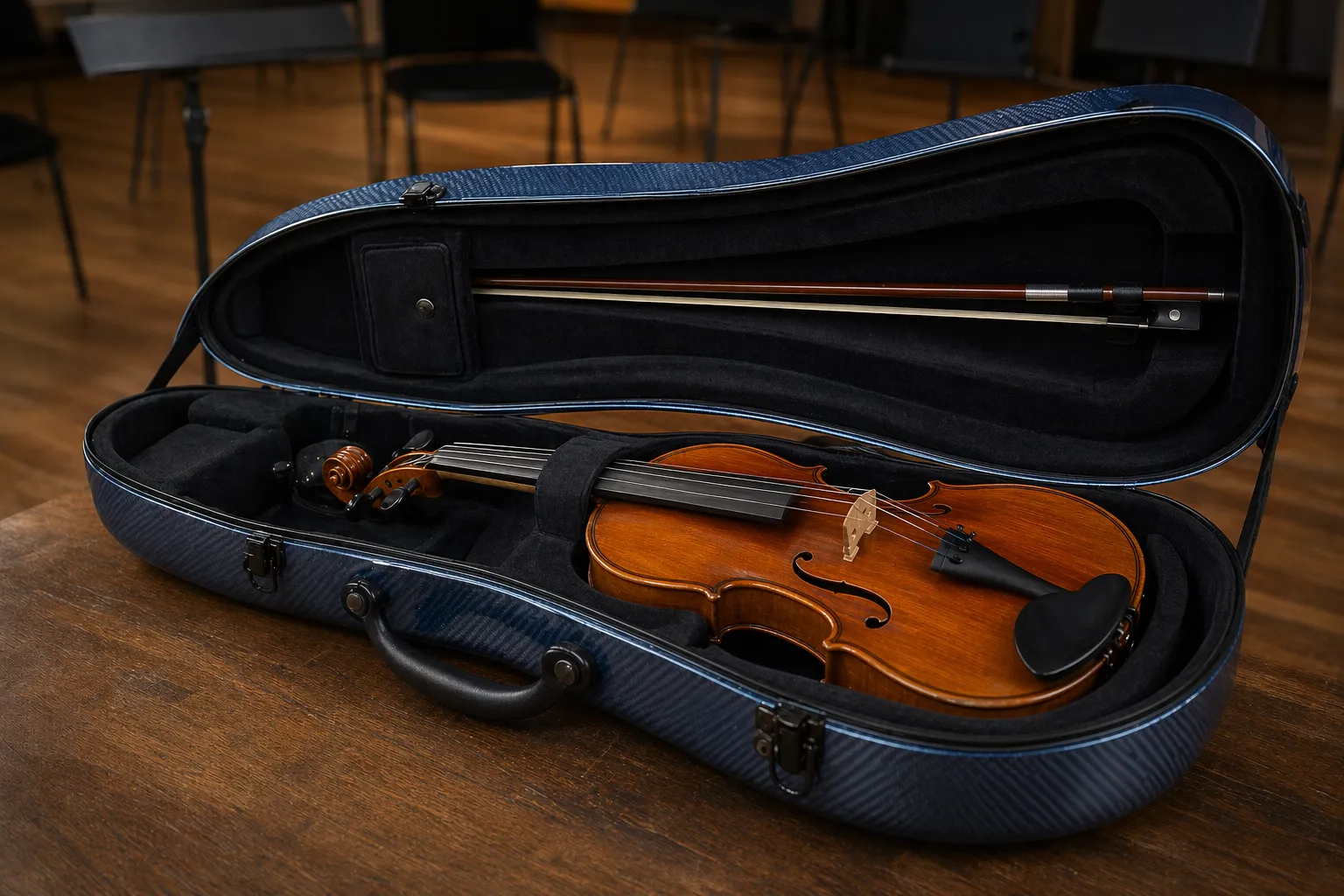
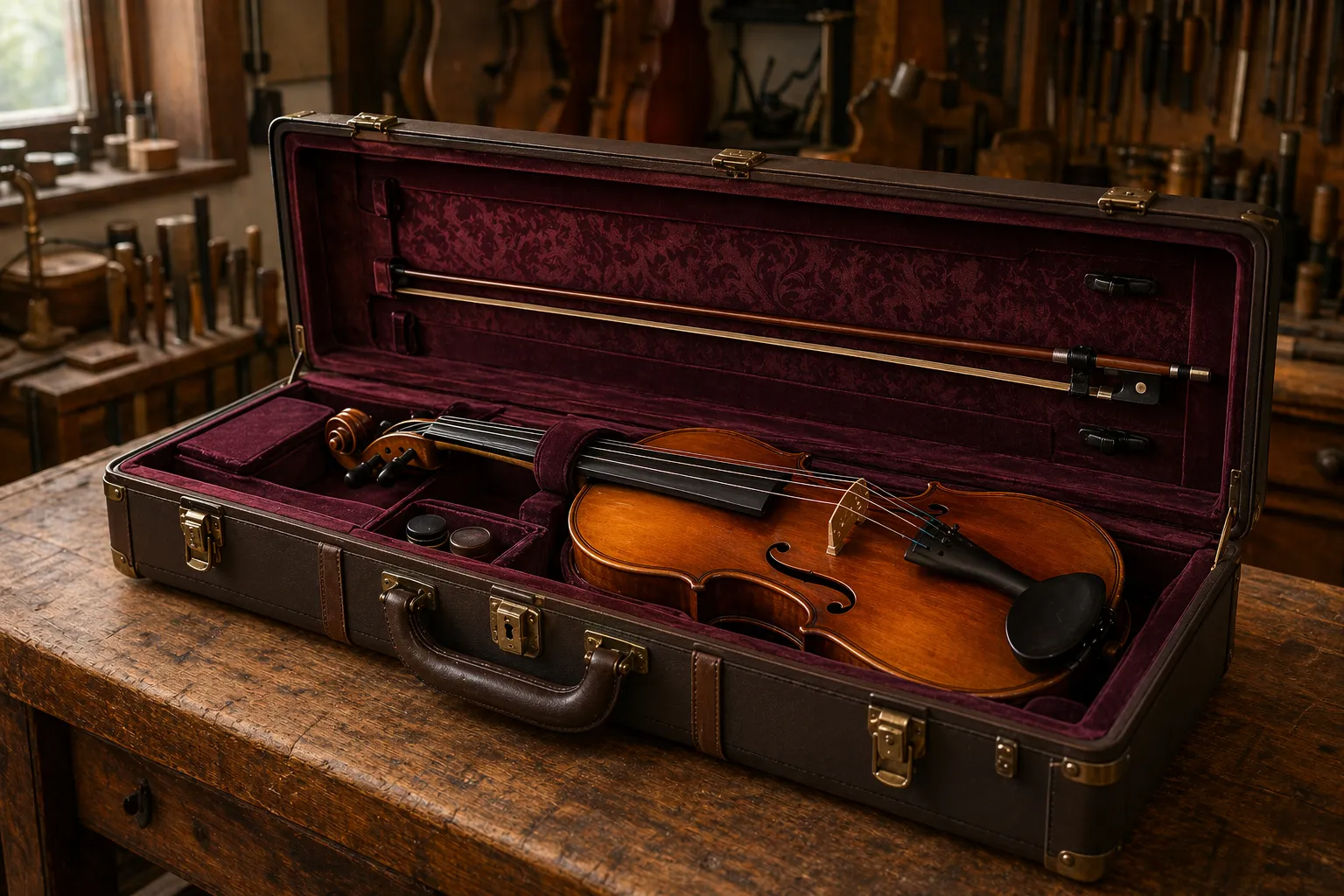
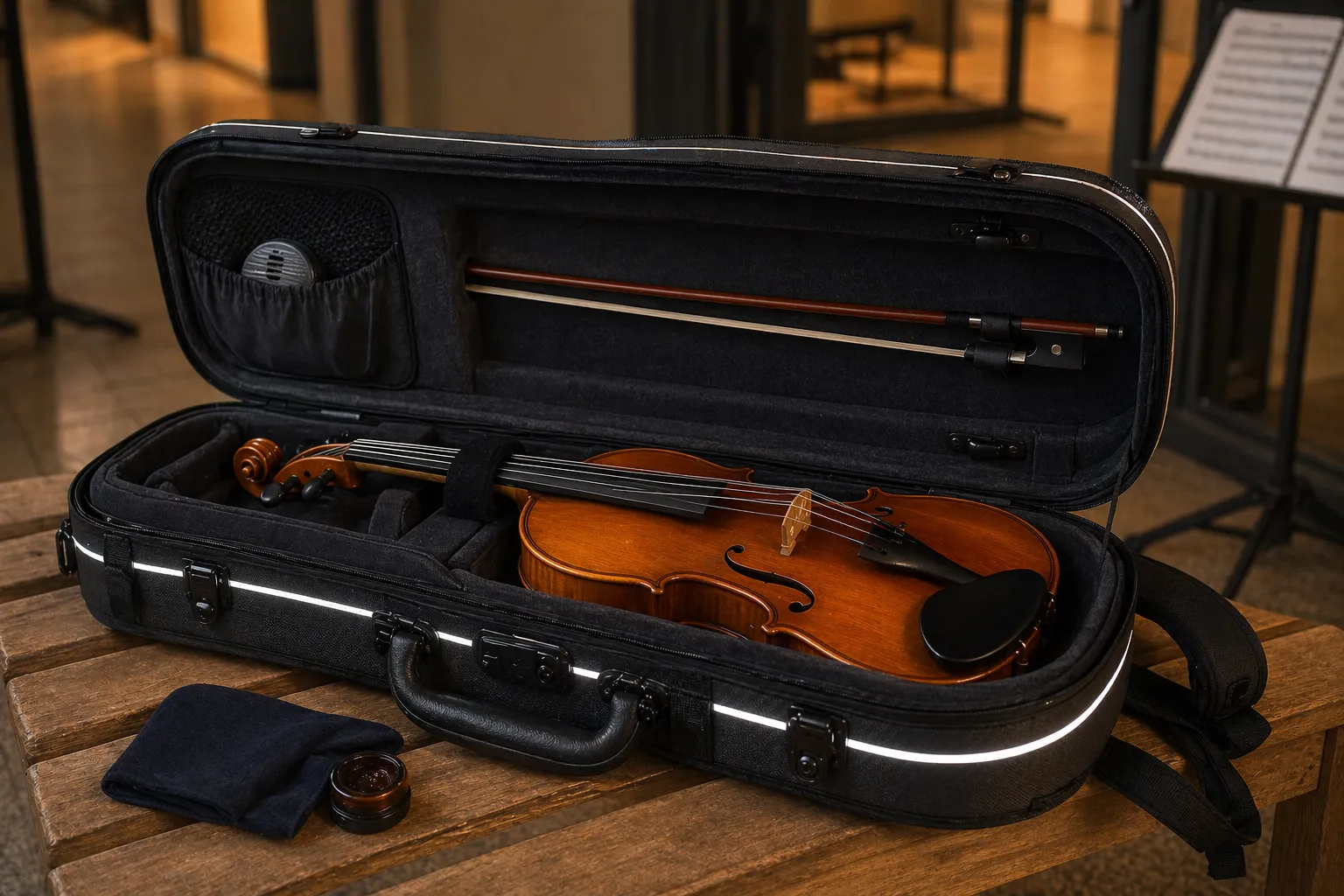
The images in this section are original editorial reference images, not official manufacturer product photos. Use them as visual guides to the type of case being discussed, then check the linked makers or retailers for exact current specifications.
Bam Hightech cases are common among players who want a light, hard, modern shell. Bam lists several viola models adjustable up to about 43 cm, including contoured and oblong versions. The contoured models are compact and light; oblong versions usually offer more bow and accessory capacity.
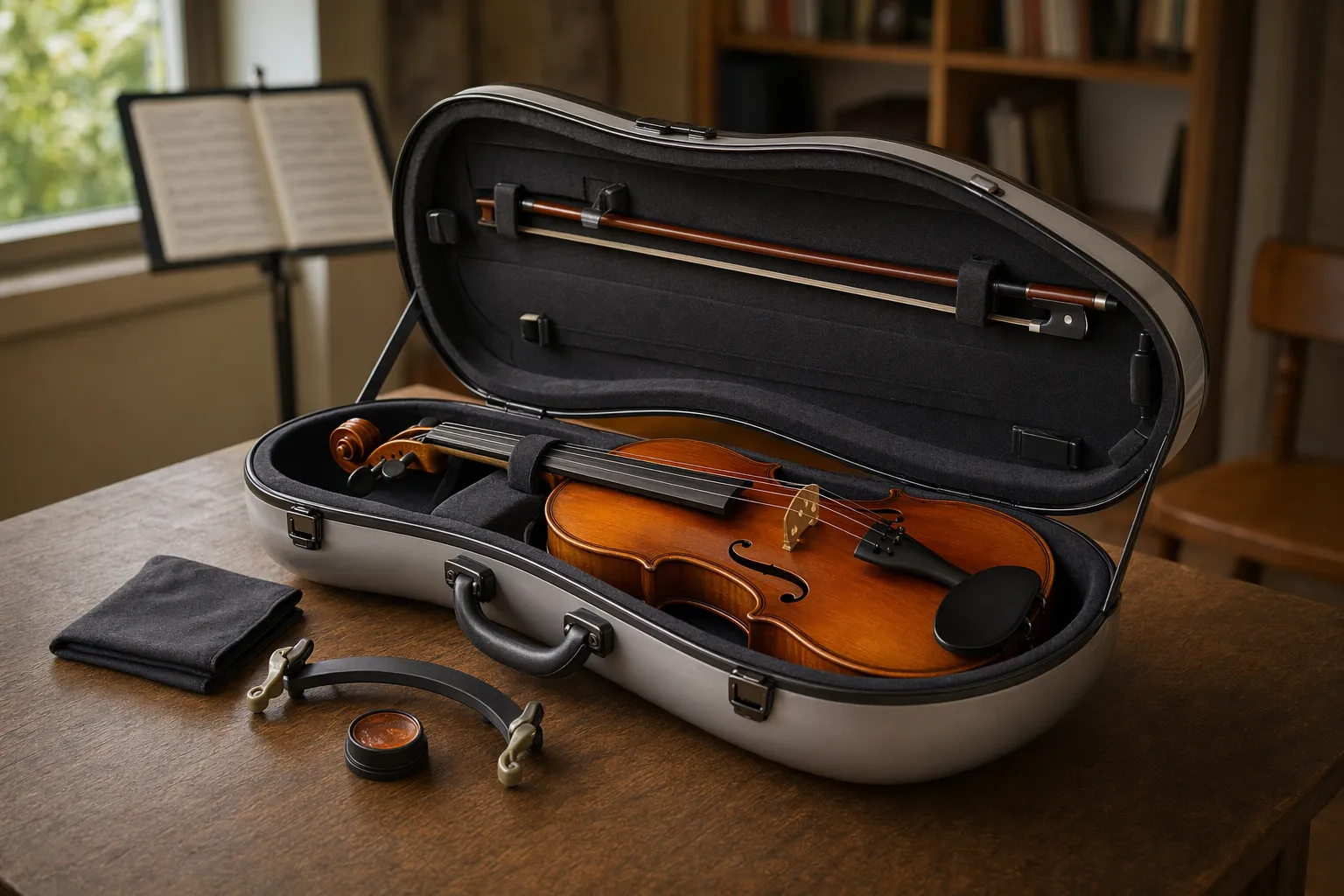
GEWA Air cases are another strong modern option. The Air 2.0 shaped viola case uses a thermoplastic shell, an adjustable neck rest, and a padded suspension system, with published compatibility from 13” to 17”. The Air 2.8 oblong version extends the size range further and adds an attached music pocket.
Accord carbon fiber cases are notable for custom color choices and lightweight carbon construction. Some Accord viola cases are described as freely adjustable to the body length of the instrument, with custom fitting possible. This can be attractive for large violas, unusual outlines, or players who want a personal finish.
Musafia cases sit in a different category. They are chosen for craftsmanship, fitted interiors, repairable luxury construction, and custom options. For valuable instruments, unusual dimensions, baroque bows, or a case made around a specific viola, Musafia is one of the important names to know.
Pedi SteelShield-style viola cases are worth mentioning for practical protection at a more accessible level. Some models use reinforced construction with steel elements, water-repellent covering, reflective strips, humidifier provision, and hidden backpack straps. They can be sensible for students, night travel, and regular commuting.
Flight Cases And Special Scenarios
Flying with a viola is less about owning a magical flight case and more about planning risk. The safest route is usually to carry the viola into the cabin in a hard case, board early if possible, and avoid checking it. In the United States, small musical instruments must be accepted in the cabin if they can be safely stowed and space is available when the passenger boards. TSA also notes that instruments may need physical inspection.
Airline policies vary. British Airways, for example, describes smaller instruments up to 80 cm in their case as cabin hand baggage if they fit within its stated dimensions. A viola case that is 83 cm long may be easy in one situation and awkward in another. Always check the specific airline, aircraft, route, and fare before travel.
If a viola must be checked, use a rigid case with strong shell construction, reliable closure, excellent internal suspension, and no loose objects inside. Remove or secure accessories that could move. Loosen the strings slightly if the airline or luthier advises it for temperature variation. Consider instrument insurance before travel; a case reduces risk, but it does not turn airport handling into a gentle environment.
For frequent flying, look at high-protection hard shells, fitted interiors, and compact external dimensions. Bam Hightech, GEWA Air, Accord carbon, and Musafia custom builds can all make sense depending on the instrument and the player’s priorities. For exceptionally valuable violas, speak with a trusted luthier before choosing.
A Practical Buying Checklist
- Does the case fit the exact body length and bout width of the viola?
- Does the viola rest in suspension without pressure on the bridge, scroll, or edges?
- Can the case hold the bow securely even if carried vertically?
- Is the case light enough for the person who will actually carry it?
- Are the straps, handles, latches, zippers, and hinges strong enough for daily use?
- Does the case offer reasonable insulation against heat, cold, humidity, and rain?
- For travel, does the external length fit the airline situations you expect?
The best case is rarely the one that wins every category on paper. A very light case may lack storage. A luxury wooden case may protect beautifully but feel heavy. A carbon case may be excellent for travel but excessive for a young beginner.
The right choice begins with honesty: what is the viola worth, where does it travel, who carries it, and what kind of accident is most likely?
The Case Should Serve The Music
A good viola case should disappear into musical life. It should let the student arrive at a lesson without a sore shoulder, let the adult player commute without anxiety, and let the travelling violist make practical decisions under pressure.
Protection is not fearfulness. It is respect for the instrument and for the work that happens through it. Choose a case that fits well, carries well, and matches the real conditions of your musical life. Then close it carefully, carry it calmly, and let it do its quiet job.
Sources and further reading
- Bam Cases: Hightech Contoured Viola Case
- Bam Cases: Hightech Oblong Viola Case
- GEWA Strings: Air 2.0 Viola Shaped Case
- GEWA Strings: Air 2.8 Viola Case
- Fiedler Cases: Accord Ultralight Viola Case
- Musafia Cremona Italy: Options
- Paganino: PEDI NiteFlash SteelShield Viola Case
- TSA: Violins
- 14 CFR § 251.3: Small Musical Instruments as Carry-On Baggage
- British Airways: Flying With Musical Instruments