Trinity Viola Diploma Exam: ATCL, LTCL and FTCL Guide
A practical hub for Trinity viola performance diplomas, covering ATCL, LTCL, FTCL, recital timings, written programme requirements and 2026 repertoire planning.
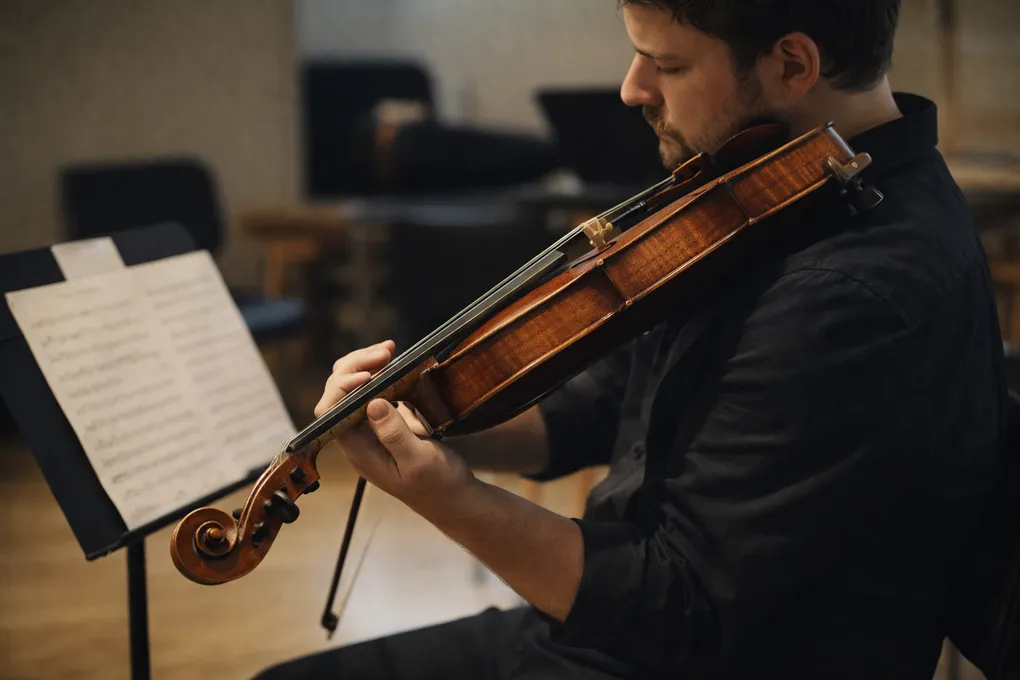
Trinity viola diplomas are performance-led recital exams. The candidate prepares a substantial programme, provides a written programme, and is assessed on both the playing and the planning of the recital.
This hub follows Trinity’s Classical Music Performance Diplomas syllabus and the 2026 Trinity viola diploma repertoire list. Before entering, always check Trinity’s latest syllabus, fees, dates, digital submission rules and programme approval requirements.
Trinity viola diploma route at a glance
| Level | Standard | Performance duration | Assessment shape |
|---|---|---|---|
| ATCL | Level 4, comparable to a first-year undergraduate recital | 32-38 minutes | Marked out of 100 |
| LTCL | Level 6, comparable to a final-year undergraduate recital | 37-43 minutes | Marked out of 100 |
| FTCL | Level 7, comparable to a postgraduate recital | 42-48 minutes | Approved or Not Approved |
At ATCL and LTCL, the recital carries 96 marks and Programme & Planning carries 4 marks. At FTCL, there is no numerical mark; the exam is either Approved or Not Approved, and the written programme includes 1,200-1,600 words of programme notes.
Why Trinity can suit violists
The viola repertoire naturally crosses categories: Bach transcriptions, Classical sonatas and concertos, Romantic sonata writing, British viola repertoire, modern solo works, and works originally linked to violin or cello traditions. Trinity’s programme flexibility can suit this very well.
Candidates may use listed repertoire, a mixture of listed and own-choice repertoire, or a fully own-choice programme. Any programme with own-choice repertoire must be approved in advance, and the approval process considers the whole programme’s technical and musical level.
For a first post-Grade-8 diploma, ATCL viola is the natural starting point. The 2026 list includes Alwyn, Bach viola da gamba sonata movements, Bach Suite no.1 for solo cello, Blake, Bloch, Boccherini, Britten Lachrymae, Bruch Kol Nidrei, Dittersdorf, Glinka, Hummel, Jacob, Martinu, Milhaud, Schumann, Vaughan Williams and Weber.
LTCL viola raises the level with repertoire such as Bach cello suites, Bax, Berkeley, Biber, Bloch Suite Hebraique, Brahms sonatas, Bruch Romanze, Enescu, Hindemith, Hoffmeister, Holst, Martinu, Mozart, Reger, Schubert Arpeggione, Schumann, Stamitz, Vaughan Williams and Vieuxtemps.
FTCL viola is fellowship-level, with repertoire such as Bach solo violin sonatas or partitas, Bartok Concerto, Bax Sonata, Bowen Concerto, Clarke Sonata, Henze Serenade, Hindemith, Ligeti Sonata, Milhaud, Paganini, Penderecki, Schnittke, Shostakovich, Takemitsu, Walton and Wiesenberg.
Practical planning points
| Requirement | Why it matters |
|---|---|
| Minimum two works | The recital needs contrast and shape |
| Exact timing window | Trinity is strict about minimum performance duration |
| Written programme | Programme details must be accurate; FTCL includes notes |
| Own-choice approval | Unlisted repertoire must be approved as a whole programme |
| Unaccompanied limit | Accompanied instrumentalists may normally use unaccompanied works for up to 40% of the programme duration |
For Hong Kong violists, Trinity can be attractive because it rewards recital thinking. It allows a player to design a programme around the viola’s real identity instead of treating the exam as a narrow list of tests.
But that freedom requires taste. A good viola programme should avoid becoming one long dark sound-world. It needs articulation, space, line, colour, historical contrast and physical pacing.
Related viola pages
| Page | Use it when |
|---|---|
| ATCL viola guide | You are planning a first Trinity viola diploma after Grade 8 |
| LTCL viola guide | You are ready for a larger and more independent recital |
| FTCL viola guide | You are considering fellowship-level performance |
The strongest Trinity viola programmes let the instrument’s middle voice become an artistic strength, not a compromise between violin and cello.