ATCL Viola Guide: Trinity Diploma After Grade 8
How to plan a Trinity ATCL viola recital, including timings, written programme, approval rules and repertoire choices from the 2026 list.
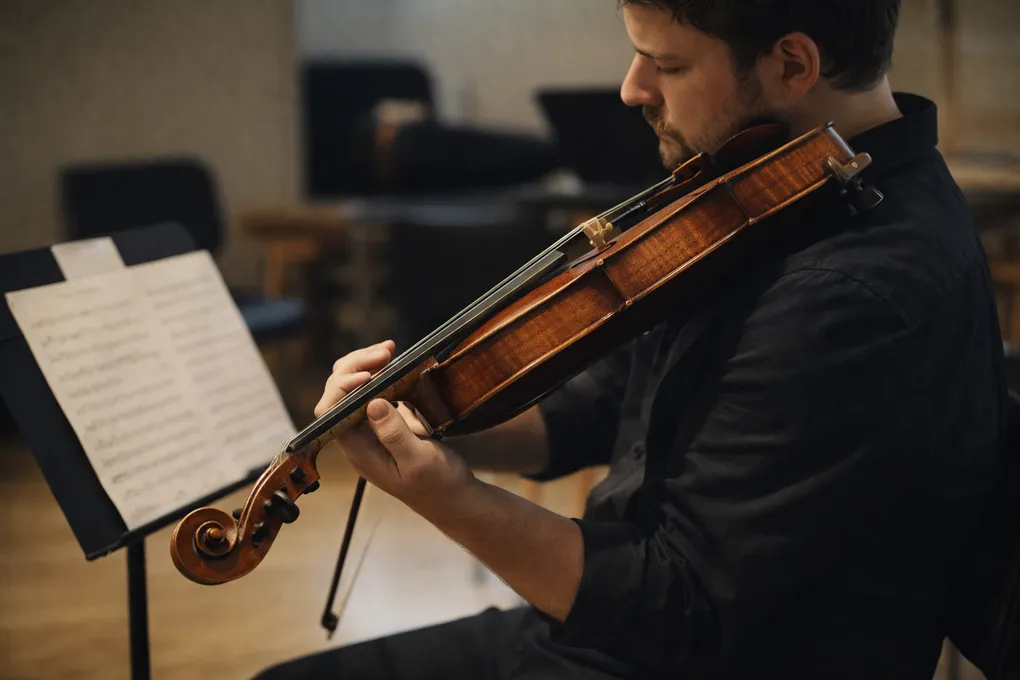
ATCL viola is Trinity’s first performance diploma level. The recital lasts 32-38 minutes and the exam is marked out of 100, with 96 marks for recital performance and 4 marks for Programme & Planning.
Trinity does not require a previous qualification before entry, but ATCL is still a serious post-Grade-8 project. The standard is comparable to a first-year undergraduate recital, and the candidate needs enough stamina and musical control to make a complete programme work.
For the full route, see the Trinity viola diploma exam hub.
What ATCL viola is testing
| Area | What matters |
|---|---|
| Recital | A varied 32-38 minute performance with reliable technique, tone, interpretation and stagecraft |
| Written programme | Accurate names, date, titles, movements and timings |
| Programme planning | Contrast of style, mood and tempo, plus effective order |
| Practical compliance | Minimum two works, correct timing and approval for own-choice repertoire |
There is no Viva Voce or Quick Study. Trinity places the pressure on the recital itself.
Repertoire direction
The 2026 ATCL viola list includes Alwyn Ballade, Bach viola da gamba sonata movements, Bach Suite no.1 for solo cello, Blake Prelude for Solo Viola, Bloch Allegro ironico, Boccherini Sonata in G, Britten Lachrymae, Bruch Kol Nidrei, Butterworth Sonata, Cambini Concerto, Carter Elegy, Dittersdorf Sonata, Franck Sonata third movement, Glinka, Hummel, Jacob, Martinu, Milhaud, Piston, Richardson, Rubinstein, Samuel, Schumann, Taneiev, Vaughan Williams, Vieuxtemps and Weber.
That is a generous palette for a first diploma. The danger is creating a programme that is too uniformly warm or serious. A viola recital needs different kinds of energy: line, rhythm, brightness, stillness and speech.
ATCL viola repertoire choices
| Composer | Repertoire choice | Edition |
|---|---|---|
| Alwyn | Ballade | Corda |
| Bach, J S | Any three movts from one of the three viola da gamba sonatas | Henle |
| Bach, J S | Suite no. 1 for Solo Cello, all 7 movts | Peters |
| Blake | Prelude for Solo Viola, from Benedictus | Faber |
| Bloch | Allegro ironico, from Suite no. 2 | Schirmer |
| Boccherini | Sonata in G | IMC |
| Britten | Lachrymae, op. 48 | Boosey |
| Bruch | Kol Nidrei, op. 47 | Peters |
| Butterworth | Sonata, op. 78 | Comus |
| Cambini | Concerto in D | Amadeus |
| Carter | Elegy | Peer |
| Dittersdorf | Sonata in E-flat | IMC |
| Franck | Sonata, 3rd movt | IMC |
| Glinka | Sonata in D minor, 1st movt | Breitkopf |
| Hummel | Fantasia | Breitkopf |
| Hummel | Sonata in E-flat | Doblinger |
| Jacob | Sonatina | Novello |
| Martinu | Sonata no. 1, H 355, 1st movt | AMP |
| Milhaud | Quatre visages, nos. 1 and 2 | Heugel |
| Milhaud | Sonata no. 2, op. 244 | Heugel |
| Piston | Interlude | Boosey |
| Richardson | Rhapsody | Comus |
| Rubinstein | Sonata in F minor, op. 49, 1st movt | Amadeus |
| Samuel | Tangled Webs and Gannets Diving, from Blytheswood: Three Pieces for Viola and Piano | Stainer |
| Schumann | Adagio and Allegro, op. 70 | Peters |
| Taneiev | Album Leaf, op. 33 | IMC |
| Vaughan Williams | Suite for Viola, Group 1, all 3 movts | OUP |
| Vieuxtemps | Capriccio | Schott |
| Vieuxtemps | Elegy | Sikorski |
| Weber | Andante and Rondo Ungarese | Schott |
Programme shapes
| Shape | Why it can work |
|---|---|
| Bach plus Britten or Bruch plus a Classical or lighter work | Depth balanced by clarity |
| Vaughan Williams plus a sonata movement plus a solo piece | Strong viola identity with contrast |
| Classical sonata or concerto plus modern colour plus lyrical centre | Clear variety without forcing virtuosity |
Check timing early. Trinity’s duration window is strict, and repeated sections generally cannot be used to make the recital long enough.
Practical preparation
ATCL preparation should include full-run practice from the beginning. The candidate needs to learn how the programme feels as a whole: where the left hand tires, where the bow arm tightens, and where a change in sound is needed.
For digital exams, the performance must be one continuous recording. For face-to-face exams, the candidate needs the appointment form, written programme, copies of pieces and any approval letter ready at the start.
Next step
If ATCL feels musically secure, LTCL viola is the next step. It asks for a longer recital and more mature repertoire ownership.