ABRSM Grade 2 Musical Terms: English Glossary
ABRSM Music Theory Grade 2 musical terms, with what is new at this grade and a full English glossary for exam preparation.
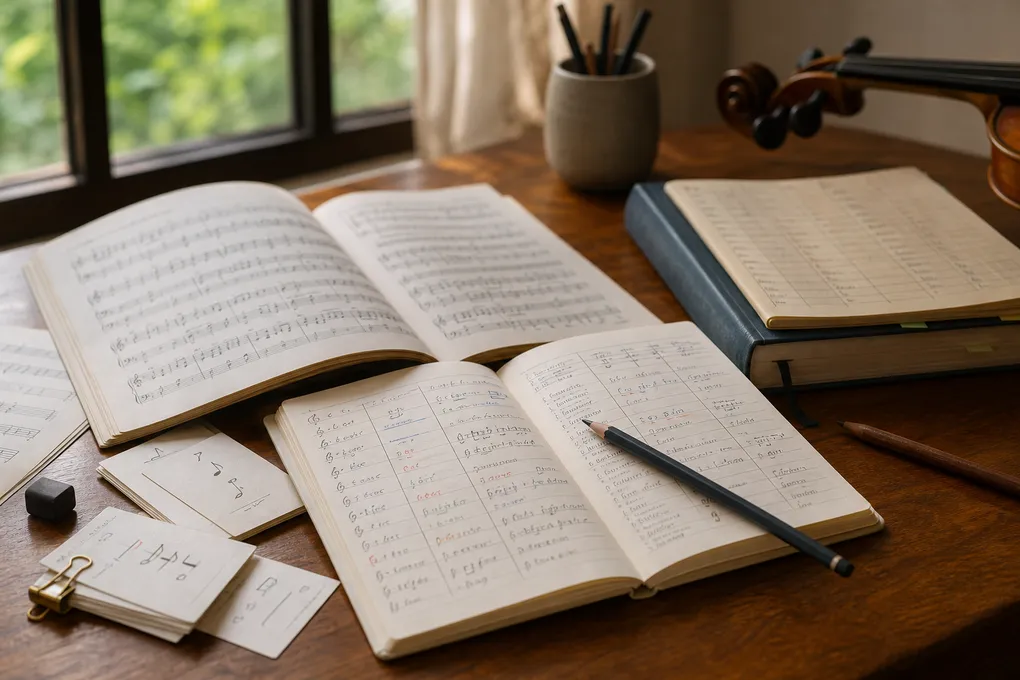
Musical terms become much easier to learn when students can see exactly what belongs to the grade they are preparing. This Grade 2 glossary keeps the vocabulary focused: first the terms that are new at this level, then the full Grade 2 study list.
It follows the same format as the ABRSM Grade 5 musical terms glossary, but with a smaller vocabulary set for Grade 2. Related lists: Grade 1, Grade 3, Grade 5.
For the wider Grade 5 exam context, read this alongside ABRSM Music Theory Grade 5: what students need to learn.
How to Use This List
Use the “what is new” table when moving up from the previous grade, then use the full table for revision. Students should learn each word as a musical instruction, not only as a translation.
A simple routine works well:
- say the term aloud
- write the meaning in your own words
- find the marking in a real piece
- decide whether it changes speed, volume, character, articulation, or score direction
- test both ways: term to meaning, and meaning to term
Grade 2 Terms
Grade 2 has 61 terms in this study list.
What Is New in Grade 2
| Term | English meaning |
|---|---|
allargando | Broadening |
allegro assai | Very fast |
andantino | Slightly faster than andante |
larghetto | Rather slow |
largo | Slow and stately |
mosso / moto | Movement |
presto | Fast; faster than allegro |
ritenuto / riten. / rit. | Held back |
vivace / vivo | Lively, quick |
alla marcia | In the style of a march |
dolce | Sweet, soft |
espressivo / espress. / espr. | Expressive |
giocoso | Playful, merry |
grave | Very slow, solemn |
grazioso | Graceful |
maestoso | Majestic |
simile / sim. | In the same way |
sostenuto | Sustained |
tenuto | Held |
fp / fortepiano | Loud, then immediately soft |
fz / forzando | Forced, accented |
pp / pianissimo | Very quiet |
sf / sfz / sforzando / sforzato | Forced, accented |
a | At; to; in the style of |
al / alla | In the style of; to the |
assai | Very |
con / col | With |
e / ed | And |
ma | But |
meno | Less |
molto | Very much |
non | Not |
più | More |
senza | Without |
troppo | Too much |
Full Grade 2 Term List
| Term | English meaning |
|---|---|
accelerando / accel. | Gradually getting faster |
adagio | Slow |
allargando | Broadening |
allegretto | Fairly quick |
allegro | Fast |
allegro assai | Very fast |
andante | At a walking pace |
andantino | Slightly faster than andante |
larghetto | Rather slow |
largo | Slow and stately |
lento | Slow |
moderato | Moderate speed |
mosso / moto | Movement |
presto | Fast; faster than allegro |
rallentando / rall. | Gradually getting slower |
ritardando / ritard. / rit. | Gradually getting slower |
ritenuto / riten. / rit. | Held back |
tempo | Speed, time |
vivace / vivo | Lively, quick |
alla marcia | In the style of a march |
cantabile | In a singing style |
da capo / D.C. | Repeat from beginning |
dal segno / D.S. | Repeat from the sign |
dolce | Sweet, soft |
espressivo / espress. / espr. | Expressive |
fine | The end |
giocoso | Playful, merry |
grave | Very slow, solemn |
grazioso | Graceful |
legato | Smoothly |
maestoso | Majestic |
simile / sim. | In the same way |
sostenuto | Sustained |
staccato / stacc. | Detached |
tenuto | Held |
crescendo / cresc. | Gradually getting louder |
decrescendo / decresc. | Gradually getting quieter |
diminuendo / dim. | Gradually getting quieter |
f / forte | Loud |
ff / fortissimo | Very loud |
fp / fortepiano | Loud, then immediately soft |
fz / forzando | Forced, accented |
mf / mezzo forte | Moderately loud |
mp / mezzo piano | Moderately quiet |
p / piano | Quiet |
pp / pianissimo | Very quiet |
sf / sfz / sforzando / sforzato | Forced, accented |
a | At; to; in the style of |
al / alla | In the style of; to the |
assai | Very |
con / col | With |
e / ed | And |
ma | But |
meno | Less |
mezzo | Half |
molto | Very much |
non | Not |
più | More |
poco | A little |
senza | Without |
troppo | Too much |
Final Thought
The aim is not to memorise a longer and longer foreign-language list. The aim is to read a score with more confidence. When students understand what these words ask them to do, theory study starts to support real playing and listening.