When Should You Visit a Violin Luthier in Hong Kong?
A practical guide to when Hong Kong violin and viola students should ask a luthier about buzzing, cracks, pegs, bridge problems, sound changes, and setup checks.
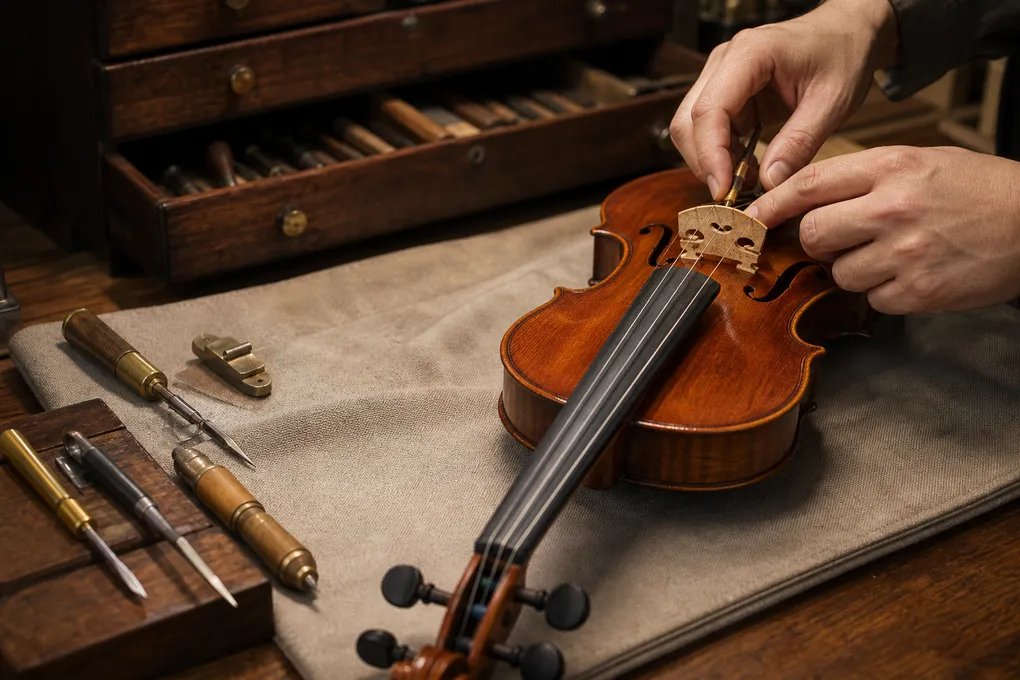
A good luthier visit can save weeks of confused practice. When a violin or viola is difficult to tune, slow to respond, buzzing, or physically uncomfortable, the student may assume the problem is musical. Sometimes it is mechanical.
Hong Kong students also deal with heavy humidity, sudden air conditioning, crowded transport, school storage, and rainy-season travel. These conditions make regular instrument checks more important, not less.
Go To A Luthier If The Instrument Buzzes
A buzz should not be ignored. It may come from a loose fine tuner, open seam, fingerboard issue, tailpiece, chin rest, string winding, or something inside the instrument. Some causes are small. Others need proper repair.
Do not keep tightening random parts without knowing what they are. A teacher can help identify simple causes, but a persistent buzz belongs with a luthier.
Check Pegs That Slip Or Stick
Pegs are sensitive to weather. In humid Hong Kong conditions, they may stick; after environmental changes, they may slip. Forcing a peg can damage it or frighten a young student away from tuning.
Well-fitted pegs should turn smoothly and hold securely. If tuning has become a daily struggle, peg fitting or adjustment may be needed.
Take Bridge Problems Seriously
The bridge should stand upright and stable. Tuning gradually pulls it forward, and students may not notice until it is leaning badly. A warped or leaning bridge can affect tone, string height, and safety.
If the bridge looks tilted, do not push it aggressively without guidance. Ask a teacher first, and visit a luthier if the bridge is warped, unstable, or repeatedly moving.
Sudden Sound Changes Need Checking
If the violin suddenly sounds dull, nasal, weak, or uneven, first check simple things: old strings, rosin buildup, bow hair, and recent weather changes. If the change remains, the instrument may need a setup check.
A fallen or shifted soundpost is not a beginner repair. Neither are cracks, open seams, fingerboard issues, or major bridge adjustment.
Before Exams, Auditions, And Performances
Do not wait until exam week. A setup check before an ABRSM exam, school audition, concert, or recording can prevent avoidable panic.
Ask about string condition, bridge position, peg function, bow hair, and general response. Students often practise hard while the instrument quietly becomes less cooperative.
Buying Or Renting In Hong Kong
Luthier advice is especially useful when buying second-hand, upgrading from a rental, or deciding whether a student instrument is worth repairing. A violin that looks tidy may still need strings, bridge work, peg adjustment, or bow rehairing before it supports learning well.
This connects closely with the decision to rent or buy a viola in Hong Kong. The same principle applies to violin: price matters, but setup decides whether the instrument is genuinely playable.
What Not To DIY
Students and parents should avoid home repairs involving glue, varnish cleaners, bridge cutting, soundpost adjustment, crack repair, seam repair, or aggressive peg sanding. These are not ordinary household fixes.
Daily care is still important: wipe the strings, loosen the bow, store the instrument in the case, and watch for small changes. But when the instrument itself is structurally or mechanically unhappy, the wisest practice is to ask someone who works with instruments every day.