A Gentle Guide to the String Family
An introduction to the violin, viola, cello, and double bass, with listening suggestions that show how each instrument speaks in its own way.
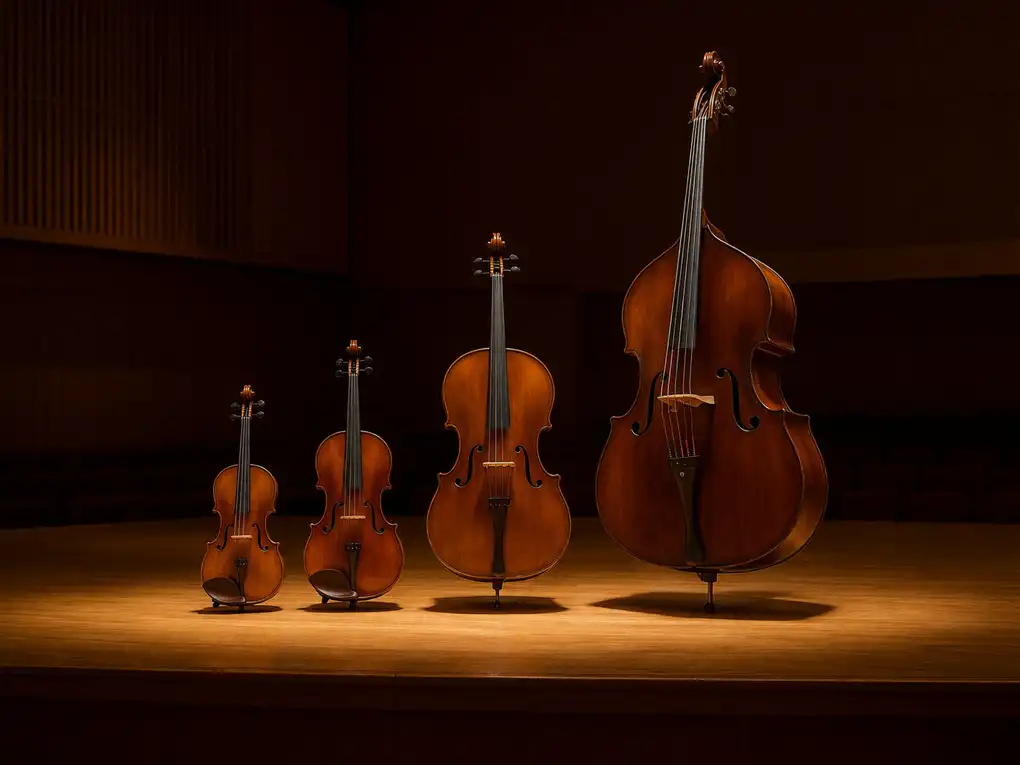
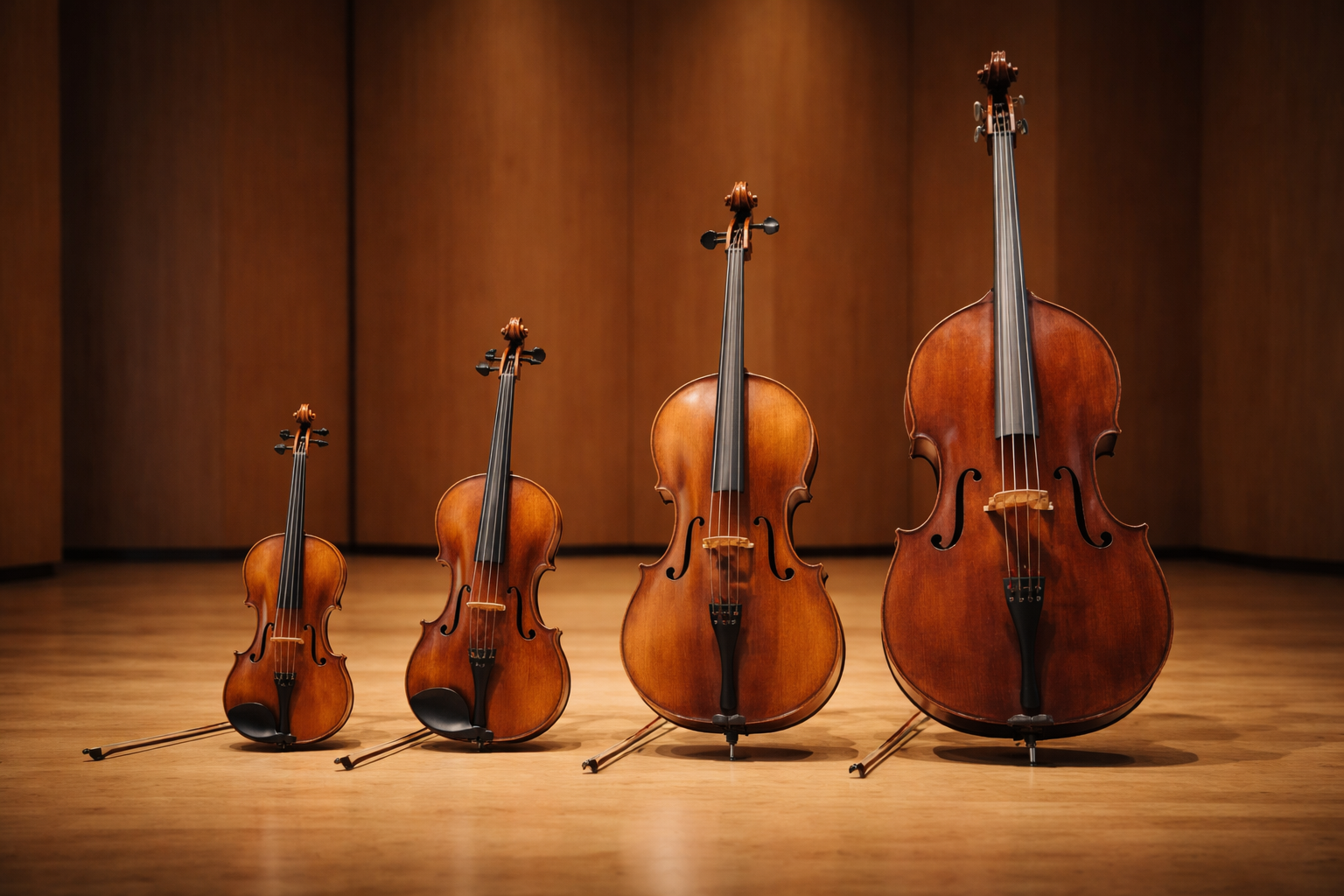
String instruments are often introduced together, but they do not feel the same at all when you hear them closely. They belong to one family, yet each one has its own voice, weight, and character. The violin can shine and sing above a group. The viola often speaks in a darker, warmer middle register. The cello carries both depth and lyricism. The double bass gives the whole family its ground.
For beginners, these instruments can look similar from a distance. In practice, though, they offer very different musical experiences. One of the best ways to understand them is not only to learn their sizes or ranges, but to listen for what each one naturally does well.
If you are comparing the two shoulder instruments in particular, I have written a more focused guide to viola vs violin. For families wondering whether the viola is a meaningful starting point rather than a secondary option, see why learn viola in Hong Kong and when to start learning viola.
| Instrument | Relative size | Usual role | First impression |
|---|---|---|---|
| Violin | Smallest | Carries melody easily | Bright, clear, agile |
| Viola | Slightly larger | Connects the middle of the texture | Warm, dark, inward |
| Cello | Larger, played upright | Balances support and singing line | Resonant, lyrical, human |
| Double bass | Largest | Grounds harmony and pulse | Deep, spacious, weighty |
Violin
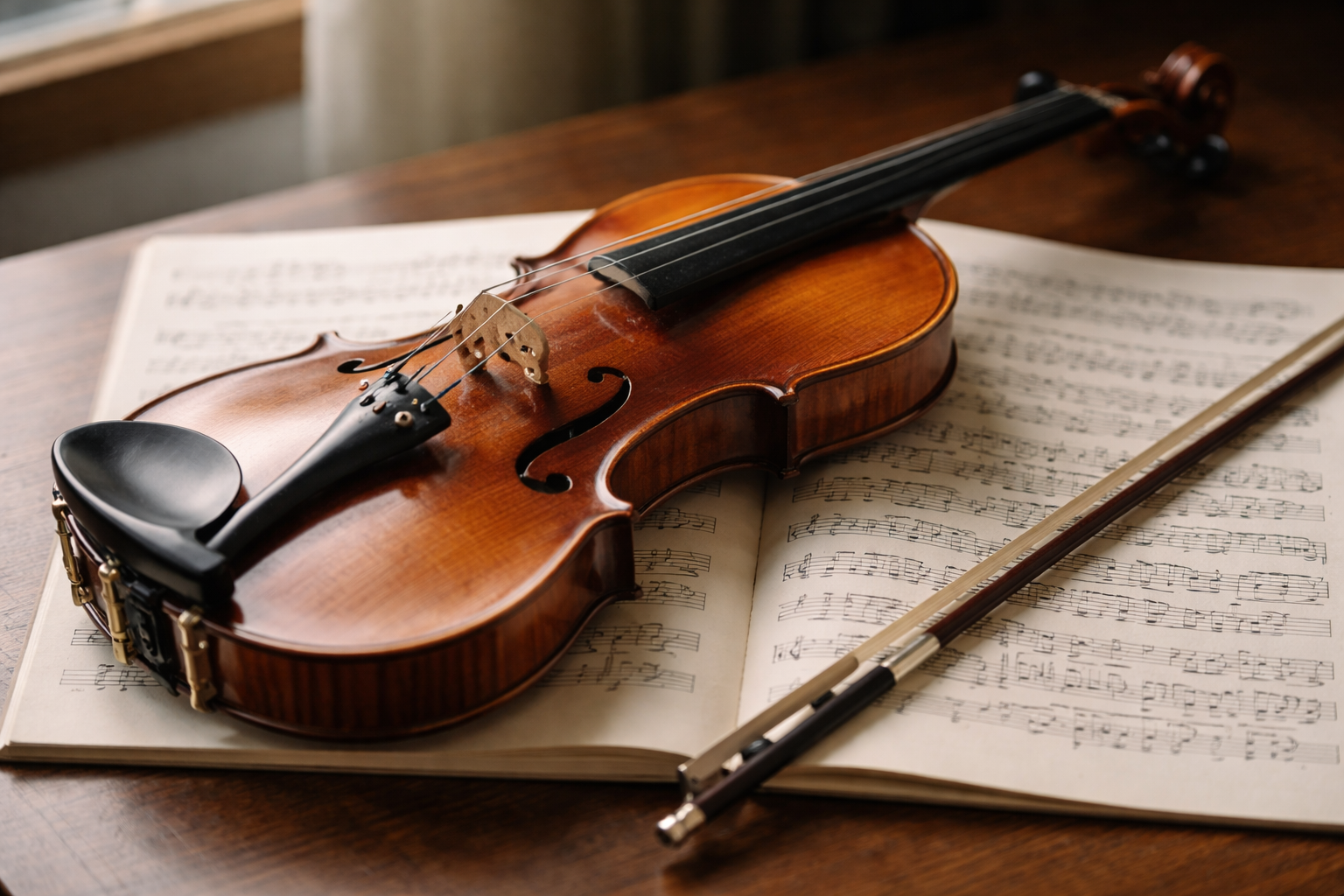
The violin is the smallest and highest member of the main string family. Because of its bright and focused sound, it often carries melody. In an orchestra, it is usually the most prominent string instrument. In chamber music and solo repertoire, it can sound brilliant, agile, delicate, or deeply expressive.
Its range allows it to move easily through fast passages, high singing lines, and detailed articulation. For many listeners, the violin is the most immediately recognizable string instrument because it appears so often in both classical and popular contexts.
What makes the violin special is not only that it can project, but that it can change character very quickly. It can sound radiant in one phrase and intimate in the next.
Some good listening examples are:
- Antonio Vivaldi, The Four Seasons: Spring
- Johann Sebastian Bach, Violin Concerto in A minor
- Jules Massenet, Meditation from Thaïs
- The solo violin opening of John Williams’s Schindler’s List theme
These examples show different sides of the instrument. Vivaldi highlights energy and brightness. Bach shows clarity and structure. Massenet reveals lyrical warmth. Schindler’s List reminds us how directly the violin can carry emotion.
Viola
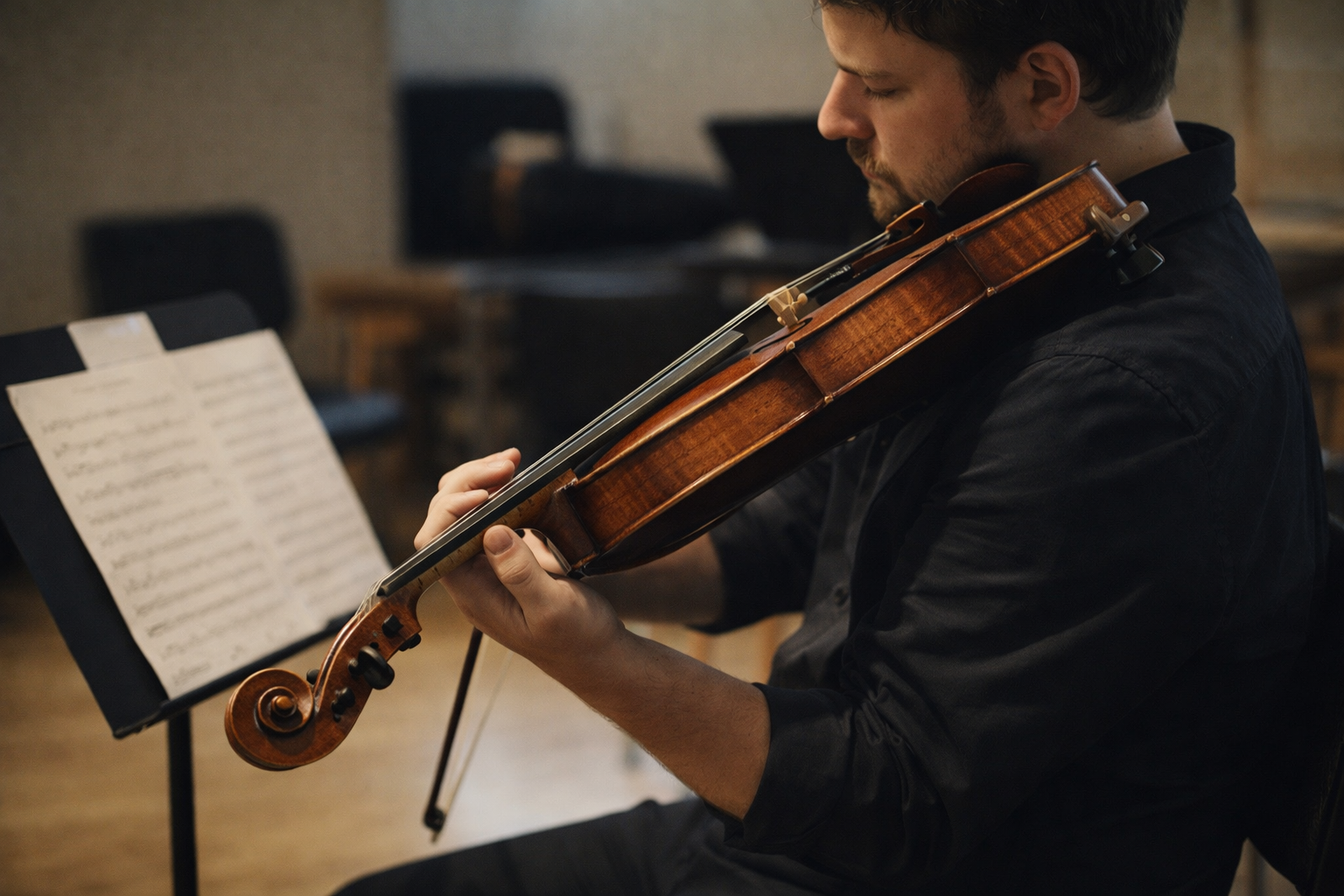
The viola is slightly larger than the violin and tuned lower. Its sound is darker, fuller, and often more inward. It does not usually sit at the very top of the texture, and that is part of its beauty. The viola often lives in the middle, where it connects harmony, color, and inner movement.
For a long time, many casual listeners knew less about the viola than the violin or cello. Yet once you start listening for it, the instrument becomes unforgettable. The viola can sound mellow, velvety, and reflective in a way that is difficult to replace.
It is especially moving in music that values warmth and subtle color rather than sheer brilliance. The instrument’s strength is often its human quality. It does not always try to dominate the room. Instead, it draws you closer.
Some good listening examples are:
- Wolfgang Amadeus Mozart, Sinfonia Concertante for Violin and Viola
- Hector Berlioz, Harold in Italy
- Rebecca Clarke, Viola Sonata
- Johannes Brahms, Viola Sonata No. 1 in F minor
Mozart lets the viola speak nobly and gracefully beside the violin. Berlioz gives it a wandering, thoughtful character. Rebecca Clarke shows how rich and powerful the viola can be. Brahms reveals its autumnal warmth and depth.
Cello
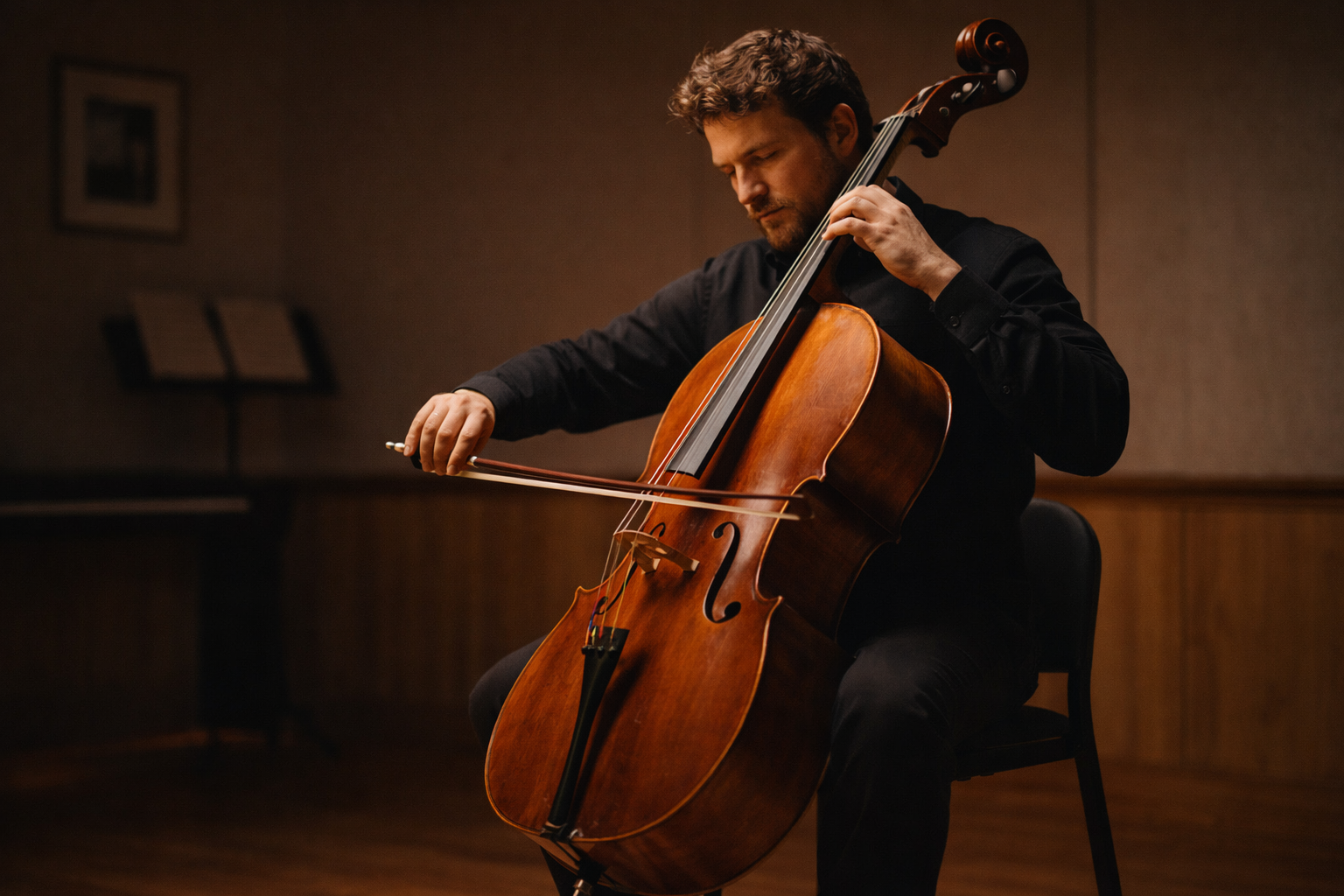
The cello is larger still and is played upright, supported by an endpin on the floor. Its range stretches from a rich low register to a surprisingly vocal upper register. That is one reason people are so drawn to it: the cello can sound almost like a speaking or singing human voice, but with a deeper foundation beneath it.
In ensemble music, the cello often supports harmony and rhythm, but it is also one of the most beloved solo instruments. It can be noble, tender, dramatic, or meditative. Few instruments move between strength and vulnerability as naturally as the cello.
The physical relationship between player and instrument also shapes how people perceive it. The cello is held close to the body, and that visual image often matches the sound: grounded, resonant, and intimate.
Some good listening examples are:
- Camille Saint-Saëns, The Swan
- Johann Sebastian Bach, Cello Suite No. 1 in G major
- Antonín Dvořák, Cello Concerto in B minor
- Gabriel Fauré, Élégie
The Swan is graceful and lyrical. Bach’s suite is one of the clearest introductions to the cello’s resonance and line. Dvořák shows its heroic and expansive side. Fauré brings out its melancholy tenderness.
Double Bass
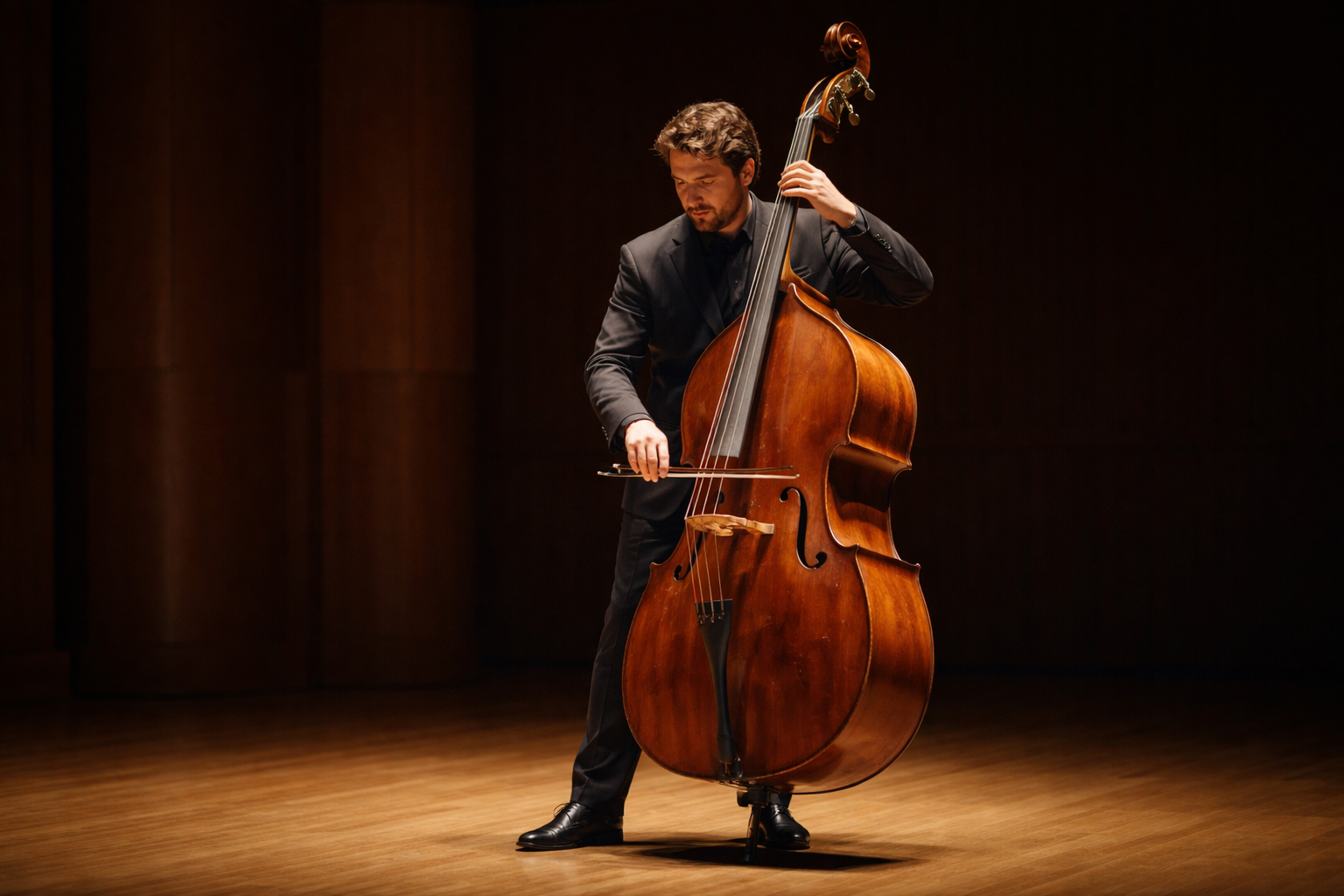
The double bass is the largest and lowest of the four instruments. In many ensembles, it provides the foundation that supports the entire texture. Because of that role, new listeners sometimes overlook it. Yet the double bass is far more than a background instrument. It can be rhythmic, lyrical, playful, and surprisingly agile.
Its deep register gives music weight and direction. In orchestra, it reinforces harmony and pulse. In jazz, it often becomes the heartbeat of the ensemble. As a solo instrument, it has a distinct personality: spacious, dark, earthy, and sometimes unexpectedly singing.
The double bass reminds us that musical importance is not always about standing in front. Often, what holds everything together is heard as much as felt.
Some good listening examples are:
- Giovanni Bottesini, Elegy No. 1
- Serge Koussevitzky, Double Bass Concerto
- The walking bass lines in many jazz standards, such as Autumn Leaves
- The opening atmosphere shaped by low strings in orchestral works such as Gustav Mahler’s symphonies
Bottesini and Koussevitzky show the bass as a true solo voice. Jazz standards reveal its rhythmic life and flexibility. In orchestral repertoire, the bass often creates the depth that makes the whole string section feel complete.
Hearing the Family as a Whole
What makes the string family so compelling is not only the individuality of each instrument, but the way they belong together. The violin, viola, cello, and double bass cover different registers, but they also create a shared world of color. When they play together, the result can feel almost like a choir: soprano, alto, tenor, and bass, each with its own role.
For anyone beginning to explore classical music, listening instrument by instrument can be a very helpful way in. Once you can recognize each voice, ensemble music becomes much more vivid. You begin to hear not just “strings,” but conversation, balance, support, and contrast.
That may be the best introduction of all. These instruments are related, but they are not interchangeable. Each one offers a different way of singing.