What Makes a Musical Life Sustainable
A few thoughts on building a life in music that is serious, human, and able to keep growing over time.
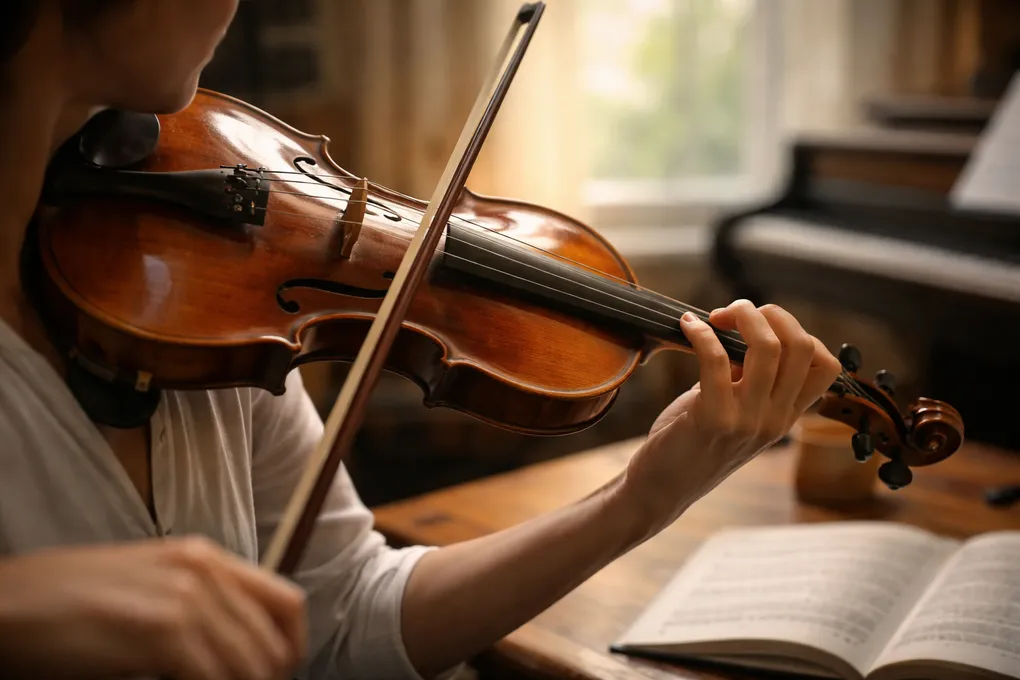
A musical life is not sustained by intensity alone.
Many musicians learn early how to work hard, stay alert, and keep moving under pressure. Those capacities matter. They help us prepare, recover, adapt, and meet difficult moments with seriousness. But they are not enough on their own. When everything depends on urgency, the work begins to harden. What once felt alive can start to feel narrow, brittle, and strangely distant from the reasons we cared about music in the first place.
A sustainable musical life asks for something steadier. It asks for discipline, certainly, but also for perspective. Discipline helps us return to the instrument, the score, and the necessary repetitions that shape craft over time. Perspective reminds us that music is not only a test of endurance. It is also a way of listening, communicating, and staying in contact with meaning.
A sustainable musical life depends on more than exams or short-term results. This connects closely with why I teach music first, not exam first, what ABRSM exams can and cannot teach, and teaching the known and unknown in music lessons.
Discipline is not the same as strain
It is easy to confuse seriousness with constant pressure. In music, the culture of effort is often strong. There is always more repertoire to learn, more technique to refine, more auditions, deadlines, rehearsals, and expectations waiting just ahead. That reality is not imagined. The demands are real.
Still, a sustainable approach does not mean treating every day like an emergency.
There is a difference between being disciplined and being perpetually strained. Discipline gives shape to work. It allows progress to accumulate quietly. Strain, by contrast, can make every task feel urgent, even when it does not need to be. Over time, that kind of pressure can distort judgment. It becomes harder to hear clearly, to think musically, or to notice what the music itself is asking for.
A serious musical life should still leave room for patience. Not everything can be forced to grow on command.
Perspective keeps the work human
Perspective matters because it protects us from reducing music to pure output. Technique matters. Accuracy matters. Professional standards matter. But if musical life is built only around efficiency, achievement, or survival, something essential begins to thin out.
Music is not only something we produce. It is also something we receive.
That is why listening matters so much, even outside formal practice. Listening to great performances, listening across different styles, listening with curiosity rather than comparison: these are not secondary activities. They help restore proportion. They remind us that music is a living art, not only a system of demands.
Perspective also helps us understand that growth in music is rarely linear. There are periods of momentum, but also periods of uncertainty, fatigue, rethinking, or quiet rebuilding. A sustainable life in music makes room for those phases without treating them as failure. Not every important period is outwardly impressive. Some of the most necessary work happens when we are learning how to stay honest, attentive, and open.
Different parts of musical life can support one another
One of the things that makes a musical life sustainable is the way its different parts can strengthen each other instead of competing for energy.
Teaching, for example, can sharpen listening. It asks us to name things we may otherwise leave instinctive. It forces us to think about timing, sound, gesture, and structure with greater clarity. Performing, in turn, can deepen what we say in lessons. It keeps our teaching connected to risk, timing, and the reality of making music in the moment.
Studying repertoire can also widen the imagination when routine starts to narrow it. Returning to a score with care can refresh the mind in ways that pure efficiency cannot. Sometimes what sustains musical life is not less seriousness, but a broader form of it: one that allows performing, learning, teaching, reading, and listening to remain in conversation with each other.
When these parts are allowed to support one another, the work becomes more resilient. A setback in one area does not have to empty everything else. The whole life does not depend on a single measure of worth.
Sustainability is not softness
To speak about sustainability is not to argue for a less committed musical life. A sustainable musical life can still be demanding, exacting, and ambitious. It still asks for consistency, honesty, and effort. But it is not built only on depletion.
It leaves room for renewal. It values attention, not just output. It recognises that long-term artistic growth depends not only on how intensely we can push, but on how deeply we can remain connected: to sound, to thought, to curiosity, and to the larger meaning of the work.
That kind of life may not always look dramatic from the outside. It may seem quieter than the culture of constant urgency. But in the long run, it is often what allows music to remain serious without becoming empty, and devoted without becoming unsustainable.