ABRSM Music Theory Grade 1: What Students Need to Learn
A clear guide to ABRSM Music Theory Grade 1, including notes, clefs, rhythm, simple keys, intervals, basic signs, terms, and preparation.
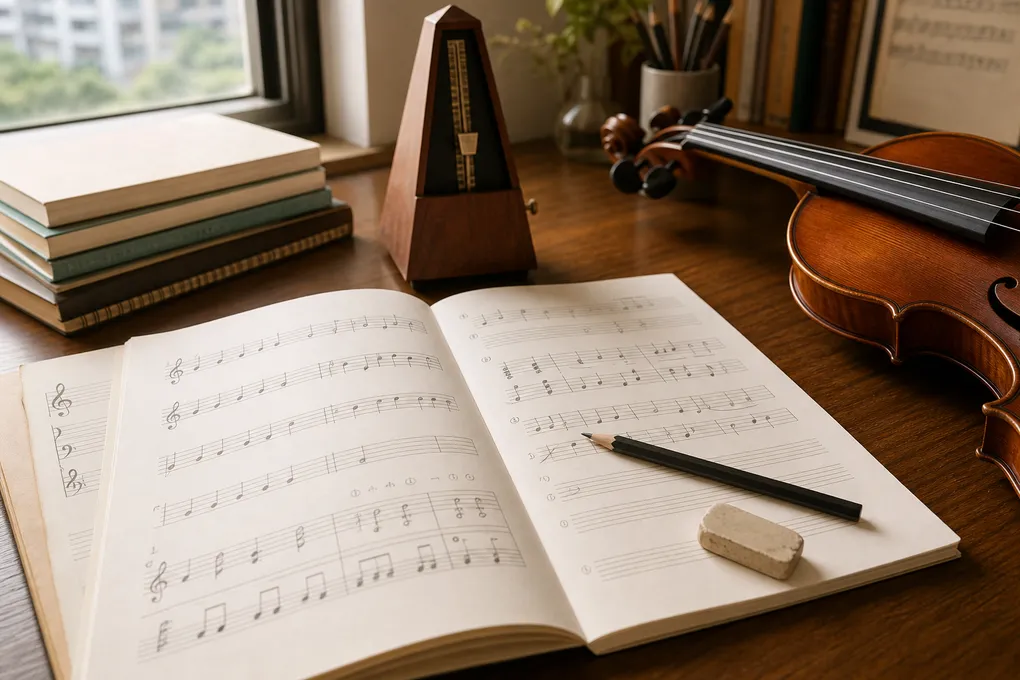
ABRSM Music Theory Grade 1 is the first formal step in learning how music works on the page. It is not about advanced harmony or complicated analysis. It is about reading clearly, counting accurately, and understanding the basic symbols that appear in everyday beginner music.
For many students, Grade 1 is most useful when it is connected to the instrument they already play. Notes, rests, clefs, dynamics, and terms should not feel like separate schoolwork. They should help the student understand the music in front of them.
Related guides: Grade 2, Grade 3, Grade 4, Grade 5.
What Music Theory Grade 1 is for
Grade 1 gives students the basic vocabulary of notation. A prepared student should be able to name notes, recognise common rhythmic values, understand simple time signatures, follow basic performance markings, and answer short questions from a printed score.
The aim is not speed at first. The aim is accuracy. Students should learn to read the question carefully, count beats calmly, and check that each answer matches the clef, key, rhythm, and bar length.
What ABRSM tests in Grade 1
The official ABRSM Music Theory syllabus outline from 2020 sets Grade 1 around the first layer of notation and score reading.
Students should expect questions on:
- note values and rests from semibreves to semiquavers, including ties and single-dotted notes
- simple time signatures, bar lines, and grouping notes within those metres
- the stave, treble and bass clefs, middle C, note names, and basic accidentals
- construction of the major scale, with C, G, D, and F major key signatures
- tonic triads in root position, scale degrees by number, and intervals above the tonic by number
- common tempo, dynamic, articulation, and performance terms
- simple questions about a melody in treble or bass clef
Notes, clefs, and pitch
Students need secure note reading in the clefs used by the exam. They should know how pitch moves up and down on the stave, how ledger lines extend the stave, and how accidentals change notes.
Good preparation includes:
- naming notes from the stave without guessing
- drawing notes neatly in the correct place
- understanding sharps, flats, and naturals
- noticing whether the question is in treble or bass clef
- connecting written notes to the student’s own instrument
Rhythm, metre, and rests
Grade 1 rhythm is about basic pulse and clear counting. Students should understand common note values, rests, bar lines, and simple time signatures.
They should be able to add missing bar lines, complete short bars, and spot whether the rhythm adds up correctly. A student who can clap the rhythm usually understands it more securely than one who only calculates it silently.
Keys, scales, and simple patterns
Grade 1 introduces key signatures and simple scale patterns in a gentle way. Students should understand that a key signature affects the notes throughout the piece, not only at the beginning of the stave.
They should also begin to recognise tones, semitones, and simple scale movement. This is the foundation for later grades, where keys and scales become much more important.
Intervals and basic harmony
At this level, intervals should be counted slowly by letter name first. Students do not need to rush into complicated harmonic thinking, but they do need to see the distance between two notes accurately.
Basic triads and simple chord shapes may also appear as part of the early theory foundation. These should be linked to sound whenever possible: play or sing the notes, then look at how they are written.
Terms, signs, and score details
Grade 1 terms are common musical instructions: tempo words, dynamic markings, articulation, and repeat signs. Students can use the ABRSM Grade 1 musical terms glossary for focused vocabulary revision.
Terms should be learned as musical actions. piano changes volume, staccato changes articulation, and da capo changes where the performer goes in the score.
What ready looks like
A student is ready for Grade 1 when the basics are calm and reliable.
Readiness looks like this:
- notes are named accurately
- rhythms and rests are counted correctly
- simple time signatures make sense
- key signatures and accidentals are noticed
- common signs and terms are understood
- answers are written neatly enough to be read
- short practice papers can be completed without panic
A sensible preparation plan
Start with note reading and rhythm. These are the two areas that affect almost every question.
Then add keys, intervals, terms, and signs. Use short daily tasks rather than long irregular sessions. Grade 1 theory becomes much easier when students meet the same symbols in their pieces, not only in worksheets.
In the final stage, use practice questions to build exam confidence. The goal is not to rush. The goal is to answer carefully, check the bar lengths, and read every marking on the page.
The real purpose of Grade 1 theory
ABRSM Music Theory Grade 1 is useful because it turns beginner notation into something the student can understand independently.
When Grade 1 is learned well, students stop treating the score as a maze of symbols. They begin to see rhythm, pitch, dynamics, and signs as part of one musical language.