【指南】ABRSM DipABRSM 中提琴文憑:八級後的第一張演奏文憑
如何規劃 DipABRSM 中提琴演奏會,包括 Programme Notes、Viva Voce 和 Quick Study,根據 ABRSM 演奏文憑考試大綱。
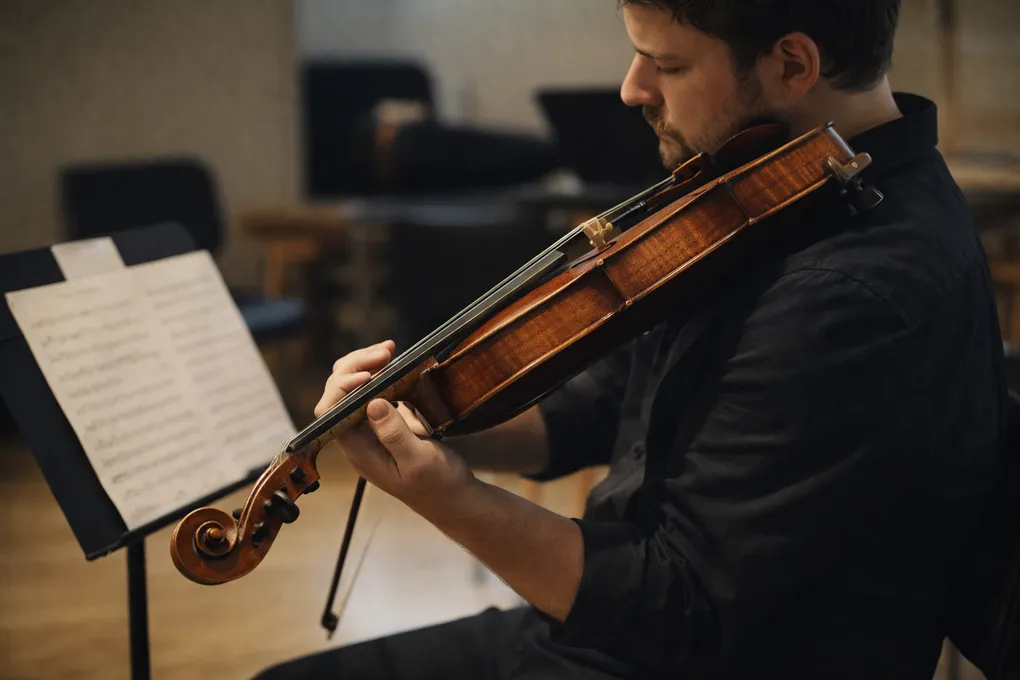
DipABRSM 中提琴是很多演奏者在八級後自然選擇的第一張文憑。它要求的,不僅僅是進階曲目。考生需要建立一個演奏會、撰寫 Programme Notes、在 Viva Voce 中討論音樂,並以音樂上的冷靜回應 Quick Study。
在 ABRSM Performance Diploma Syllabus 2022 中,DipABRSM Music Performance 包括一個約 35 分鐘的演奏會、約 1,100 字的 Programme Notes、Viva Voce 和 Quick Study。一般先決條件是該樂器的 ABRSM Grade 8 Practical 或 Performance,或獲認可的替代資格。
完整的中提琴路線,可先看 ABRSM 中提琴文憑考試總覽。
DipABRSM 中提琴在考甚麼
| 範疇 | 重點 |
|---|---|
| Recital | 穩健的演奏、有說服力的音色和平衡的節目 |
| Programme Notes | 清晰、面向觀眾的文字,介紹所選作品 |
| Viva Voce | 對風格、結構、脈絡和演奏選擇的理解 |
| Quick Study | 在壓力下可靠地讀譜、保持拍子和音色 |
由八級到 DipABRSM 的最大轉變,是主導權。八級考生按照一個既定的考試菜單應考。DipABRSM 中提琴手則需要塑造一個感覺統一的 35 分鐘演奏會。
曲目方向
DipABRSM 中提琴清單提供了廣闊的選擇空間:改編給中提琴的巴赫大提琴組曲樂章、巴赫 viola da gamba 奏鳴曲樂章、Berkeley、Blake、Bloch、Brahms、Britten、Bruch、Campagnoli、Dittersdorf、Handel、Hindemith、Hoffmeister、Holst、Hummel、Jacob、Kodaly、Kreutzer、Maconchy、Mazas、Milhaud、Rawsthorne、Reger、Rivier、Schubert、Schumann、Stamitz、Steptoe、Telemann、Vaughan Williams、Vivaldi 和 Weber。
這種多樣性很有用,但節目必須避免聽起來零散。中提琴演奏會策劃通常最有效的方法是賦予樂器一個清晰的身份:溫暖的歌唱線條、清晰的古典風格、深邃的獨奏巴赫,或二十世紀的色彩。
DipABRSM 中提琴曲目選擇
| Composer | Repertoire choice |
|---|---|
| M. Arnold | Sonata: 2nd and 3rd movts (Lengnick) |
| J.S. Bach | Cello Suite no.1 in G, BWV 1007: 2nd, 4th and 7th movts, Allemande, Sarabande and Gigue, trans. Forbes (Chester) |
| J.S. Bach | Cello Suite no.3 in C, BWV 1009: 3rd and 4th movts, Courante and Sarabande, trans. Forbes (Chester) |
| J.S. Bach | Cello Suite no.5 in C minor, BWV 1011: 3rd, 4th and 7th movts, Courante, Sarabande and Gigue, trans. Forbes (Chester) |
| J.S. Bach | Any three movements from one of the 3 Viola da Gamba Sonatas: no.1 in G, BWV 1027; no.2 in D, BWV 1028; no.3 in G minor, BWV 1029 (Barenreiter BA 5186) |
| L. Berkeley | Sonata in D minor, Op.22: 1st movt (Chester) |
| Howard Blake | Prelude for solo viola from Benedictus (Highbridge Music) |
| Bloch | Suite (1919): 1st movt (G. Schirmer) |
| Brahms | Sonata in F minor, Op.120 no.1: any two movts (Wiener Urtext) |
| Brahms | Sonata in E-flat, Op.120 no.2: any two movts (Wiener Urtext) |
| Britten | Elegy for solo viola (Faber) |
| Britten | Lachrymae, Op.48, Reflections on a Song by John Dowland (Boosey & Hawkes) |
| F.X. Brixi | Concerto in C: 1st movt (Schott VAB 5, now out of print) |
| Bruch | Kol Nidrei, Op.47, arr. de Smet (Peters EP 7177a) |
| Campagnoli | Any of the following from 41 Caprices for solo viola, Op.22: nos.1, 9, 12, 15, 17, 36 (Peters EP 2548) |
| Dittersdorf | Sonata in E-flat: complete (IMC 2211) |
| Handel | Sonata in G minor, Op.1 no.6, HWV 364b, arr. Pilkington: complete (Stainer & Bell) |
| Hindemith | Kammermusik no.5, Op.36 no.4: 1st movt (Schott ED 1977) |
| Hindemith | Sonata in F, Op.11 no.4: 1st and 2nd movts (Schott ED 1976) |
| Hoffmeister | Concerto in D: 1st movt (Peters EP 9857) |
| Holst | Lyric Movement (OUP archive-Allegro) |
| Hummel | Sonata in E-flat, Op.5 no.3: complete (Schott VAB 16) |
| G. Jacob | Air and Dance (OUP archive-Allegro) |
| G. Jacob | Concerto no.2 in G: 1st and 2nd movts (Simrock) |
| G. Jacob | Sonatina: 1st movt (Novello) |
| Kodaly | Adagio (Editio Musica Budapest Z.14894) |
| R. Kreutzer | Any one of the following from 42 Studies, trans. Pagels: nos.9, 12, 26, 27, 29 (IMC 0976) |
| Maconchy | Any two of the 5 Sketches for solo viola (Chester) |
| Mazas | Etudes Speciales, Op.36 Book 1: no.18 or no.23 (IMC 1091) |
| Milhaud | La Californienne and The Wisconsonian, or La Bruxelloise and La Parisienne, from Quatre Visages, Op.238 (Heugel) |
| Milhaud | Sonata no.2, Op.244: any two movts (Heugel) |
| Rawsthorne | Sonata: 1st movt (OUP archive-Allegro) |
| Reger | Any one movement from 3 Suites for solo viola, Op.131d: Suite no.1 in G minor 1st or 2nd movt; Suite no.2 in D 1st or 4th movt; Suite no.3 in E minor 2nd or 4th movt (Peters EP 3971) |
| Rivier | Concertino: 1st movt (Salabert) |
| Schubert | Sonata in A minor “Arpeggione”, D.821, arr. Wrochem: 1st movt (Barenreiter BA 5683) |
| Schumann | Marchenbilder, Op.113: nos.1 and 3, or nos.2 and 4 (Peters EP 2372) |
| C. Stamitz | Concerto in D, Op.1: 3rd movt (Peters EP 3816a) |
| Roger Steptoe | Narration, Burlesque and Elegy from 3 Pieces (Stainer & Bell) |
| Telemann | Concerto in G, TWV 51:G9: complete (Barenreiter BA 5878-90) |
| Telemann | Any one Fantasia complete from 12 Fantasias for Unaccompanied Viola, arr. Rood (McGinnis & Marx, currently unavailable) |
| Vaughan Williams | Romance (OUP) |
| Vaughan Williams | Suite for Viola: Group 1 complete (OUP) |
| Vivaldi | Concerto in G for Viola d’Amore, RV 392: complete (Alfred-Kalmus K04298) |
| Weber | Andante e Rondo ungarese, Op.35 (Schott VAB 36) |
| Weber | Variations in C (Peters EP 8321) |
可行的演奏會結構
| 結構 | 可能的用途 |
|---|---|
| 巴赫加奏鳴曲加性格小品 | 展現結構、深度和個性 |
| 古典協奏曲樂章加浪漫奏鳴曲樂章加英國作品 | 展現時期對比和中提琴音色 |
| 獨奏作品加伴奏作品 | 展現獨立性,同時避免整個節目過於裸露 |
不要把節目塞滿全部停留在中音區溫暖音色的作品。中提琴可以美麗地歌唱,但一個演奏會同樣需要 articulation、空間、明亮度、節奏和對比。
Programme Notes
在 DipABRSM 程度,Programme Notes 應該幫助一個有基本音樂知識的聽眾更好地聆聽音樂。對中提琴考生來說,有力的主題包括改編曲目的歷史、中提琴在小提琴和大提琴之間的角色、奏鳴曲樂章的性格,以及作曲家如何運用音域或音色。
避免泛泛的作曲家生平。關於 Brahms 的一段文字,應該引向正在演奏的那首奏鳴曲。關於巴赫的一段文字,應該幫助讀者在所選樂章中聽到舞曲、織體或線條。
Viva Voce 和 Quick Study
Viva Voce 是節目理解不足會暴露出來的地方。DipABRSM 中提琴手應該能夠解釋為甚麼節目次序合理、每首作品貢獻了甚麼,以及技術選擇如何服務音樂性格。
Quick Study 練習應包括中音譜號流暢度、節奏穩定度、乾淨的換弦,以及一個即時的弓段分配計劃。目標不是完美,而是具有良好判斷力的音樂性首次視奏。
下一步
如果演奏會已經感覺舒適,而考生準備好處理更深入的書面習作,可以將這個級別與 LRSM 中提琴比較。